

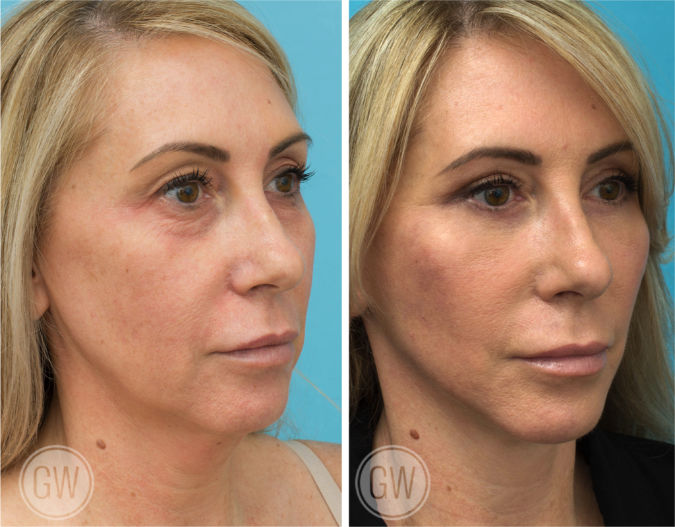
21 Jul How Does Ageing Affect the Face and Neck, and When Might Surgery Be Considered?
Ageing affects the face and neck gradually, with changes occurring in the skin, fat compartments, muscles, connective tissues and facial bones. Because each anatomical layer changes differently, a person may notice reduced facial volume, altered jawline definition, visible neck bands or changes in skin texture at different stages of life.
In his Perth practice, Dr Guy Watts, Specialist Plastic & Reconstructive Surgeon (FRACS), assesses how these changes relate to each patient’s anatomy, health and treatment goals. This article explains why the face and neck change over time, which surgical procedures may be considered and what patients should understand before deciding whether an operation is appropriate.
Why Do the Face and Neck Change as We Age?
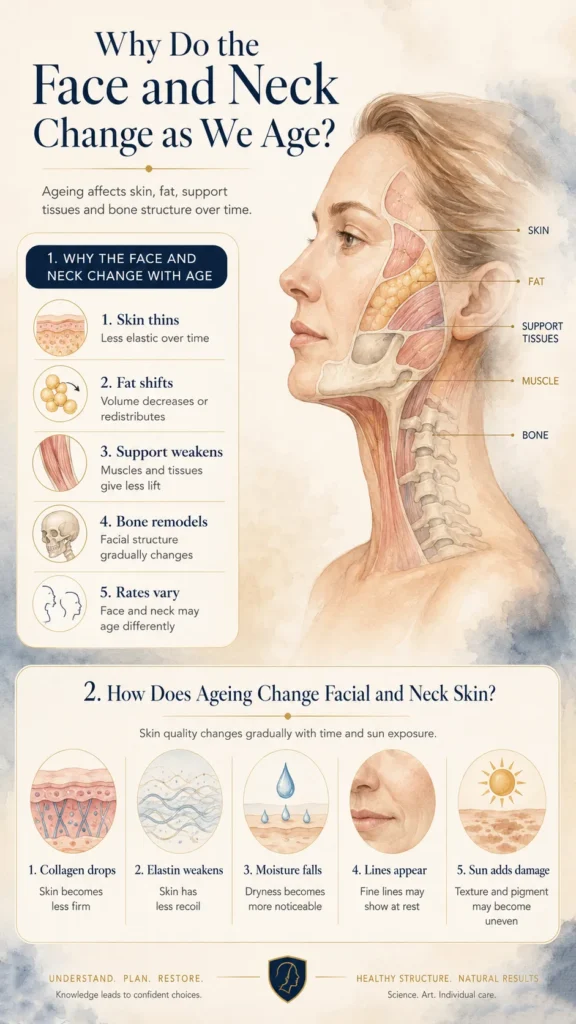
Ageing changes several anatomical layers at the same time rather than affecting the skin alone. Changes in skin quality, fat position, muscle activity, connective tissue support and bone structure can collectively alter facial and neck proportions.
These changes do not follow the same pattern or timeline for every person. Genetics, sun exposure, smoking, hormonal changes, weight fluctuations and facial structure can all influence which features become noticeable and when they appear.
- Skin may become thinner and less elastic.
- Facial fat may reduce in some areas and become more noticeable in others.
- Muscles and connective tissues may provide less support.
- Facial bones may gradually remodel with age.
- The face and neck may change at different rates.
How Does Ageing Change Facial and Neck Skin?
Ageing skin commonly becomes thinner, drier and less elastic as collagen and elastin production changes over time. Environmental exposure, particularly ultraviolet radiation, can also contribute to differences in pigmentation, texture and fine lines.
The neck may show these changes differently because its skin is relatively thin and is exposed to frequent movement. During consultations in Perth, Dr Guy Watts assesses skin quality alongside deeper anatomical structures because skin changes alone do not fully explain facial or neck ageing.
- Collagen production gradually decreases.
- Elastin fibres may become less effective.
- Skin may retain less moisture.
- Fine lines may become visible at rest.
- Sun exposure can contribute to uneven texture and pigmentation.
Why Does Facial Fat Change Position Over Time?
Facial fat is arranged in separate anatomical compartments rather than one continuous layer. With age, individual compartments may lose volume, shift position or become more prominent, altering the shape of the cheeks, temples, lower face and area beneath the chin.
This means ageing does not always involve a uniform loss of facial volume. Dr Guy Watts evaluates where volume has reduced, where tissue has descended and whether changes beneath the chin relate to fat, skin, muscle or skeletal support.
- The temples and cheeks may lose volume.
- Midface support may reduce gradually.
- Lower facial fullness may become more noticeable.
- Fat beneath the chin may affect the jaw–neck angle.
- Facial fat changes can occur independently of overall body weight.
How Do Facial Muscles Affect Ageing Changes?
Repeated facial movement contributes to lines around the eyes, forehead and mouth, while age-related changes in muscle tone can affect how the overlying tissues sit. Lines that initially appear during expression may become visible when the face is at rest.
In the neck, the platysma muscle can become more noticeable as its edges separate, contract or provide less support. Because platysma anatomy and activity differ between individuals, Dr Guy Watts considers muscle position carefully when planning surgery involving the lower face and neck.
- Forehead movement may contribute to horizontal lines.
- Repeated eye movement can affect the outer eye area.
- Mouth movement may influence lines around the lips.
- Platysma edges may appear as vertical neck bands.
- Muscle changes may occur alongside skin and fat changes.
When Might Someone Consider Face or Neck Surgery?
Face surgery may be considered when anatomical changes in the face or neck are persistent and the person wishes to explore an operative approach. There is no particular age at which someone should have surgery, and visible ageing alone does not mean that an operation is necessary.
Suitability depends on the person’s anatomy, general health, expectations and ability to understand the procedure and its risks. Australian cosmetic surgery guidance also emphasises informed consent, appropriate assessment and adequate time for patients to consider their decision.
- Concerns should be personally motivated.
- Expectations should be realistic and specific.
- Medical conditions must be reviewed.
- Smoking and medications may affect planning.
- Patients need time to consider risks and alternatives.
What Does Facelift Surgery Address?
Facelift surgery addresses selected ageing-related changes in the lower and middle regions of the face by repositioning deeper tissues and managing skin according to the patient’s anatomy. It is not limited to pulling or removing skin.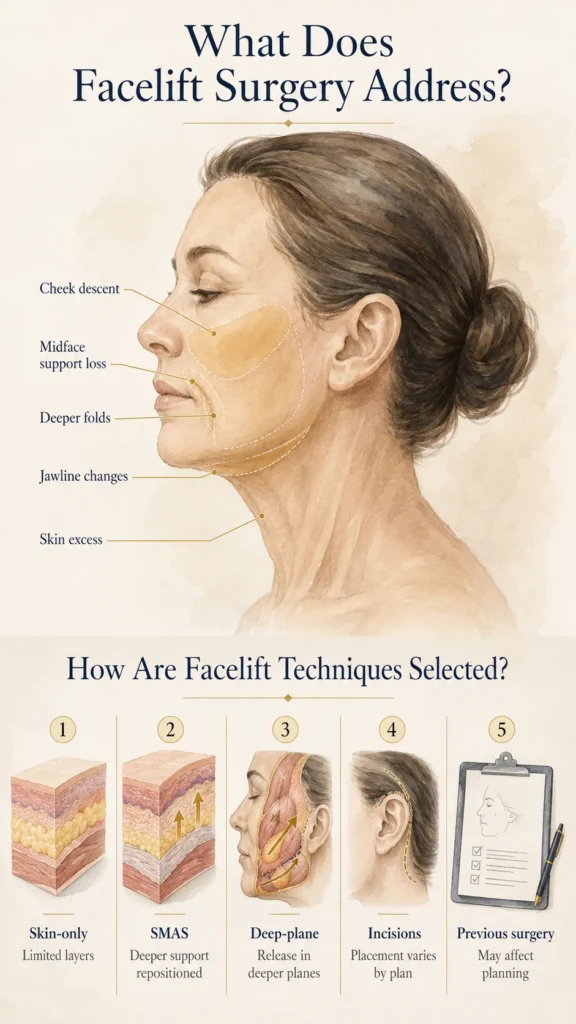
Many facelift approaches involve the superficial musculoaponeurotic system, commonly called the SMAS. Dr Guy Watts may consider techniques such as a high-SMAS or deep-plane approach after examining tissue position, facial proportions and the areas the patient would like assessed.
- Descent of cheek and lower-face tissues
- Changes along the jawline
- Deepening folds in the lower face
- Altered support in the midface
- Skin excess associated with deeper tissue movement
How Are Facelift Techniques Selected?
Facelift techniques are selected according to anatomy rather than age or a standard treatment formula. The extent of tissue descent, skin quality, facial shape and previous procedures can all influence which surgical approach may be suitable.
During consultations in Perth, Dr Guy Watts explains which tissue layers would be addressed and why a particular technique may be considered. A more extensive operation is not automatically more appropriate, and each approach has its own limitations and risks.
- Skin-only approaches address limited anatomical layers.
- SMAS techniques reposition deeper supporting tissue.
- Deep-plane techniques involve release within deeper tissue planes.
- Incision placement varies with the planned procedure.
- Previous surgery may affect operative planning.
What Does Neck Lift Surgery Address?
Neck lift surgery may address skin position, fat distribution and platysma changes in the area beneath the chin and along the upper neck. It may be performed alone or combined with facial surgery, depending on how the face and neck relate anatomically.
A neck-focused procedure may involve management of the platysma, removal or repositioning of selected fat and adjustment of skin. The appropriate combination depends on whether the main concern is muscle banding, localised fullness, skin excess or several factors together.
- Visible platysma bands
- Reduced definition beneath the chin
- Localised fat beneath the jaw
- Changes in the jaw–neck angle
- Skin excess in the upper neck
Can Face and Neck Procedures Be Combined?
Facial and neck procedures may be combined when several areas contribute to the overall pattern of ageing. A combined plan can address related anatomical changes during one operative episode, but it also affects operating time, recovery requirements and the overall risk profile.
Depending on the examination, Dr Guy Watts may discuss eyelid surgery, brow surgery or fat grafting alongside a facelift or neck procedure. Additional surgery is only considered when it has a clear anatomical purpose and aligns with the patient’s stated priorities.
- Eyelid surgery may address upper or lower eyelid changes.
- Brow surgery may address altered brow position.
- Fat grafting may add volume to selected areas.
- Neck surgery may be combined with lower-face surgery.
- Each additional procedure requires separate risk discussion.
Face and Neck Surgery Before and After Photos
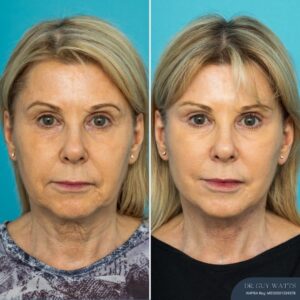
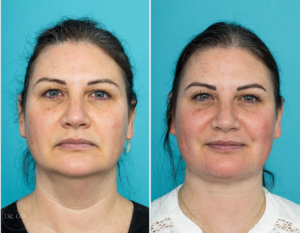
Photo disclaimer:
Each surgical procedure produces unique outcomes influenced by factors such as body composition, skin tone, laxity, age, and genetics. The before-and-after photographs displayed are of actual patients and are provided for informational purposes only.
What Should Patients Expect During Recovery?
Recovery after face or neck surgery varies according to the procedure, the extent of surgery and the individual’s healing response. Swelling, bruising, tightness, temporary altered sensation and changes around incision sites may occur during the early neck lift recovery period.
Patients receive individual instructions regarding dressings, wound care, activity, sleeping position and follow-up appointments. Visible changes continue to settle over several months, so early appearance should not be treated as the final outcome.
- Swelling and bruising are common initially.
- Activity restrictions vary by procedure.
- Some patients require temporary drains or dressings.
- Follow-up appointments are used to monitor healing.
- Final tissue settling may take several months.
What Risks Should Be Discussed Before Surgery?
Face and neck surgery carries potential risks and complications, and these must be understood before consent is given. The risk profile varies according to the operation, the patient’s medical history, smoking status, medications and previous facial procedures.
Dr Guy Watts discusses risks relevant to the proposed surgery rather than presenting surgery as a guaranteed solution. Patients should also understand that revision surgery may occasionally be considered and that results vary between individuals.
- Bleeding or haematoma
- Infection or delayed wound healing
- Scarring or hairline changes
- Temporary or persistent altered sensation
- Facial nerve injury, asymmetry or need for further surgery
How Important Are Personal Expectations Before Surgery?
Personal expectations are central to deciding whether face or neck surgery is appropriate. Surgery can address selected anatomical features, but it cannot stop ageing, guarantee a particular appearance or resolve broader personal or emotional concerns.
A consultation should provide space to discuss motivations, concerns and the limits of treatment without pressure. Dr Guy Watts encourages patients in Perth to make decisions based on their own priorities and a clear understanding of the proposed procedure.
- The decision should come from the patient.
- Goals should relate to identifiable anatomical features.
- Outcomes cannot be guaranteed.
- Surgery does not stop future ageing.
- External pressure is not an appropriate reason to proceed.
Why Does a Personalised Surgical Assessment Matter?
A personalised assessment identifies which anatomical layers are contributing to the changes a patient has noticed. Two people of the same age may require very different discussions because their skin, fat distribution, muscle position, bone structure and medical histories are not the same.
At his Perth clinic, Dr Guy Watts examines the face and neck together while also assessing each area independently. This allows the consultation to focus on clinically relevant options rather than assigning the same procedure to every patient.
- Facial proportions are assessed.
- Skin quality is reviewed.
- Fat position and volume are considered.
- Muscle and skeletal support are examined.
- Health, goals and recovery capacity are discussed.
Take our quiz, and find out if you are ready for surgery
Can Weight Changes and Lifestyle Affect Facial Ageing?
Weight fluctuations can affect facial fat volume, skin support and fullness beneath the chin. Significant or repeated changes in body weight may make tissue changes more apparent, although facial ageing can also occur in people whose weight remains stable.
Lifestyle factors such as sun exposure and smoking can influence skin quality over time. Genetics, hormonal changes and underlying skeletal anatomy also remain important, so lifestyle is only one part of the overall ageing process.
- Weight loss may reduce facial volume.
- Weight gain may increase lower-face or neck fullness.
- Repeated fluctuations may affect skin support.
- Smoking can affect circulation and wound healing.
- Long-term sun exposure contributes to skin changes.

Ageing Of The Face And Neck FAQs
How Can You Decide Whether Face or Neck Surgery Is Appropriate?
The decision should follow a detailed medical assessment and a clear discussion of goals, alternatives, recovery and risks. Surgery may be considered when the concern relates to identifiable anatomical changes and the patient has realistic expectations about what an operation can and cannot address.
For people considering face or neck surgery in Perth, an in-person consultation with Dr Guy Watts provides an opportunity to review anatomy and ask questions. Proceeding with surgery remains an individual decision, and choosing not to have surgery is also a valid outcome.
- Consider whether the concern is specific and personally important.
- Review the expected recovery and activity restrictions.
- Understand the risks and possible need for further treatment.
- Allow time to consider the information.
- Proceed only when the decision feels informed and unpressured.
DOWNLOAD DR GUY WATTS’ FACE AND NECK LIFT SURGERY GUIDE
Further Reading
- Read Dr Guy Watts’ Blog on A Surgeon’s Guide To Facial Ligaments: Why They Matter In Facelifts
- Read Dr Guy Watts’ Blog on Can A Face Lift Look Natural? Understanding Today’s Techniques For Facial Balance
- Read Dr Guy Watts’ Blog on Combining Face Lift With Eyelid And Brow Procedures
- Read Dr Guy Watts’ Blog on How Age, Lifestyle And Skin Care Can Influence The Outcome Of A Facelift
- Read Dr Guy Watts’ Blog on Structural Ageing of the Face and Neck: How Anatomy Changes Over Time
About Dr. Guy Watts – MED0001539378
FRACS (Plas) – Specialist Plastic Surgeon In Perth WA

Dr. Guy Watts is a Specialist Plastic Surgeon (AHPRA MED0001539378) with an extensive career that spans across renowned plastic surgery clinics worldwide. His experience has been honed through invaluable experiences at esteemed establishments such as the New York Eye and Ear Infirmary and the renowned Pitanguy Clinic in Brazil.
Having collaborated with the foremost cosmetic plastic surgeons on a global scale, Dr. Watts has chosen to return to Perth after a 17-year journey of intensive training and invaluable professional experience to bring the latest practices and technology in cosmetic plastic surgery to his patients.
Dr. Watts is a Fellow of the Royal Australasian College of Surgeons (FRACS) and a Member of the Australian Society of Plastic Surgeons (ASPS), Australasian Society of Aesthetic Plastic Surgeons (ASAPS) and the International Society of Aesthetic Plastic Surgeons (ISAPS).
Read about the potential Risks and Complications of Surgery
Read the Patient Information and Resources
About CLINISPA
Clinispa is Dr Watts’ bespoke medical clinic performing Cosmetic Aesthetic treatments. At Clinispa, we offer advanced clinical treatments in a luxurious and calming environment, tailored to support your skin’s health and appearance.
Clinispa aesthetic services are performed by Dr Guy Watts’ nursing professionals, who have a passion for and solid understanding of facial aesthetics.
All Clinispa clients are considered individually, with a personalised treatment plan consisting of advanced scientific approaches to cosmetic aesthetics. We incorporate innovative technologies in conjunction with superiorly formulated skin care.
For more information about the full range of Clinispa Aesthetic of Cosmetic Treatments visit the Clinispa website
Sorry, the comment form is closed at this time.