
This website contains imagery which is only suitable for audiences 18+.


Facelift Surgery for Patients in Their 40s, 50s and 60s

Facelift surgery, medically known as rhytidectomy, is a surgical procedure that addresses age-related structural changes affecting the lower face and neck. These changes typically develop gradually over time and may involve alterations in skin characteristics, tissue position, and underlying facial structures.

For individuals considering facelift surgery in Perth, Dr Guy Watts, Specialist Plastic and Reconstructive Surgeon, undertakes an individualised assessment based on facial anatomy, tissue support, and overall health. Surgical planning considers deeper facial structures that contribute to age-related change, rather than focusing on surface skin adjustment alone.

Facelift surgery is not a single uniform procedure. The surgical approach is determined by individual anatomical findings, skin characteristics, and the extent of structural change present at the time of assessment. While age can influence the pattern of change, suitability and surgical planning are based on clinical evaluation rather than chronological age alone.

UNDERSTANDING FACELIFT SURGERY ACROSS DIFFERENT LIFE STAGES

Facial ageing is influenced by a combination of genetic factors, sun exposure, lifestyle, gravity, and gradual changes in skin, fat, muscle, connective tissue, and bone. These changes occur at varying rates and affect individuals differently.

In individuals in their 40s, facial changes may be at an earlier stage and involve gradual alterations to the lower face, cheek position, or upper neck. Skin characteristics may differ between individuals, and changes within deeper tissue layers are often less advanced compared with later decades.

In selected cases, facelift surgery may be considered following individual assessment to address structural changes present at the time of consultation.

In the 50s, age-related changes often become more established. There may be a noticeable change in the lower face, increasing prominence of folds beside the mouth, and greater involvement of the neck. Both skin and deeper facial tissues are commonly affected. Surgical planning in this decade often requires a broader approach that addresses multiple anatomical layers.

In the 60s, facial changes often reflect a combination of altered skin elasticity, deeper tissue descent, muscle changes in the neck, and gradual changes in the underlying facial skeleton. Facelift surgery at this stage is typically more comprehensive and carefully planned, taking into account general health, healing capacity, and anatomical considerations.

Dr Guy Watts approaches facelift surgery with consideration of how facial structures change across different decades of life. This informs surgical assessment and facilitates informed discussion about the role of surgery at various stages, based on individual anatomy and circumstances.

Understanding Facelift Surgery Across Different Life Stages by Dr Guy Watts

IS FACELIFT SURGERY APPROPRIATE FOR YOU?

Suitability for facelift surgery is assessed on an individual basis. Age alone does not determine whether face surgery is appropriate. Patients in their 40s, 50s and 60s may be considered depending on health status, facial anatomy, and personal priorities.

Facelift surgery may be considered if you:

  • Notice ongoing changes in the lower face or neck that are not adequately addressed with non-surgical care
  • Are medically suitable for surgery and anaesthesia
  • Have a clear understanding of the purpose and limitations of surgery
  • Are seeking a surgical approach that addresses structural facial changes rather than temporary measures

Patients in their 40s often explore surgery to address early changes before they become more pronounced. Patients in their 50s and 60s may consider surgery to address more established tissue changes involving the face and neck.

During consultation at his Perth practice, Dr Guy Watts undertakes a detailed assessment that includes medical history, facial examination, lifestyle factors, and discussion of patient concerns. This process supports informed decision-making and helps guide whether facelift surgery may be appropriate and how it could be planned.

WHAT FACELIFT SURGERY MAY ADDRESS

Facelift surgery may assist with addressing a range of age-related changes affecting the lower face and neck, including:

  • Changes in jawline definition
  • Alteration in cheek tissue position that contributes to folds beside the mouth
  • Changes in the lower face
  • Alteration in neck appearance, including muscle involvement or skin changes

The extent to which these changes can be addressed varies between individuals and depends on factors such as skin characteristics, facial structure, and the degree of tissue change present at the time of surgery.

In individuals in their 40s, surgical assessment may identify earlier structural tissue changes that are localised in nature. In later decades, assessment may identify more extensive changes involving deeper facial tissues and the neck. The surgical approach is determined by individual anatomy and clinical findings rather than age alone.

Facelift surgery does not stop the ageing process. It alters tissue position at a specific point in time, and further changes occur gradually with age.

CLINICAL FACELIFT RESULTS AND PATIENT PHOTOGRAPHY

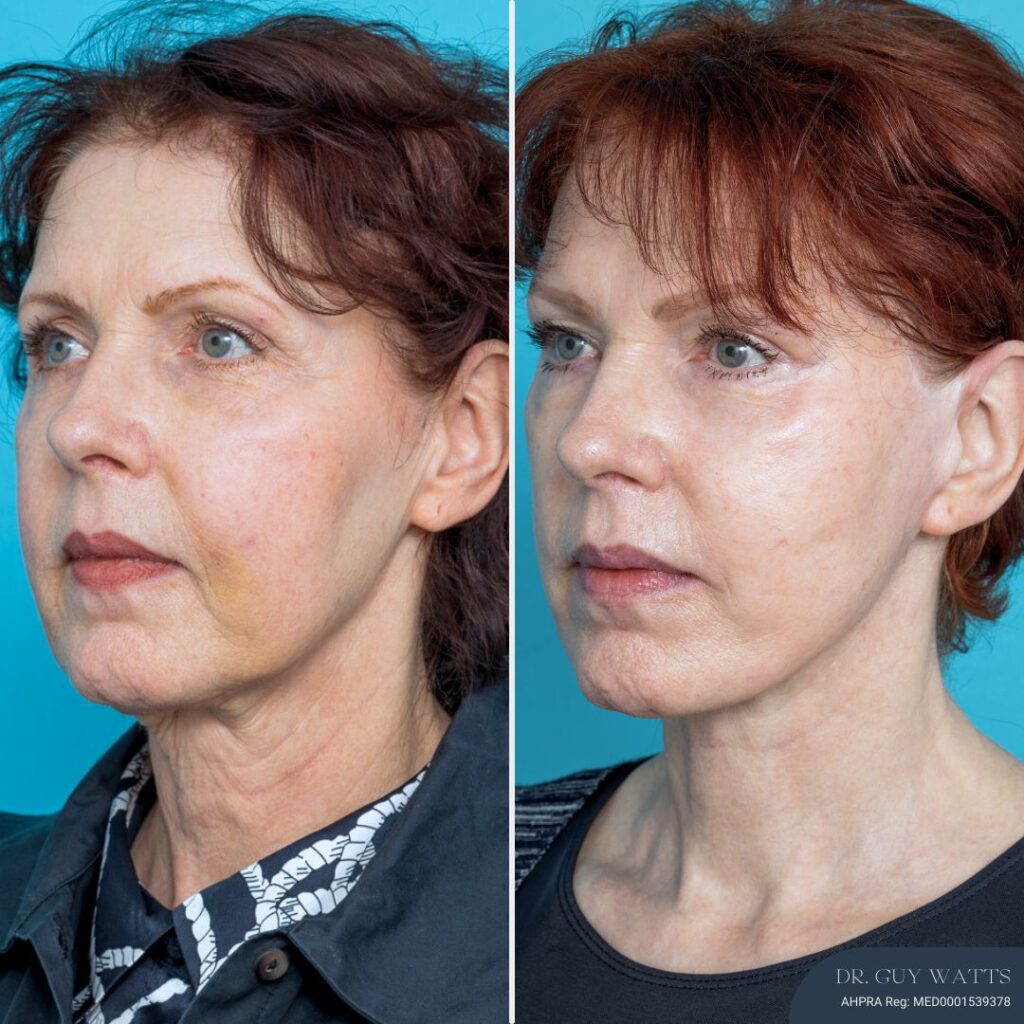
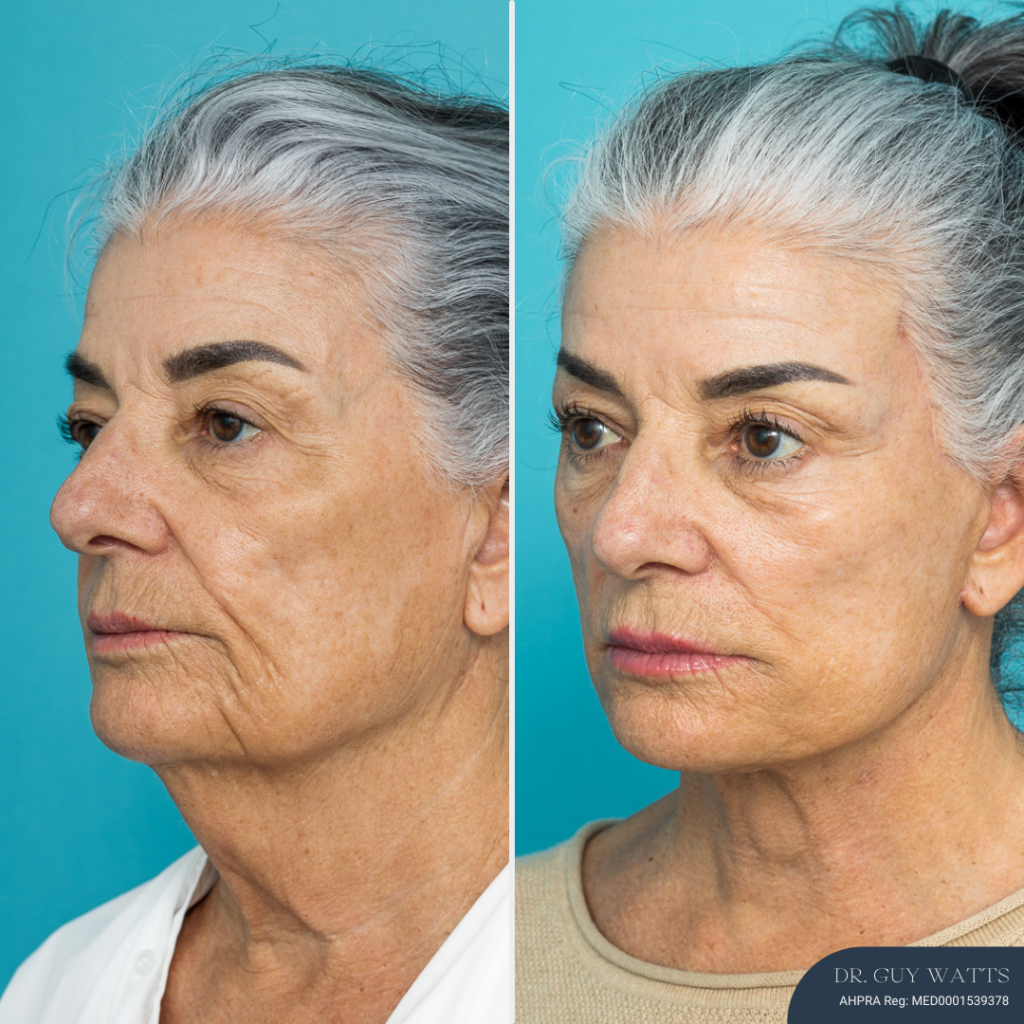
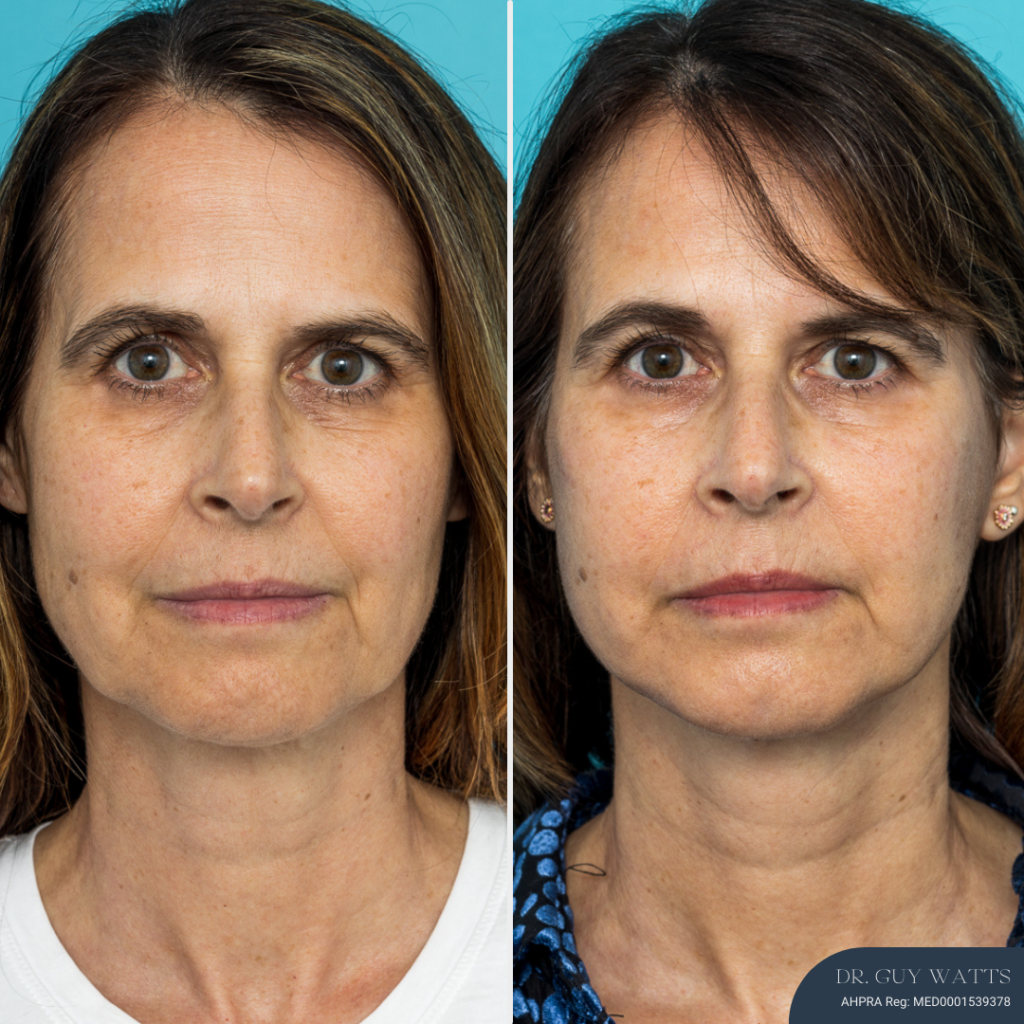
Clinical photography is used as an educational tool during consultation. Before and after photographs assist with discussion about the types of changes that may be addressed with surgery and the variability of outcomes between individuals.

Dr Guy Watts may present de-identified clinical photographs to illustrate:

Clinical photographs are provided for educational purposes only. They do not represent guarantees of outcome, as individual anatomy and healing responses differ.

BEFORE AND AFTER PHOTOS

Before and after photos may be discussed during consultation where appropriate and in accordance with AHPRA advertising requirements. Images should be understood as examples only, as individual anatomy, healing, scarring and surgical outcomes vary between patients.

HOW FACELIFT SURGERY IS PERFORMED

Facelift surgery is performed in an accredited hospital under general anaesthesia. The surgical technique is modified based on the patient’s age, anatomy, and the extent of facial and neck involvement.

Incisions are generally placed around the ear and within existing skin creases to provide access to deeper facial structures. Supportive facial tissues may be repositioned and secured according to the surgical plan. The skin is then redraped and adjusted in line with the underlying tissue position.

In patients in their 40s, surgery may involve targeted adjustment of the lower face with limited neck involvement. In patients in their 50s and 60s, surgery often includes more extensive modification of deeper facial tissues and the neck.

Dr Guy Watts’ approach is based on specialist training in plastic and reconstructive surgery and an in-depth understanding of facial anatomy. The focus is on structural modification and tissue support rather than surface skin adjustment alone.

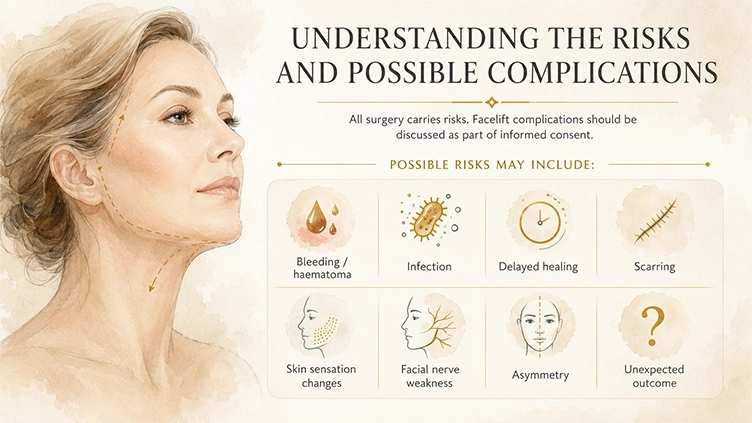
UNDERSTANDING THE RISKS AND POSSIBLE COMPLICATIONS

All surgical procedures carry risks, and facelift surgery is no exception. Understanding potential complications is an essential part of informed consent.

Possible risks may include:

  • Bleeding or haematoma
  • Infection
  • Delayed wound healing
  • Scarring
  • Temporary or permanent changes in skin sensation
  • Facial nerve weakness
  • Asymmetry
  • Outcomes that differ from patient expectations

The likelihood of complications varies depending on individual health factors, the extent of surgery, and adherence to post-operative instructions.

Dr Guy Watts discusses these risks in detail during consultation and encourages patients to take time to consider their decision and ask questions.

Understanding The Risks And Possible Complications by Dr Guy Watts

THE RECOVERY PROCESS AND EXPECTED HEALING

Recovery following facelift surgery occurs gradually and varies between individuals. Swelling and bruising are common in the early post-operative period and typically settle over time.

Patients are advised to rest, avoid strenuous activity, and attend scheduled follow-up appointments. Dressings and sutures are managed under medical supervision.

Patients in their 40s may experience a shorter recovery period compared with those in their 50s or 60s, although this varies. Healing generally progresses in stages, with continued improvement over several weeks and months.

Most patients return to non-physical activities within a few weeks. Full tissue settling may take several months, particularly after more extensive surgery.

Download Dr Watts’ Guide to Face and Neck Lift

Ultimate Guide To Face and Neck Lift

CARING FOR SURGICAL OUTCOMES OVER TIME

Long-term care following facelift surgery focuses on supporting skin health and general wellbeing.

Factors that may influence longer-term outcomes include:

  • Ongoing sun protection
  • Appropriate skin care
  • Attention to general health and nutrition
  • Avoidance of smoking

Facelift surgery modifies tissue position at a particular point in time. Further age-related changes occur gradually and vary between individuals.

Dr Guy Watts provides guidance on follow-up care and longer-term considerations as part of ongoing patient management.

REQUEST AN APPOINTMENT

Name(Required)
Please upload any relevant photos of what you are trying to achieve or your current situation. This may help you get an earlier surgery or consult appointment. Limit 20MB & 3 images. Only include your face if relevant.
Drop files here or
Accepted file types: jpg, png, jpeg, gif, Max. file size: 20 MB, Max. files: 3.
    Yes, please contact me and put me on your mailing list. I can be reached through any of the option(s) indicated below

    PROFESSIONAL FEES AND ASSOCIATED COSTS IN WESTERN AUSTRALIA

    The overall cost of facelift surgery in Western Australia includes several components. These may include the surgeon’s professional fee, hospital fees, anaesthesia fees, and post-operative care.

    Costs vary depending on:

    • The extent and complexity of the procedure
    • Whether neck surgery is included
    • Hospital and anaesthetic requirements

    A detailed cost estimate is provided following consultation, once a personalised surgical plan has been discussed. Written financial consent is provided in accordance with Australian healthcare standards.

    GW Face Procedure FAQ Image - Guy Watts

    FACELIFT SURGERY FOR PATIENTS IN THEIR 40S, 50S, AND 60S FAQS

    Does the approach to facelift surgery differ between patients in their 40s and those in their 60s?

    Yes. Surgical planning is modified according to how facial structures and skin characteristics typically change over time, with earlier decades often requiring more limited adjustment and later decades involving broader anatomical considerations.

    Can a facelift be considered if changes are mostly noticed in the neck rather than the face?

    In some cases, changes affecting the neck form an important part of the overall assessment. Facelift planning commonly considers the face and neck together, based on their anatomical relationship.

    How does skin quality influence facelift planning?

    Skin characteristics affect how tissues respond to repositioning and healing. These factors are assessed during consultation and contribute to decisions about surgical technique and incision placement.

    Is facelift surgery planned differently for men and women?

    Yes. Differences in skin thickness, hairline position, and facial structure are considered when planning surgery. These factors influence incision design and tissue handling.

    Can previous facial procedures affect facelift surgery?

    Prior surgery or non-surgical treatments can influence tissue characteristics and surgical planning. This information is reviewed carefully during consultation to guide appropriate surgical decisions.

    How long does it take to see the final settled result after facelift surgery?

    Healing occurs in stages, with early changes visible once swelling reduces and further settling over several months. The timeline varies between individuals and depends on the extent of surgery.

    Does weight change affect the outcome of facelift surgery?

    Significant weight changes after surgery can alter facial tissue distribution. Patients are generally advised to consider surgery when their weight is relatively stable.

    Are scars always visible after a facelift?

    Incisions are placed within existing skin creases and around the ear to allow surgical access. Scar appearance varies between individuals and changes over time as healing occurs.

    How does ageing continue after facelift surgery?

    Facelift surgery modifies tissue position at a specific point in time, while age-related changes continue thereafter. Subsequent changes occur gradually and vary between individuals, influenced by factors such as genetics, lifestyle, and skin characteristics.

    What role does follow-up play after facelift surgery?

    Follow-up appointments allow healing to be monitored and support appropriate post-operative care. Ongoing review also provides an opportunity to address questions as recovery progresses.

    Medical References

    PREPARING FOR FACELIFT SURGERY

    Preparation for facelift surgery begins well before the day of surgery and supports patient safety and recovery.

    Preparation may involve:

    • A comprehensive medical assessment
    • Review of medications and supplements
    • Pre-operative guidance regarding smoking and alcohol
    • Planning time away from work and arranging support during early recovery

    Patients in their 40s, 50s and 60s may have different preparation needs depending on health status and lifestyle factors.

    Dr Guy Watts and his team provide clear, structured guidance to assist patients in preparing medically and practically for surgery.

    TAKE OUR QUIZ, AND FIND OUT IF YOU ARE READY FOR SURGERY

    FURTHER READING

    Next Steps on Your Plastic Surgery Journey 

    Always Do Your Research
    Please read our website to learn more about your intended procedure
    Do you need a Medical Referral to see Dr Guy Watts?
    Yes, a GP referral is required for all patients seeking surgery with Dr Watts. We ask all patients, medical and cosmetic, to obtain a GP referral prior to their consultation that includes a detailed medical history, any medications they may be on, and their current BMI. Patients will not be able to attend a consultation without a referral and we ask that you send your referral to our reception team prior to your consultation. Please note that your Medicare Rebates for medical consults will NOT be claimable without a valid recent Medical Referral.
    How to Get the Most from Your Plastic Surgery Consultation

    Please arrive slightly early for your in-person consultation, this will allow for any paperwork or information we may need to collect from you prior to your consultation with Dr Guy Watts.

    Dr Guy Watts encourages you to bring a friend or relative to help consider the information and discuss your options surrounding the plastic surgery procedures you are interested in.

    Please be aware you may need to undress for a physical examination by Dr Guy Watts. A chaperone will be present for the examination and we suggest you wear comfortable clothing to make this easier for you at the time of consultation.

    Please bring along notes and any questions you have to address during the consultation, take notes at the time of consultation and thoroughly examine all the documents provided by Dr Guy Watts on the surgical plastic surgery procedures.

    Want more information before scheduling your plastic surgery consultation?

    If you would like more information about pricing, medical payment plans or paying for your surgery we are happy to help

    Request more information about the procedure – call or contact us

    How to Book Your Consultation
    You can book your initial consultation via phone or email and by paying the $350 cosmetic consultation fee in advance at the time of booking your appointment
    Phone for More Information on Plastic Surgery Procedures with Dr Guy Watts

    To find out more information about surgery you can reach the friendly front desk team by phone to discuss your options for your chosen plastic surgery procedure.

    Contact us or call 08 9286 1600  to arrange your plastic surgeon consultation in Perth.

    Please email us for more information:  admin@guywattsplasticsurgeon.com.au

    PLEASE TAKE INTO CONSIDERATION

    Any surgical or invasive procedure carries risks. Before proceeding, you should seek a second opinion from an appropriately qualified health practitioner.