

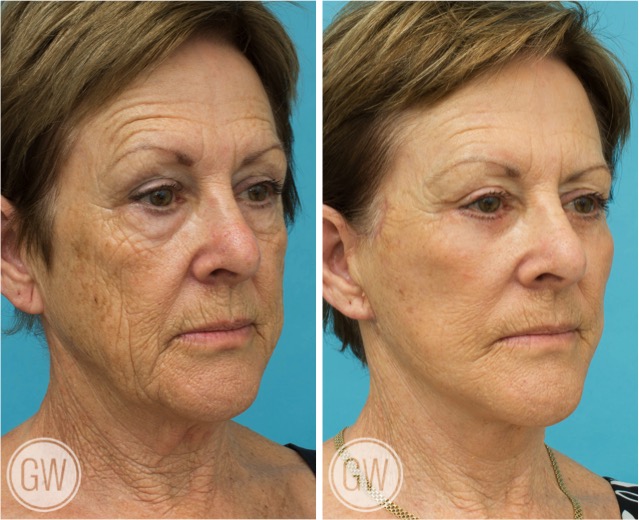
27 Jul Facial Ageing: How Each Anatomical Layer of the Face Changes Over Time
Facial ageing is a gradual process involving the bones, fat compartments, retaining ligaments, muscles and skin. Fine lines (medically known as rhytids) and changes in skin texture may be the first features noticed, but changes also occur beneath the surface and can influence facial proportions, tissue position and the way light falls across the face.
The timing and pattern differ between individuals. Genetics, sun exposure, smoking, weight fluctuation, health and environmental factors can all contribute. Dr Guy Watts is a Specialist Plastic and Reconstructive Surgeon in Perth, Western Australia, who assesses facial changes from a layered anatomical perspective when patients request information about possible surgical options.
This article focuses specifically on the anatomical layers of the face and how changes within each layer may contribute to visible facial ageing over time.
For a broader discussion of how ageing may affect both the face and neck, including when surgical assessment may be considered, read our related guide.
How Is the Face Organised Into Different Anatomical Layers?
The face is formed from interconnected anatomical layers rather than one continuous sheet of tissue. A practical framework begins with the facial skeleton, followed by deep fat, muscles and retaining structures, superficial fat and skin.
Changes in one layer can affect the appearance and behaviour of the layers above it, contributing to the structural ageing of the face and neck. Contemporary anatomical reviews therefore describe facial ageing as a combined process involving skeletal remodelling, changes in fat volume and position, muscle activity, ligament support and skin quality.
- Facial bones provide the underlying framework
- Deep fat supports parts of the midface
- Muscles and ligaments influence movement and tissue position
- Superficial fat contributes to surface shape
- Skin forms the external covering
Why Does Facial Ageing Look Different From One Person to Another?
Facial ageing differs because people begin with different bone structures, fat distribution, skin thickness and facial proportions. The rate of change also varies between regions of the same face.
Environmental and lifestyle factors can modify the process. Long-term ultraviolet exposure particularly affects the skin, while substantial weight changes may alter facial fat and how the skin sits over deeper structures.
- Genetics influence facial structure and skin characteristics
- Sun exposure affects collagen and elasticity
- Weight changes can alter facial volume
- Smoking may accelerate skin-related changes
- Previous surgery or trauma may influence asymmetry
What Happens to the Midface and Jaw Bones Over Time?
The cheekbones and upper jaw form the base of the midface. Age-related remodelling in these areas can reduce forward support beneath the cheeks and around the nose.
The lower jaw can also change in shape and height. These changes may influence how soft tissue sits along the jawline and around the mouth, although dental health, muscle activity and fat distribution also contribute.
- Midface projection can reduce
- The area beside the nose may lose support
- Chin and jaw proportions may change
- Soft tissue can appear differently positioned
- Dental changes may affect the lower facial third
What Are the Deep Facial Fat Compartments?
Deep facial fat is organised into separate anatomical compartments rather than one continuous layer. These compartments support areas such as the cheeks and help maintain the relationship between the lower eyelid, midface and surrounding tissues.
Research into facial anatomy shows that the deep and superficial fat compartments behave differently over time. Some areas may lose volume, while others remain relatively stable or change position.
- Deep fat lies close to the facial skeleton
- Compartments have defined anatomical boundaries
- Some provide structural support to the midface
- Each compartment may age differently
- Volume change is not uniform across the face
How Can Changes in Deep Fat Affect My Cheeks?
Deep cheek fat contributes to midface projection and supports the tissues above it. Reduced volume in selected compartments may make the cheek appear flatter or alter the transition between the lower eyelid and cheek.
This does not mean that all facial fat disappears with age. Some compartments may retain volume while neighbouring areas change, creating differences in fullness and shadowing.
- The central cheek may appear flatter
- Under-eye shadows can become more noticeable
- Facial transitions may appear sharper
- One side may show greater volume change
- Weight loss can make these changes more apparent
Why Can the Area Under My Eyes Develop Hollows or Shadows?
The under-eye region is influenced by the eye socket, deep fat, superficial fat, retaining ligaments and thin eyelid skin. Changes across several of these structures can create a visible hollow or shadow.
Lighting and facial position can make the feature appear more or less prominent. A clinical assessment is needed to determine whether the main contribution comes from skin, fat, bone support, eyelid anatomy or a combination.
- Reduced midface support may contribute
- Fat compartments can change volume
- Thin skin may reveal underlying anatomy
- Ligament boundaries can create visible transitions
- Lighting can emphasise shadows
What Do Facial Ligaments Do?
Facial retaining ligaments connect soft tissues to deeper structures and help maintain tissue position. They also create boundaries between some facial fat compartments.
With age, the tissues around these ligaments may stretch or change in volume. The ligament itself may remain relatively fixed while adjacent tissue descends or deflates, making particular folds or boundaries more visible.
- Ligaments connect superficial and deep structures
- They help define fat compartments
- They influence tissue movement
- Adjacent tissues may change around fixed points
- Their effects vary between facial regions
What Is the SMAS Layer?
The superficial musculo-aponeurotic system, commonly called the SMAS, is a fibromuscular layer beneath the facial fat and skin. It connects with facial muscles and deeper supporting structures.
The SMAS is relevant in facial surgery because selected procedures reposition deeper tissues rather than relying only on skin tension. The appropriate depth and technique depend on anatomy, the areas being assessed and the surgeon’s clinical judgement.
- Lies beneath the skin and superficial fat
- Connects with facial expression muscles
- Extends across parts of the face and neck
- Influences soft-tissue position
- May be addressed in selected facial procedures
How Do Facial Muscles Contribute to Ageing?
Facial muscles allow expression, blinking, speaking and chewing. Their repeated activity influences how the overlying skin folds during movement.
As skin elasticity decreases, expression-related lines may remain visible for longer after the muscle relaxes. Deeper facial changes are not caused by expression alone, however, and usually reflect several anatomical processes.
- Repeated movement affects skin creases
- Muscle tone may change over time
- Some muscles pull tissues in different directions
- Skin may recover less readily after movement
- Function must be considered during surgical planning
What Happens to the Superficial Facial Fat?
Superficial facial fat lies beneath the skin and is also divided into separate compartments. It contributes to the surface contours of the cheeks, temples and lower face.
These compartments do not all reduce in volume. Some may become thinner, while others remain prominent or appear to move relative to nearby structures. This helps explain why facial ageing may involve both hollow and fuller areas at the same time.
- Superficial fat influences surface shape
- Compartments change at different rates
- Some areas may appear hollow
- Other areas may remain full
- Changes can affect how light reflects across the face
Why Can the Lower Face Appear Fuller With Age?
The lower face may appear fuller because of changes in superficial fat, ligament boundaries, skin elasticity and support from the jaw. Tissue from higher areas does not simply move downward as one unit.
The appearance of fullness can also be influenced by weight, muscle activity and natural anatomy. Assessment should therefore consider the cheek, jaw, neck and surrounding tissues together.
- Jowl fat may become more visible
- Jaw support can change
- Skin may drape differently
- Localised fat can remain prominent
- Weight changes may contribute
What Happens to Facial Skin as I Age?
Facial skin gradually becomes thinner, drier and less elastic as collagen, elastin and other supporting components change. Cell turnover and the skin’s ability to retain moisture may also reduce.
Intrinsic ageing occurs over time, while external factors such as ultraviolet exposure and smoking can add further changes. Skin ageing is only one part of the wider facial process and does not explain every shift in facial shape.
- Fine lines may become more visible
- Elasticity can decrease
- Skin may feel drier
- Pigmentation can become uneven
- Surface texture may become rougher
Face Lift Surgery Before and After Photos
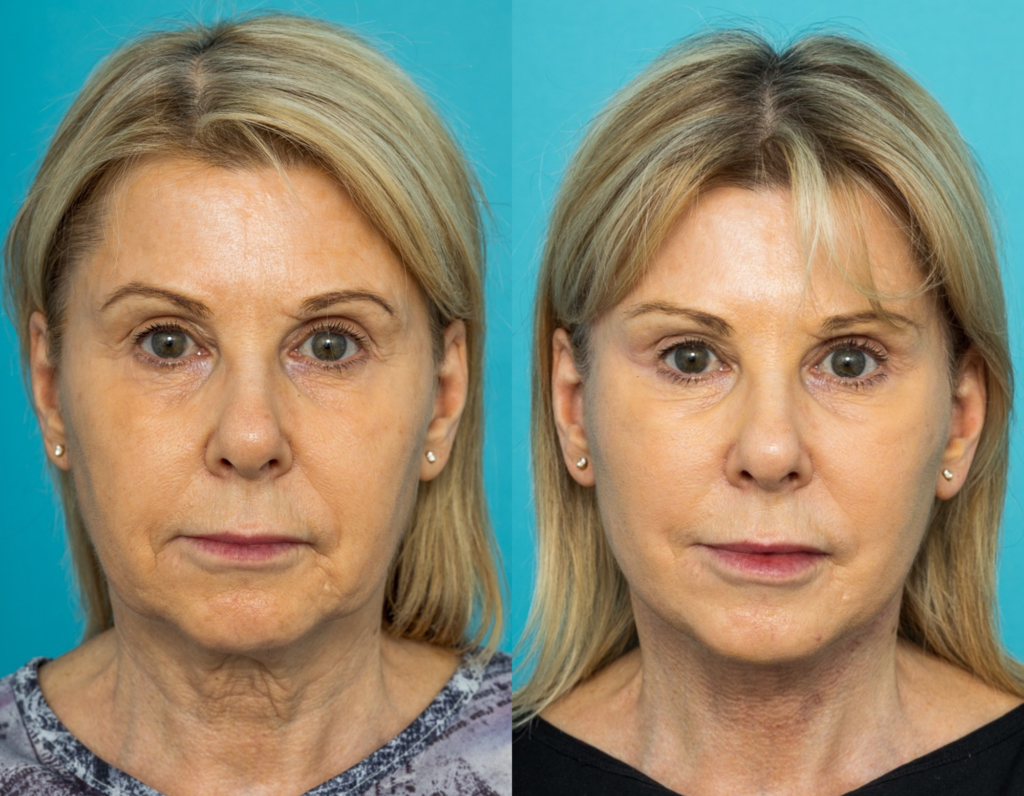
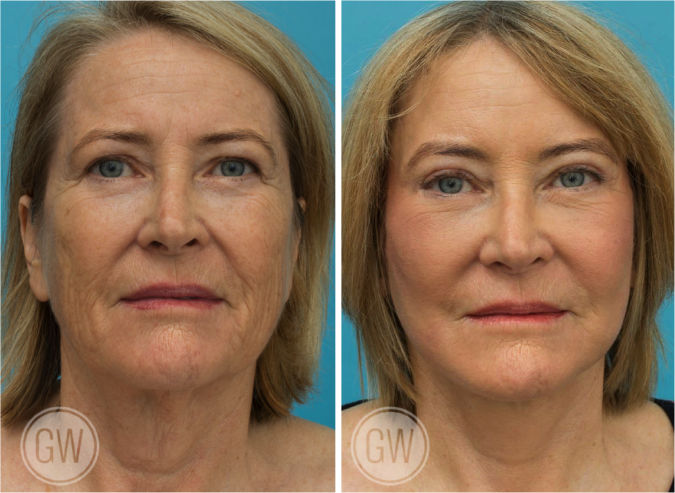
Photo disclaimer:
Each surgical procedure produces unique outcomes influenced by factors such as body composition, skin tone, laxity, age, and genetics. The before-and-after photographs displayed are of actual patients and are provided for informational purposes only.
How Does Sun Exposure Affect Facial Skin in Western Australia?
Ultraviolet radiation contributes to collagen breakdown, changes in elasticity, pigmentation and uneven skin texture. Australia experiences high levels of UV radiation, so regular protection is relevant throughout much of the year.
Sun damage primarily affects the skin rather than directly causing the deeper skeletal changes associated with ageing. However, marked skin changes can alter how the underlying facial structure appears.
- UV exposure contributes to premature skin ageing
- Damage can occur on cool or cloudy days
- Pigmentation may become uneven
- Fine lines can become more apparent
- Sun protection remains relevant after facial surgery
Can Skin Treatments Address Changes in the Deeper Layers?
Skin-directed care may improve aspects of texture, pigmentation or surface condition, but it does not reposition deeper fat, change bone support or directly adjust facial ligaments.
Similarly, a surgical procedure that repositions deeper tissues may not address every pigmentation or texture concern. Identifying which layers contribute to a patient’s concern helps clarify what a particular option can and cannot do.
- Surface care primarily affects the skin
- Deep tissue position requires separate assessment
- Bone changes are not altered by skin care
- Several approaches may sometimes be discussed
- No single treatment addresses every layer
Why Can Facial Ageing Seem to Happen Suddenly?
Ageing usually progresses gradually, but it may appear sudden when several subtle changes become visible at the same time. Weight loss, illness, hormonal changes or a period of stress may also make existing changes more noticeable.
Photography and lighting can contribute to this perception. A new shadow or change in facial volume may be more apparent in certain images even when the underlying process has developed over several years.
- Gradual changes can reach a visible threshold
- Weight loss may reveal underlying structure
- Illness can influence facial volume
- Lighting may increase shadows
- Changes may become noticeable in photographs first
Download Dr Guy Watts’ Face and Neck Lift Surgery Guide
How Is Facial Ageing Assessed During a Consultation?
A facial assessment considers the skin, fat compartments, facial movement, skeletal support and the relationship between the face and neck. Dr Guy Watts also reviews health, medications, previous procedures and the specific changes the patient has noticed.
The purpose is to identify the structures likely to be contributing and explain whether surgery is appropriate. An assessment may also establish that no procedure is indicated or that the patient should consider other forms of care.
- Review medical and procedural history
- Examine the face at rest and during movement
- Assess facial and neck tissues together
- Discuss risks, surgery scars and recovery
- Explain the limits of available options
Which Surgical Options May Be Discussed?
The face procedure discussed depends on the anatomical layers involved. Selected patients may ask about eyelid surgery, brow surgery, facial tissue repositioning, neck surgery or fat transfer, either alone or as part of a broader plan.
No procedure stops ageing or addresses every facial layer. Surgery also involves scars, recovery and recognised complications, which must be discussed before a decision is made.
- Eyelid surgery may address selected eyelid tissues
- Brow surgery may alter brow position
- Facial surgery may reposition deeper soft tissue
- Neck surgery may address selected neck structures
- Fat transfer may be considered for particular volume changes
Does Facial Surgery Stop the Ageing Process?
Facial surgery does not stop ageing. It changes selected tissues at a particular point in time, after which the bones, fat, muscles and skin continue to change.
How long a surgical result remains apparent depends on tissue quality, skeletal support, lifestyle, health and the procedure performed. Long-term studies show that facial tissues continue ageing after surgery.
- Age-related change continues
- Skin quality remains important
- Weight fluctuation can alter facial volume
- Sun exposure may affect the skin
- Further surgery is not automatically required

Facial Ageing FAQs
Take our quiz, and find out if you are ready for surgery
Why Might I Consult Dr Guy Watts About Facial Ageing?
Dr Guy Watts is a Specialist Plastic and Reconstructive Surgeon who assesses facial changes across several anatomical layers. His Perth consultations focus on explaining what may be contributing and whether a surgical approach is clinically appropriate.
Choosing a surgeon should involve checking qualifications and discussing the intended procedure, alternatives, risks, scars and recovery. Australian guidance requires cosmetic surgery information and advertising to remain balanced and avoid creating unreasonable expectations.
- Specialist registration in Plastic Surgery
- Fellowship of the Royal Australasian College of Surgeons
- Layered facial and neck assessment
- Individual surgical planning
- Perth-based follow-up care
How Do I Arrange a Facial Surgery Consultation?
You can contact Dr Guy Watts’ Perth clinic to request an appointment. The clinic can explain current referral and consultation requirements.
Bring a medication list and details of previous facial procedures, skin treatments or relevant medical conditions. Preparing notes about the changes you have observed can help guide the discussion.
Further Reading
- Read more about Deep Plane Facelift
- Read more about Facial Reconstruction
- Read more about Gliding Brow Lift
- Read Dr Watts’ Blog on Facelift vs Mini Facelift: Key Differences, Limitations and Suitability
- Read Dr Watts’ Blog on Recovery after Facelift Surgery
- Read Dr Watts’ Blog on Can A Face Lift Look Natural? Understanding Today’s Techniques For Facial Balance
- Read Dr Watts’ Blog on Combining Face Lift With Eyelid And Brow Procedures
- Read Dr Watts’ Blog on Facial Surgery Trends in Australia: What Patients Are Asking
About Dr. Guy Watts – MED0001539378
FRACS (Plas) – Specialist Plastic Surgeon In Perth WA

Dr. Guy Watts is a Specialist Plastic Surgeon (AHPRA MED0001539378) with an extensive career that spans across renowned plastic surgery clinics worldwide. His experience has been honed through invaluable experiences at esteemed establishments such as the New York Eye and Ear Infirmary and the renowned Pitanguy Clinic in Brazil.
Having collaborated with the foremost cosmetic plastic surgeons on a global scale, Dr. Watts has chosen to return to Perth after a 17-year journey of intensive training and invaluable professional experience to bring the latest practices and technology in cosmetic plastic surgery to his patients.
Dr. Watts is a Fellow of the Royal Australasian College of Surgeons (FRACS) and a Member of the Australian Society of Plastic Surgeons (ASPS), Australasian Society of Aesthetic Plastic Surgeons (ASAPS) and the International Society of Aesthetic Plastic Surgeons (ISAPS).
Read about the potential Risks and Complications of Surgery
Read the Patient Information and Resources
About CLINISPA
Clinispa is Dr Watts’ bespoke medical clinic performing Cosmetic Aesthetic treatments. At Clinispa, we offer advanced clinical treatments in a luxurious and calming environment, tailored to support your skin’s health and appearance.
Clinispa aesthetic services are performed by Dr Guy Watts’ nursing professionals, who have a passion for and solid understanding of facial aesthetics.
All Clinispa clients are considered individually, with a personalised treatment plan consisting of advanced scientific approaches to cosmetic aesthetics. We incorporate innovative technologies in conjunction with superiorly formulated skin care.
For more information about the full range of Clinispa Aesthetic of Cosmetic Treatments visit the Clinispa website
Sorry, the comment form is closed at this time.