This website contains imagery which is only suitable for audiences 18+.


Breast Reduction Perth
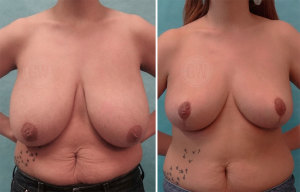
Before Breast Reduction Photo & 6 months After Photo
Breast reduction surgery, also known as reduction mammoplasty, reduces breast size and weight by removing breast tissue, fat and skin. It may be considered by people experiencing concerns related to large breasts, including neck, shoulder or back discomfort, skin irritation, bra strap pressure or difficulty with physical activity. For some patients, it may help address symptoms associated with breast weight, although outcomes vary. Dr Guy Watts performs breast reduction surgery as part of his breast surgery procedures following individual consultation.
Dr Guy Watts is a Specialist Plastic & Reconstructive Surgeon and a Fellow of the Royal Australasian College of Surgeons. He consults from his clinic in West Perth, Western Australia, and performs surgery in accredited hospital settings. During consultation, Dr Watts assesses anatomy, symptoms, medical history and expectations before discussing whether surgery may be appropriate.
WHAT IS BREAST REDUCTION SURGERY?
Breast reduction surgery is performed to reduce the size and weight of the breasts. The procedure usually involves removing excess breast tissue, fat and skin, repositioning the nipple and areola, and reshaping the remaining breast tissue. The amount of tissue removed varies between patients and depends on breast size, anatomy, symptoms, skin quality and surgical planning.
This is not a standardised procedure performed the same way for every person. Dr Guy Watts plans breast reduction surgery according to each patient’s anatomy, medical history and reasons for seeking advice. The aim of consultation is to provide clear information about what may be surgically possible, what the limitations are, and what risks should be considered before making a decision.
BREAST REDUCTION AT A GLANCE
Breast reduction surgery, also known as reduction mammoplasty, is planned according to each patient’s anatomy, symptoms, medical history and expectations. The details below provide a general overview only, as suitability, recovery and surgical planning vary between patients.
- Procedure: Breast Reduction surgery / Reduction Mammoplasty
- Common concerns: Breast weight, bra strap pressure, skin irritation, neck, shoulder or back pain
- Anaesthesia: Usually performed under general anaesthesia
- Hospital setting: Performed in accredited hospital facilities
- Consultation location: West Perth, Western Australia
- Recovery: Varies between patients and depends on the extent of surgery, work duties and healing
- Scarring: Expected; scar pattern depends on the surgical technique used
- Suitability: Assessed individually by Dr Guy Watts during consultation
- Risks: All invasive surgery carries risks, including bleeding, infection, delayed wound healing, scarring, sensation changes and asymmetry
- Results: Outcomes vary and cannot be guaranteed
WHY MIGHT I CONSIDER BREAST REDUCTION SURGERY?
People consider breast reduction surgery for a range of physical and practical reasons. Some patients seek advice because breast weight may be contributing to neck, shoulder or back discomfort. Others experience skin irritation beneath the breast fold, pressure from bra straps, difficulty finding supportive garments or discomfort during physical activity.
This page does not claim that breast reduction surgery will resolve symptoms for every person. Some patients report changes in physical symptoms after surgery, but each person’s experience is different. During consultation in Perth, Dr Guy Watts will assess whether breast size may be contributing to the patient’s concerns and whether surgery may be an appropriate option.
Common reasons patients seek advice include:
- Neck, shoulder or back discomfort associated with breast weight
- Skin irritation or chafing beneath the breast fold
- Bra strap pressure or difficulty with supportive garments
- Discomfort during exercise or daily activities
- Breast asymmetry or breast size concerns
DO I NEED A BREAST REDUCTION OR A BREAST LIFT?
Breast reduction and breast lift surgery are related procedures, but they are not the same. Breast reduction surgery focuses on reducing breast volume and weight by removing breast tissue, fat and skin. Breast lift surgery, also known as mastopexy, primarily addresses breast position and excess skin without necessarily removing a significant amount of breast tissue.
For many patients, breast reduction surgery also includes repositioning the nipple and areola as part of the reduction. Dr Guy Watts will explain the difference between these procedures during your consultation and discuss which approach may be suitable based on breast size, tissue volume, nipple position, skin quality and your concerns.
The main differences are:
- Breast reduction reduces breast volume and weight
- Breast lift surgery primarily addresses breast position
- Both procedures may involve nipple and areola repositioning
- The appropriate procedure depends on anatomy and concerns
- A consultation is required before advice can be individualised
WHO IS DR GUY WATTS?
Dr Guy Watts is a Specialist Plastic & Reconstructive Surgeon based in West Perth, Western Australia. He is a Fellow of the Royal Australasian College of Surgeons and consults with patients considering breast reduction surgery, breast lift surgery and other breast procedures.
Dr Watts provides individual consultation, surgical planning and post-operative follow-up care. During consultation, he assesses each patient’s anatomy, medical history, symptoms and expectations before discussing whether surgery may be appropriate.
REQUEST AN APPOINTMENT
WHAT HAPPENS AT MY BREAST REDUCTION CONSULTATION IN PERTH?
A breast reduction consultation with Dr Guy Watts in West Perth involves a detailed discussion about symptoms, medical history, previous surgery, medications, pregnancy history, breastfeeding history and expectations. Dr Watts will ask about physical concerns such as neck, shoulder or back discomfort, skin irritation, bra strap pressure and activity limitations.
The consultation may include breast measurements, assessment of breast position, evaluation of nipple and areola position, review of skin quality and discussion of possible incision patterns. Dr Watts will also explain risks, recovery, scarring, changes in nipple sensation and possible effects on breastfeeding. Patients are encouraged to ask questions and take time to consider the information provided.
A consultation may include discussion of:
- Symptoms and reasons for considering surgery
- Medical history, medications and previous procedures
- Breast measurements and physical assessment
- Surgical techniques and scar placement
- Risks, recovery and expected follow-up care
WHAT ARE THE DIFFERENT TYPES OF BREAST REDUCTION SURGERY?
There are several breast reduction techniques, and the most suitable approach depends on breast size, breast position, skin quality, nipple and areola position, and the amount of tissue to be removed. Dr Guy Watts will assess these factors during consultation before discussing which surgical approach may be appropriate.
The main differences between techniques usually relate to incision placement, scar pattern and how the breast tissue is reshaped. All breast reduction techniques involve scarring, and outcomes vary between patients.
Common breast reduction approaches include:
- Vertical breast reduction: Uses an incision around the areola and vertically down to the breast fold. This may be suitable for selected patients depending on anatomy and the amount of tissue to be removed.
- Anchor-pattern breast reduction: Uses an incision around the areola, vertically down to the breast fold and along the breast fold. This may be used when more tissue or skin needs to be removed.
- Liposuction-assisted breast reduction: May be considered in selected cases where fatty tissue contributes to breast volume, although it does not address significant skin excess or nipple position in the same way.
- Asymmetry-focused breast reduction: May be planned when one breast is larger than the other, although exact symmetry cannot be guaranteed.
- Revision breast reduction: May be considered for patients who have had previous breast surgery and require further assessment before any additional procedure is discussed.
AM I SUITABLE FOR BREAST REDUCTION SURGERY?
Breast reduction surgery may be suitable if you have completed breast development and have physical or practical concerns related to breast size. Suitability depends on general health, breast anatomy, skin quality, smoking status, weight stability, medical history and expectations.
A consultation with Dr Guy Watts in West Perth allows these factors to be assessed in detail. Dr Watts may also discuss previous breast surgery, pregnancy history, breastfeeding plans, family history of breast disease, medications and whether breast imaging or further medical review is required before surgery can be considered.
Suitability may depend on:
- General health and medical history
- Breast size, position and skin quality
- Smoking or nicotine use
- Weight stability
- Future pregnancy or breastfeeding plans
WHEN MIGHT BREAST REDUCTION SURGERY NOT BE SUITABLE FOR ME?
Breast reduction surgery may not be recommended for every patient. Surgery may need to be delayed if you are actively smoking, have unmanaged medical conditions, have unstable weight or are planning pregnancy in the near future. These factors can affect wound healing, recovery and longer-term breast changes.
In some situations, Dr Guy Watts may recommend further medical assessment, lifestyle changes or additional time before proceeding. This is part of responsible surgical planning and supports informed decision-making. Patients should have enough information to understand the likely limitations, risks and recovery requirements before deciding whether to proceed.
Surgery may need to be delayed or reconsidered if there is:
- Active smoking or recent nicotine use
- Unstable weight
- Unmanaged medical conditions
- Planned pregnancy in the near future
- Expectations that surgery cannot reasonably address
HOW IS BREAST REDUCTION SURGERY PERFORMED?
Breast reduction surgery is usually performed under general anaesthesia in an accredited hospital setting. During the procedure, Dr Guy Watts removes excess breast tissue, fat and skin according to the surgical plan discussed during consultation.
The nipple and areola are usually repositioned while maintaining their attachment to underlying tissue where possible. The remaining breast tissue is then reshaped, and the incisions are closed with sutures. Dressings and a supportive post-operative bra are usually applied after surgery.
The procedure may involve:
- Removal of breast tissue, fat and skin
- Repositioning of the nipple and areola
- Reshaping of the remaining breast tissue
- Closure of incisions with sutures
- Dressings and post-operative support garments
BREAST REDUCTION BEFORE AND AFTER PHOTOS
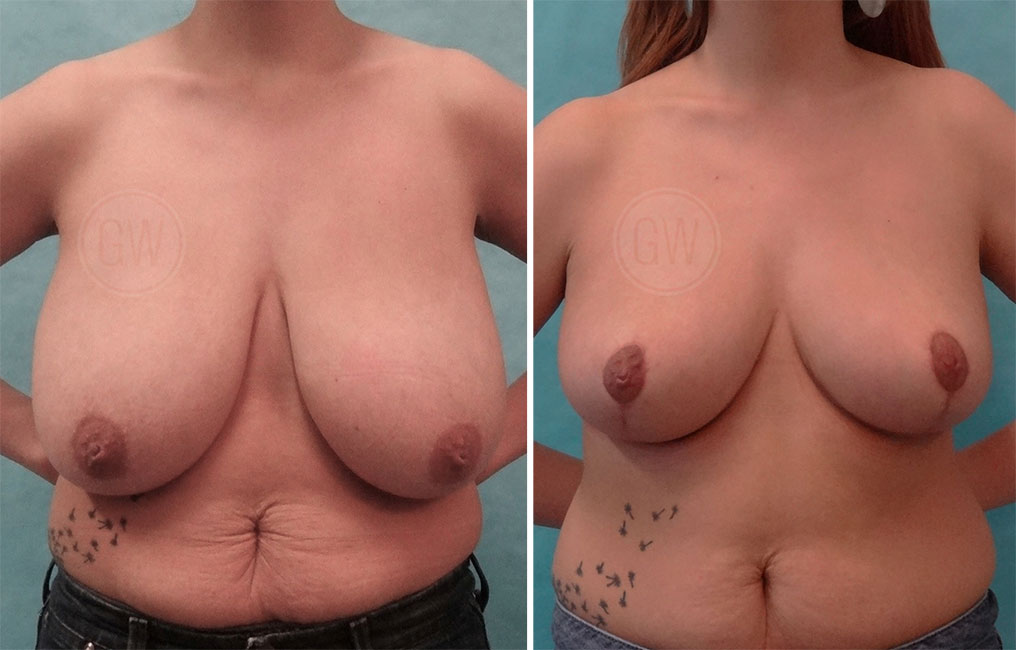
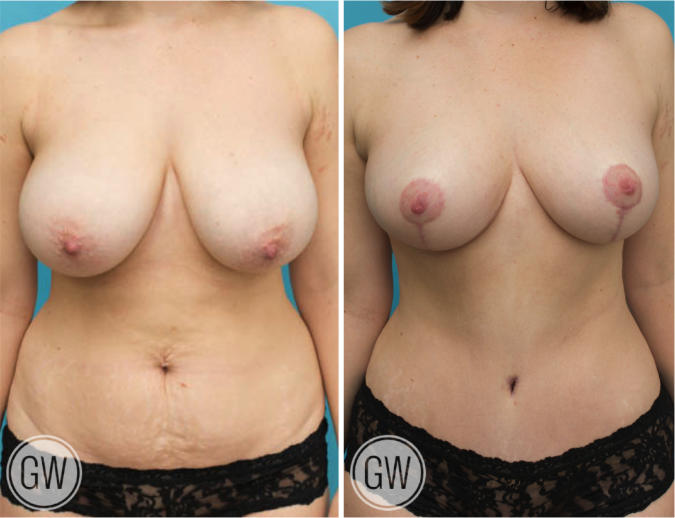
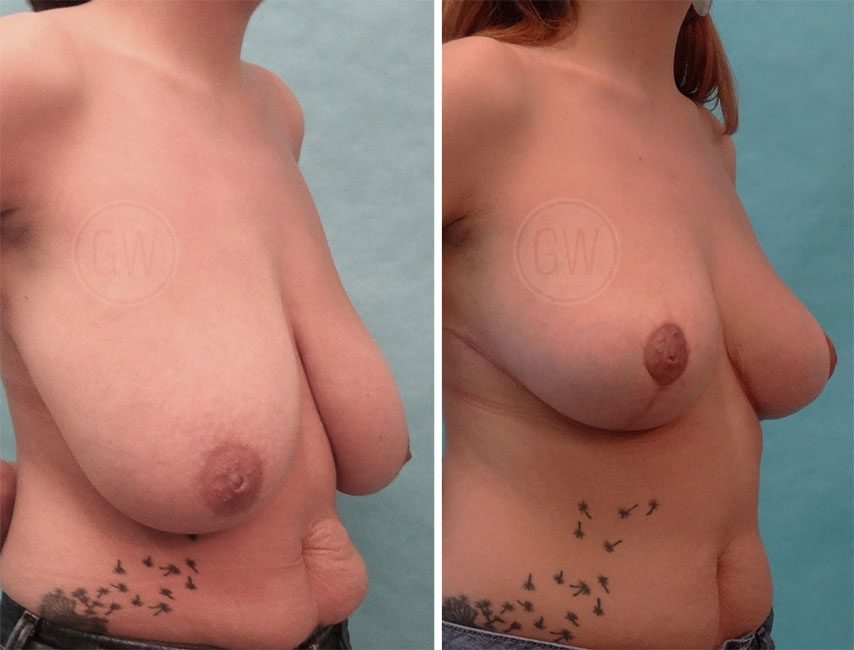

Breast reduction before and after photos can help patients understand the types of changes that may occur after surgery. However, these images show individual patient outcomes only and should not be used to predict what another patient may experience.
Before viewing photos, consider:
- Individual outcomes vary between patients
- Photos do not guarantee or predict your result
- Lighting, pose and timing should be consistent
- Scarring, recovery and risks should be understood
- A consultation is required to discuss your individual suitability
HOW CAN I REQUEST A BREAST REDUCTION CONSULTATION IN PERTH?
If you are considering breast reduction surgery, you can request a consultation with Dr Guy Watts in West Perth. During consultation, Dr Watts will assess your anatomy, symptoms, medical history and expectations before discussing whether surgery may be appropriate.
Breast reduction surgery is an invasive procedure, and all surgery carries risks. Outcomes vary between patients, so it is important to take time to consider the information provided.
REQUEST AN APPOINTMENT
WHAT CAN I EXPECT DURING BREAST REDUCTION RECOVERY?
Recovery after breast reduction surgery varies between patients. Swelling, bruising, tightness, discomfort and changes in breast sensation are common in the early stages. Patients are usually advised to wear a supportive post-operative bra and avoid strenuous activity, heavy lifting and upper body exercise for the period recommended by Dr Guy Watts.
Many patients need time away from work, particularly if their role involves lifting, driving, physical activity or prolonged standing. Follow-up appointments are important so that wound healing, swelling, scar development and recovery progress can be monitored.
Recovery commonly involves:
- Swelling, bruising and tightness
- Wound care and dressings
- Use of a post-operative bra
- Time away from work and physical duties
- Follow-up appointments with Dr Watts
WHAT IS THE BREAST REDUCTION RECOVERY TIMELINE?
Recovery after breast reduction surgery varies between patients. The timeline below is a general guide only, as healing depends on the extent of surgery, individual health, work duties, wound healing and Dr Guy Watts’ post-operative instructions.
✓ First Few Days
Swelling, bruising, tightness and discomfort are common in the first few days after surgery. Patients are usually advised to rest, wear their post-operative support garment and avoid lifting, reaching or unnecessary arm strain.
✓ 1 – 2 Weeks
Many patients continue to experience swelling, bruising and reduced energy during this stage. Light daily activities may gradually resume, but work, driving and physical duties should only be restarted when advised.
✓ 3 – 6 Weeks
Activity may gradually increase if healing is progressing as expected. Strenuous exercise, heavy lifting and upper body training should be avoided until Dr Watts confirms it is appropriate.
✓ Several Months
Breast shape, swelling, sensation and scar appearance continue to change over several months. Scars may appear firm, red or raised at first, then gradually soften and fade, although scar healing varies between patients.
Recovery may involve:
- Wearing a post-operative support garment
- Taking time away from work and physical duties
- Avoiding heavy lifting and strenuous activity
- Attending follow-up appointments
- Monitoring for increasing pain, redness, fever, swelling or unusual discharge
WHAT SCARS WILL I HAVE AFTER BREAST REDUCTION SURGERY?
Scarring is an expected part of breast reduction surgery. The position and length of scars depend on the incision pattern used. Scars commonly sit around the areola, vertically from the areola to the breast fold and, in some cases, along the breast fold.
Scars usually change over time. They may appear red, raised or firm in the early stages before gradually softening and fading. Scar appearance after breast reduction varies between patients and is influenced by genetics, skin type, wound healing, smoking, sun exposure, scar care and complications such as delayed wound healing.
Scarring may be affected by:
- Incision pattern
- Skin type and genetics
- Smoking or nicotine use
- Wound healing
- Sun exposure and scar care
WHAT SHOULD I KNOW ABOUT BREAST REDUCTION SURGERY COSTS?
The cost of breast reduction surgery varies between patients because each procedure is planned individually. Factors such as the extent of surgery, hospital requirements, anaesthesia, surgical planning and post-operative care can all affect the overall cost.
An accurate estimate can only be provided after consultation with Dr Guy Watts, once your anatomy, symptoms, medical history and surgical requirements have been assessed. The clinic team can explain the relevant fees and what is included before you decide whether to proceed.
Cost can depend on:
- The complexity of the procedure
- Hospital and anaesthesia requirements
- The surgical technique recommended
- Post-operative garment and follow-up needs
- Whether further assessment is required before surgery
Depending on the reason for surgery and relevant eligibility requirements, some patients may wish to read more about Medicare and breast reduction surgery.
GUIDE TO BREAST REDUCTION SURGERY
Guide To Breast Reduction
WHAT ARE THE RISKS OF BREAST REDUCTION SURGERY?
All surgical procedures carry risks. Breast reduction surgery has general surgical risks as well as risks specific to breast surgery. These may include bleeding, infection, delayed wound healing, fluid collection, changes in nipple or breast sensation, visible scarring, asymmetry, changes in breast shape, difficulty breastfeeding and the need for revision surgery.
More serious but less common risks include blood clots, anaesthesia-related complications and partial or complete loss of nipple or areola tissue. Some patients have a higher risk of complications due to smoking, medical conditions, higher body weight, certain medications or previous surgery. Dr Guy Watts will discuss these risks during consultation and explain how they may apply to the individual patient.
Possible risks include:
- Bleeding, infection or delayed wound healing
- Changes in nipple or breast sensation
- Visible, raised or widened scars
- Breast asymmetry or shape change
- Breastfeeding changes or revision surgery
WHO PERFORMS BREAST REDUCTION SURGERY IN PERTH?
Dr Guy Watts is a Specialist Plastic & Reconstructive Surgeon based in West Perth, Western Australia. He consults with patients considering breast reduction surgery, breast lift surgery and other breast procedures. His role is to assess suitability, explain surgical options and support patients through an informed decision-making process.
Dr Watts’ approach includes detailed consultation, individualised surgical planning, discussion of risks and recovery, and follow-up care after surgery. Patients considering breast reduction surgery in Perth can book a consultation to discuss their symptoms, anatomy, expectations and suitability.
Key details:
- Specialist Plastic & Reconstructive Surgeon
- Based in West Perth, Western Australia
- Individual consultation and assessment
- Discussion of risks, scarring and recovery
- Follow-up care after surgery
HOW CAN I BOOK A BREAST REDUCTION CONSULTATION IN PERTH?
If you are considering breast reduction surgery in Perth, a consultation with Dr Guy Watts can help determine whether the procedure may be suitable for you. During the consultation, Dr Watts will assess your anatomy, symptoms, medical history and expectations before discussing surgical options, risks and recovery.
Patients are encouraged to take time to consider the information provided before making a decision. Breast reduction surgery is an invasive procedure and should only be considered after careful assessment and informed consent.
Contact us or call 08 9286 1600 to arrange your plastic surgeon consultation in Perth.
Please email us for more information: admin@guywattsplasticsurgeon.com.au
BREAST REDUCTION FAQS
Could breast reduction surgery change how my breasts feel when I exercise?
Some patients seek advice because breast weight affects comfort during activity. Breast reduction surgery may alter breast size and weight, but comfort during exercise after surgery varies and depends on healing, support garments, activity type and individual recovery.
Will my posture automatically change after breast reduction surgery?
Posture changes should not be assumed or guaranteed after surgery. Some people notice changes in how they carry their upper body, but posture is influenced by many factors, including muscle strength, spinal alignment, work habits and physical conditioning.
Can breast reduction surgery affect how bras fit later?
Yes, bra fit can change after breast reduction surgery because breast volume, position and shape may be altered. Patients are usually advised to wait until swelling has settled before being professionally fitted for long-term bras.
Could my breast reduction result change if my weight changes?
Yes, weight changes can affect breast size, breast position and skin quality after surgery. Maintaining a stable weight may help reduce some changes, although natural changes over time can still occur.
Can breast reduction surgery be performed if my breasts are different sizes?
Breast asymmetry is common, and it may be considered during surgical planning. Surgery may reduce some asymmetry, but exact symmetry cannot be guaranteed.
Will I need breast imaging before breast reduction surgery?
Some patients may need breast imaging before surgery depending on age, medical history, family history, symptoms or previous screening. Dr Guy Watts will advise whether imaging or further assessment is required during consultation.
Could breast reduction surgery affect nipple position differently on each side?
Nipple and areola position is planned carefully, but small differences between sides can occur after surgery. Healing, swelling, breast tissue behaviour and pre-existing asymmetry may all influence the final position.
Can I sleep on my side after breast reduction surgery?
Sleeping position advice varies depending on the surgical plan and early recovery. Many patients are advised to avoid pressure on the breasts initially and follow the specific instructions provided after surgery.
Could scars look different on each breast?
Yes, scars can heal differently on each side of the body. Differences may relate to skin tension, wound healing, scar care, genetics, movement and any healing concerns after surgery.
Will breast reduction surgery affect future breast checks?
Breast reduction surgery can change breast tissue and may leave internal scarring. Patients should continue routine breast screening and tell their GP, breast physician or imaging provider about any previous breast surgery.
Next Steps on Your Plastic Surgery Journey
PLEASE TAKE INTO CONSIDERATION
Any surgical or invasive procedure carries risks. Before proceeding, you should seek a second opinion from an appropriately qualified health practitioner.