This website contains imagery which is only suitable for audiences 18+.


Upper Eyelid Surgery Perth
Upper eyelid surgery, or upper blepharoplasty, is a cosmetic procedure that removes excess skin, muscle, or fat from the eyelids to create a more rejuvenated appearance.
Upper Eyelid Surgery Perth
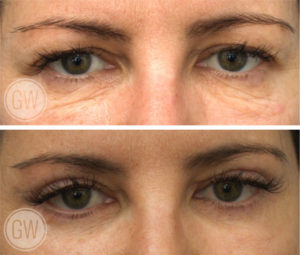
Upper and Lower Eyelid Surgery
Upper eyelid surgery is a specialised procedure performed to adjust anatomical changes in the upper eyelid region that may influence vision, physical comfort, or how the eyelids appear in relation to surrounding features. These changes may occur gradually over time or be influenced by inherited traits. In some cases, individuals report that their upper eyelid skin sits closer to the lash line or creates a sense of weight, especially during activities such as reading or using screens.
At his practice in Perth, Dr Guy Watts, Specialist Plastic and Reconstructive Surgeon, offers upper eyelid surgery as part of his focused work in facial surgery procedures. The surgical approach is tailored to the individual and considers factors such as skin texture, muscle tone, and brow position. Dr Watts applies his clinical experience and surgical training to develop a plan appropriate to each patient’s presentation and goals.
This page outlines what the procedure involves, who may consider it, what happens during the recovery period, and how the decision-making process is supported in a clinical setting. It is intended to provide factual, medically grounded information for individuals exploring this option.
What Is Upper Eyelid Surgery?
Upper eyelid surgery, also referred to as upper blepharoplasty, is a surgical procedure that focuses on the upper eyelid region. It involves adjusting the skin and, where appropriate, underlying tissue, to address structural changes that may influence function or appearance.
As skin elasticity changes with age, or where there is a natural predisposition to increased upper eyelid fullness, some individuals may experience tissue that folds closer to the lashes or interferes with their upper field of vision. Upper eyelid surgery aims to manage these changes by carefully adjusting the amount of skin or repositioning deeper tissue, where clinically appropriate.
Unlike non-surgical treatments, upper eyelid surgery involves a direct surgical approach with planned incisions and specific anatomical goals. Dr Watts will examine your eye region in detail to determine if the procedure aligns with your needs and medical history.
Download Dr Guy Watts’ Blepharoplasty Guide
Ultimate Guide To Blepharoplasty
Who May Consider This Procedure?
Upper eyelid surgery may be considered by individuals who:
- Experience changes in the shape or position of the upper eyelid skin that contribute to visual obstruction
- Notice skin resting closer to the eyelashes during everyday tasks
- Feel a persistent sense of weight or tightness around the upper eyelids, particularly later in the day
- Have difficulty with the application of eye products due to upper eyelid skin folds
- Prefer a surgical approach to modify eyelid features they have noticed changing over time
Suitability is determined during a consultation that includes a review of your medical history, a physical examination, and a discussion of your expectations. The decision to proceed with surgery is made collaboratively, with time for questions and discussion.
In some cases, individuals may be advised not to proceed with surgery due to health factors, eye conditions, or if non-surgical alternatives may be more appropriate.
What the Procedure May Address
The procedure is designed to manage physical changes affecting the upper eyelid area. These may include:
- Skin that has changed position over time and now sits closer to the eyelash line
- Areas of tissue prominence in the upper eyelid that do not respond to general lifestyle changes
- Changes that may be affecting the clarity of the upper visual field during certain activities
The aim of surgery is not to change how someone looks overall, but to adjust specific anatomical features of the upper eyelid that are creating physical or functional concerns.
If other factors such as brow position or lower eyelid changes are identified during consultation, Dr Watts may discuss whether these are contributing and, if relevant, whether additional procedures should be considered. This is done only in the context of clinical need.
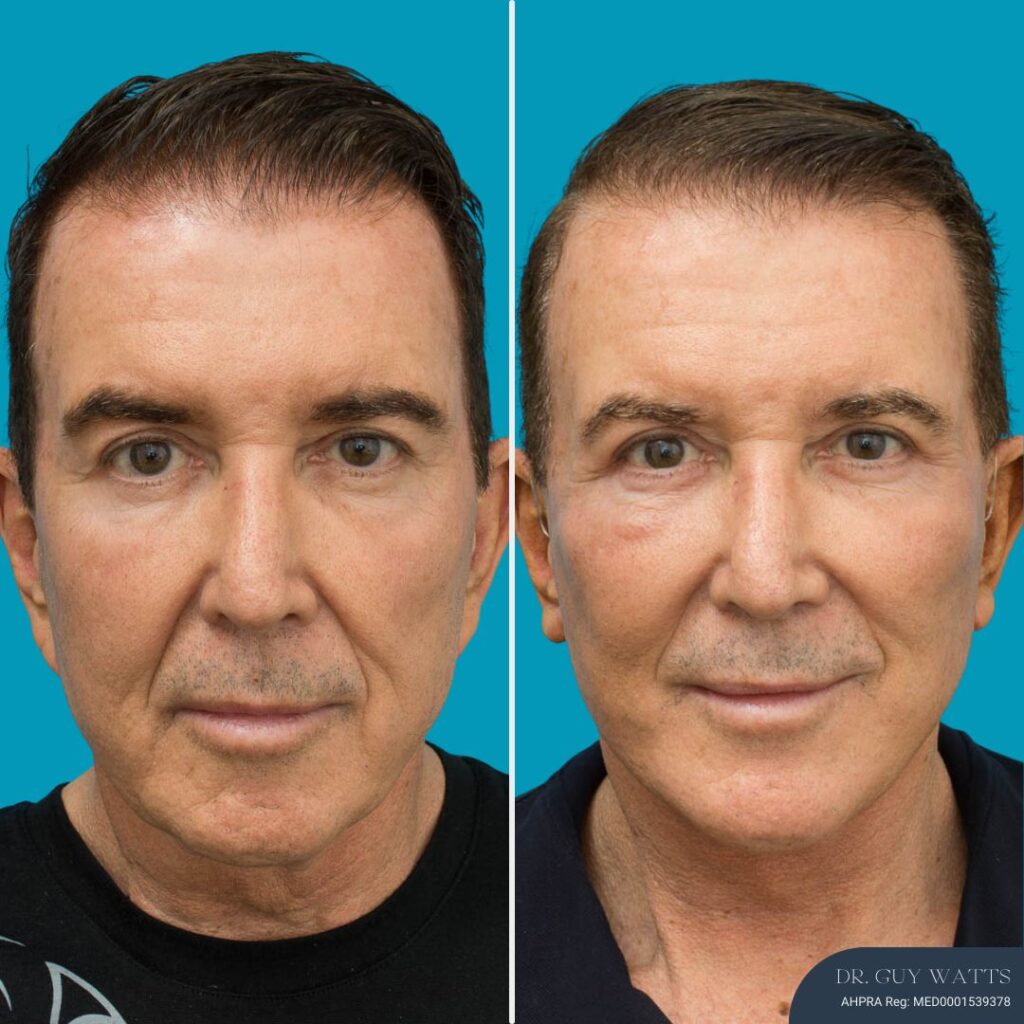
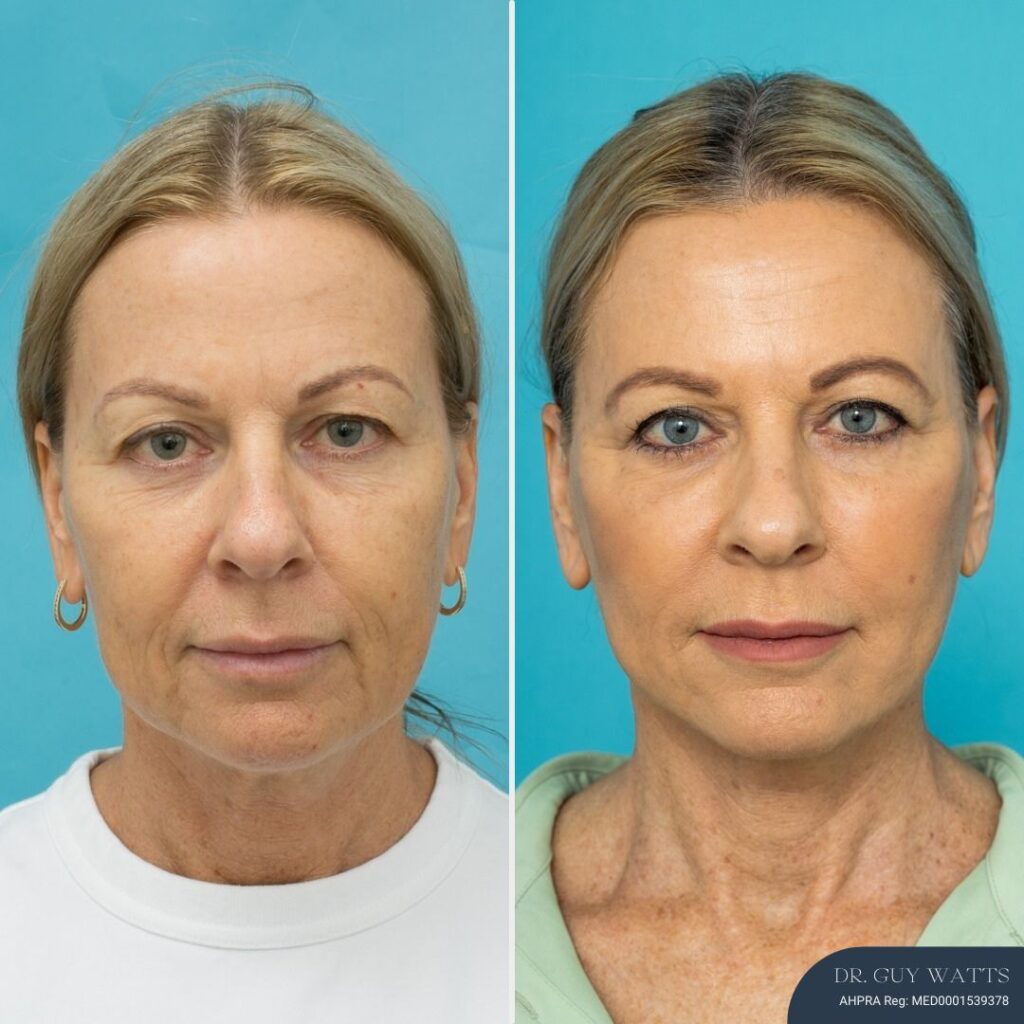
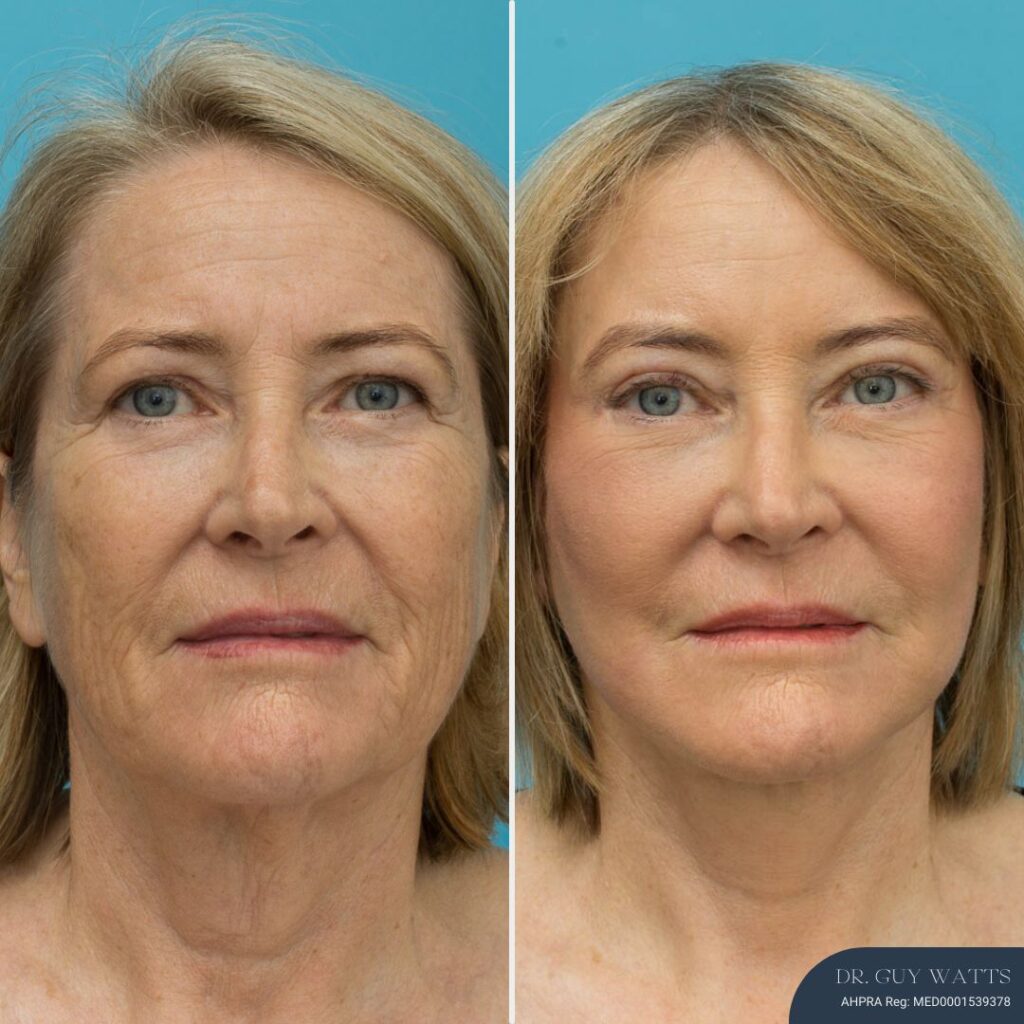
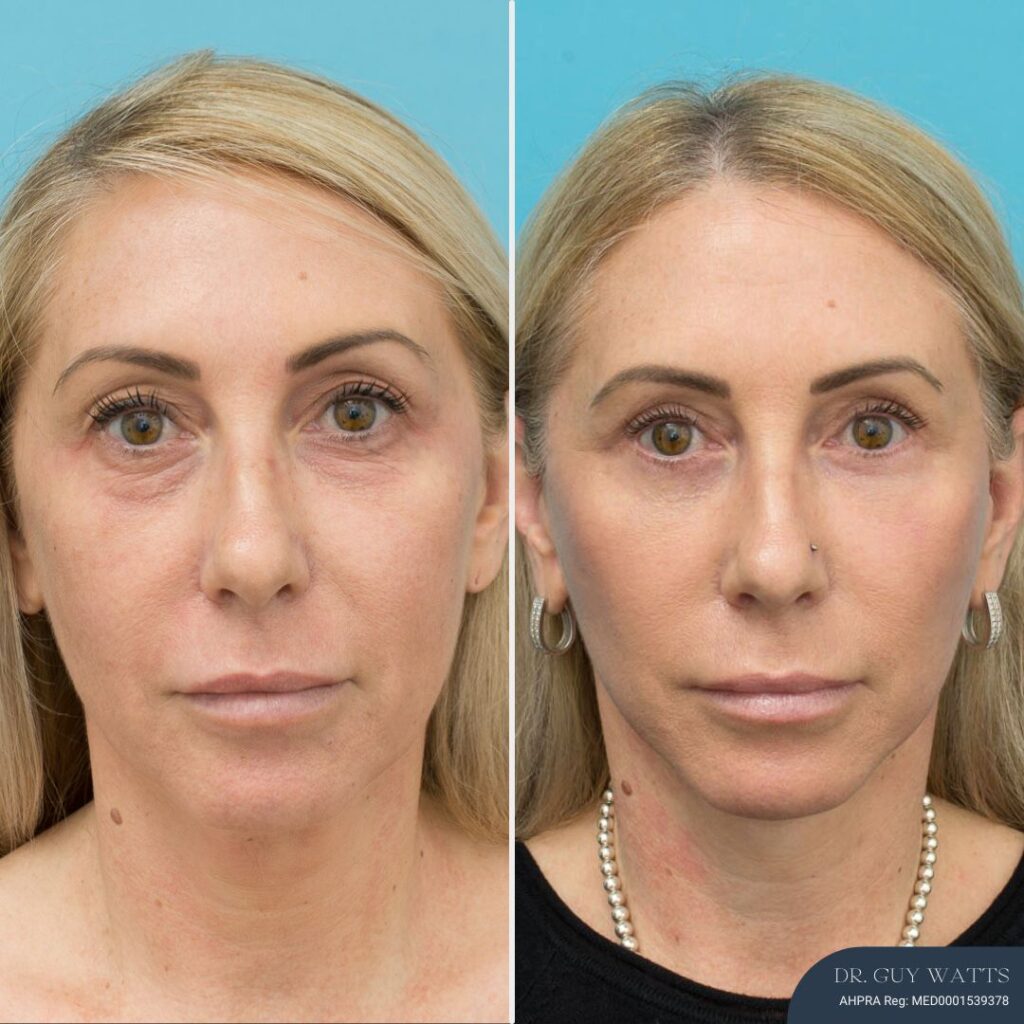
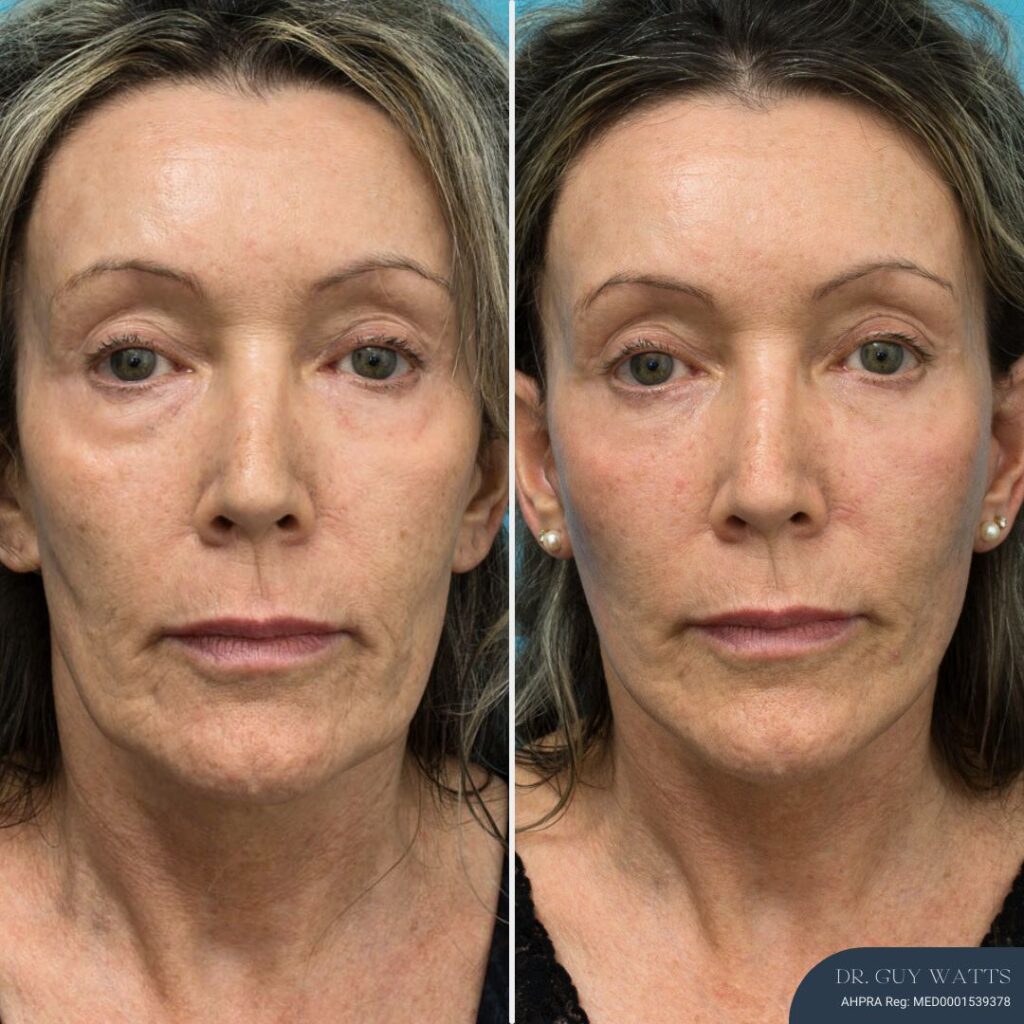
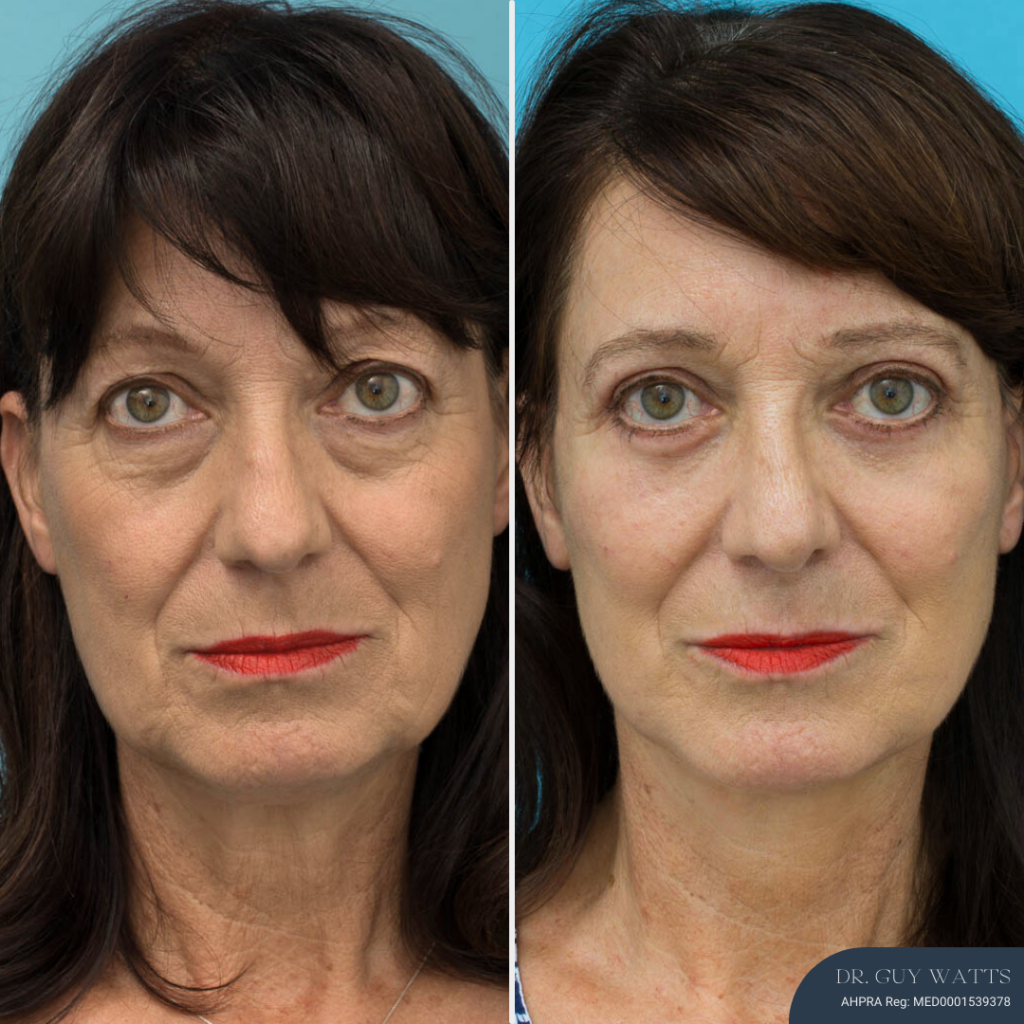
Viewing Clinical Photographs
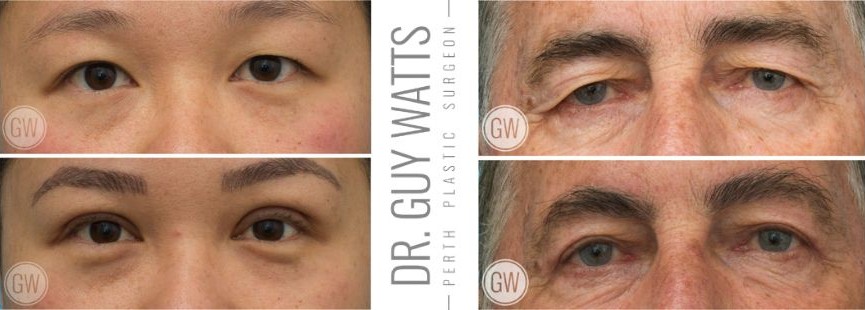
Clinical photographs of patients who have previously undergone upper eyelid surgery may be reviewed during consultation. These are used for educational purposes and shown in a clinical setting.
The purpose of showing these images is to help explain what is surgically possible in anatomical terms. It is important to understand that results vary from person to person and that these examples are not predictive. Dr Watts will explain how the surgical approach may differ in your case based on your anatomy and individual features.


What to Expect During Surgery
Upper eyelid surgery is performed in an accredited facility. It may be carried out under local anaesthesia with sedation, or under general anaesthesia, depending on your health and the planned extent of the procedure.
The procedure typically includes:
- A precisely placed incision along the natural crease of the upper eyelid
- Adjustment of skin, and where appropriate, muscle or fat tissue
- Closure of the incision using fine sutures to support alignment with the existing eyelid fold
The surgical process usually takes around one to two hours, although this may vary. Dr Watts uses a structured approach based on detailed anatomical planning and his clinical background in eyelid and facial procedures.
Surgical Considerations and Possible Risks
All surgery carries risk, and upper eyelid surgery is no exception. Dr Watts will discuss the risks in the context of your health and surgical plan.
These may include:
- Bruising and swelling, typically around the eyelid region
- Temporary tightness, dry eyes or watering
- Subtle differences in the shape or movement of each eyelid
- Scarring within the natural crease line
- Delayed wound healing or infection
- Rare complications such as bleeding, irritation or changes in vision
While the procedure is generally considered to have a low complication rate, outcomes are not guaranteed, and healing varies between individuals. Dr Watts will provide a clear explanation of what you may expect based on your history, anatomy, and goals.
Recovery Following Upper Eyelid Surgery
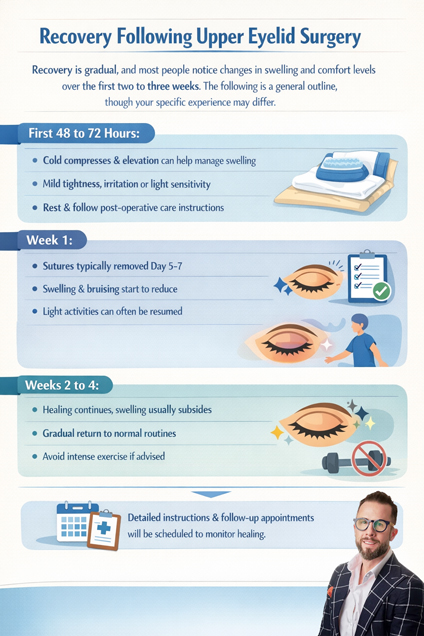
Eyelid surgery recovery is gradual, and most people notice changes in swelling and comfort levels over the first two to three weeks. The following is a general outline, though your specific experience may differ.
✓ First 48 to 72 hours:
- Cold compresses and elevation can help manage swelling
- Mild tightness, irritation or light sensitivity may occur
- It is important to rest and follow post-operative care instructions
✓ Week 1:
- Sutures are typically removed between day 5 and 7
- Swelling and bruising tend to reduce noticeably
- Light activities can often be resumed, depending on how you feel
✓ Weeks 2 to 4:
- Healing continues and visible swelling usually subsides
- Gradual return to normal routines is common
- You may be advised to delay some activities such as intense exercise
You will receive detailed post-operative instructions tailored to your situation, and follow-up appointments will be scheduled to monitor healing.
Longer Term Considerations
Upper eyelid surgery may provide a lasting anatomical change to the structure of the upper eyelids, but it does not stop natural changes that continue over time. The effects of ageing, sun exposure and lifestyle choices will continue to influence the skin and surrounding areas.
To support long-term results, Dr Watts encourages:
- Using sun protection, including sunglasses and hats
- Avoiding excessive pressure or rubbing of the eyelids
- Attending regular appointments with your general practitioner or eye care specialist if advised
In some cases, further procedures may be considered in the future, but this is based on clinical need and discussed only if relevant.
Blepharoplasty Before and After Photos
Fees for Upper Eyelid Surgery in Western Australia
The total fee for upper eyelid surgery varies based on the complexity of the procedure, anaesthesia type, and hospital or facility charges.
A written estimate will be provided during your consultation with Dr Watts, which outlines:
- The surgical fee
- Anaesthetic charges
- Hospital or day facility fees
- Post-operative follow-up appointments
If there is a documented visual field obstruction due to upper eyelid skin, a Medicare item number may apply. Dr Watts will advise if this is relevant during your assessment. Private health insurance may also contribute to some costs, depending on your level of cover and the provider’s policy.
You will have the opportunity to review all costs before proceeding. There is no obligation to book surgery at the time of consultation.
Preparing for Surgery
Preparation begins with a detailed consultation to review your health status, medications and any factors that could affect healing.
Before surgery, you may be asked to:
- Avoid certain medications or supplements that affect blood clotting
- Stop smoking if applicable, as this may influence healing
- Arrange for transport home and support in the initial recovery period
- Prepare your home with items such as clean linens, eye care supplies and access to cold compresses
You will receive a full pre-operative pack with instructions tailored to your needs. This includes fasting times, wound care information, and follow-up appointment dates.
Dr Watts and his team will provide support throughout the process to help ensure you feel prepared, informed and comfortable with your decision.
Upper Eyelid Surgery FAQs
Can upper eyelid surgery affect how my glasses or contact lenses fit?
Will my eye shape change after the procedure?
Does upper eyelid surgery affect blinking or tear production?
Can this procedure be done differently for men and women?
Will people notice I've had surgery?
Is eyelid asymmetry always addressed during surgery?
Can I sleep normally after the procedure?
How do I know if I'm eligible for a Medicare item number?
Does removing skin affect the heaviness I feel in my eyelids?
Can this procedure be combined with other facial surgery?
Medical References
Next Steps on Your Plastic Surgery Journey
PLEASE TAKE INTO CONSIDERATION
Any surgical or invasive procedure carries risks. Before proceeding, you should seek a second opinion from an appropriately qualified health practitioner.