This website contains imagery which is only suitable for audiences 18+.


Facelift Surgery for Men
Changes to the face occur gradually over time and differ between individuals. In men, these changes often involve shifts in skin behaviour, facial volume, muscle tone and the position of underlying soft tissues. These changes may become more noticeable in the lower face and neck as the years progress.
Facelift surgery, medically known as rhytidectomy, is a surgical procedure designed to address age-related changes in the face and neck by repositioning underlying structures and modifying excess skin where appropriate. When performed in male patients, the approach must account for differences in skin thickness, hairline position, beard growth patterns and facial anatomy.
Dr Guy Watts is a Specialist Plastic and Reconstructive Surgeon based in Perth, Western Australia, with specialist training and extensive clinical experience in facial surgery. This page provides detailed, factual information about facelift surgery for men, including suitability, how the procedure is performed, recovery considerations, potential risks and longer-term care.
The information provided is intended to assist with understanding the procedure and does not replace personalised medical advice obtained during a consultation.
FACELIFT SURGERY FOR MEN AT A GLANCE
Facelift surgery for men involves repositioning deeper facial tissues and adjusting skin to accommodate these structural changes. The procedure is usually performed under general anaesthesia in an accredited hospital setting.
Key considerations for men include:
- The procedure focuses on underlying facial structures rather than surface skin alone
- Incision placement is planned to account for male hairlines and beard growth
- Recovery progresses gradually and varies between individuals
- The aim is to maintain recognisable male facial features
- Age-related change continues over time following surgery
A consultation with Dr Guy Watts allows these factors to be discussed in relation to individual anatomy, health status and circumstances.
UNDERSTANDING FACELIFT SURGERY IN MALE PATIENTS
Facelift surgery involves repositioning facial tissues that have altered position over time. In men, these changes often present differently compared to women and require a tailored surgical approach.
Male facial skin is typically thicker and more adherent to underlying tissues. Beard-bearing skin requires specific consideration during surgical planning, particularly in the cheek, jawline, and neck regions. Incision placement takes into account beard-bearing areas and underlying anatomy to minimise disruption to hair-bearing skin.
Contemporary facelift techniques focus on the deeper facial support layer known as the superficial musculoaponeurotic system or SMAS. Repositioning this layer allows for structural support and reduces reliance on skin tension alone.
Dr Guy Watts approaches facelift surgery with detailed attention to anatomical relationships and proportional considerations. Surgical planning focuses on addressing age-related structural changes while taking into account the individual’s existing facial anatomy.
CONSIDERATIONS SPECIFIC TO MALE FACIAL ANATOMY
Male facial anatomy presents particular considerations that influence surgical planning. Thicker skin and increased vascularity can affect swelling patterns during recovery. Beard-bearing areas require precise planning to avoid changes in hair direction or shaving patterns.
Hairline position is another important factor. As male hairlines may change over time, incision placement is planned with both early healing and longer-term changes in mind.
Jaw structure, neck muscle configuration and facial fat distribution vary between individuals and influence surgical technique. These factors are assessed during consultation and incorporated into the surgical plan.
WHEN FACELIFT SURGERY MAY BE CONSIDERED
Facelift surgery is not determined by age alone. Men may consider this procedure for reasons related to structural changes of the face and neck that occur over time.
Facelift surgery may be considered in men who have:
- Observable changes in the jawline related to soft tissue descent
- Altered structural support affecting the lower face or neck
- Changes in facial folds associated with movement of underlying tissues
- Stable general health and no medical contraindications to surgery
- An understanding of the surgical process and realistic expectations regarding outcomes and recovery
Suitability for surgery is assessed during consultation. Dr Guy Watts, Specialist Plastic and Reconstructive Surgeon, reviews facial anatomy, skin characteristics, medical history, current medications, smoking status, and lifestyle factors before providing individualised advice.

WHAT FACELIFT SURGERY MAY ADDRESS
Facelift surgery aims to address structural changes that occur in the face and neck over time. These changes are influenced by gravity, tissue behaviour, volume redistribution and changes in skin characteristics.
In male patients, facelift surgery may assist with:
- Changes in the position of facial soft tissues
- Alteration along the jawline
- Changes in the neck region
- Deepening facial folds in the lower face
- Reduced distinction between facial regions
The procedure does not stop ageing. Instead, surgery may reposition selected facial tissues according to the individual anatomy and surgical plan. The degree of change varies between individuals and depends on anatomy, skin characteristics and surgical approach.
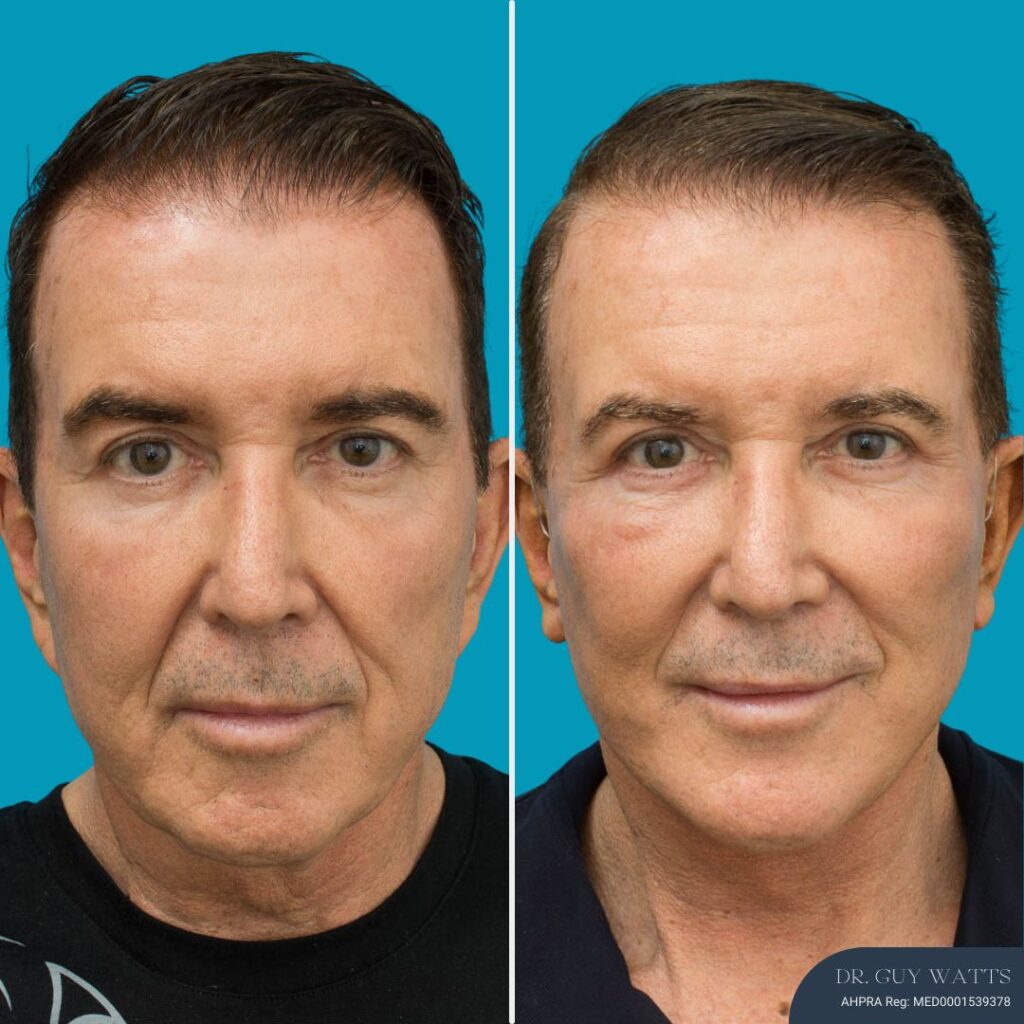
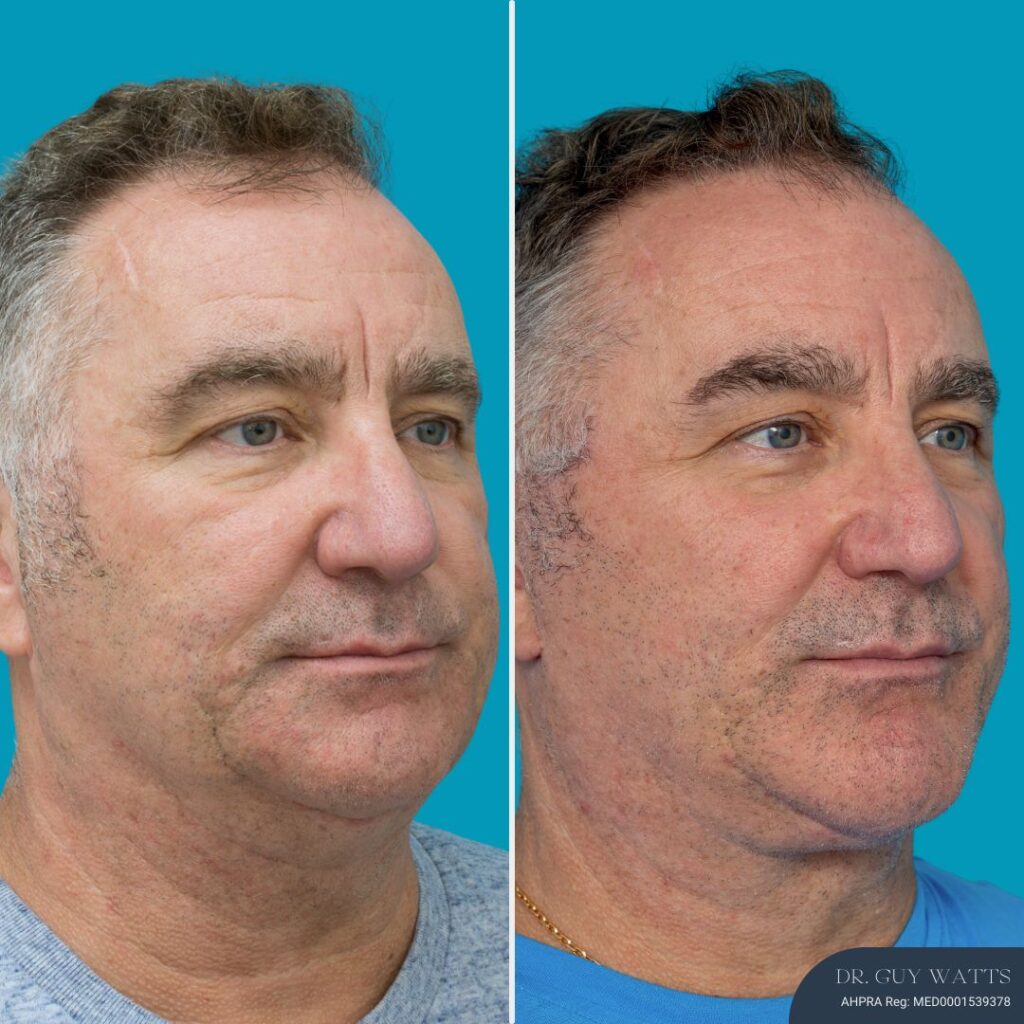
CLINICAL PHOTOGRAPHY: FACELIFT SURGERY IN MEN
Clinical photographs are used as an educational tool during consultation to assist in the discussion. Images shown represent real patients who have provided informed consent in accordance with Australian medical advertising guidelines.
It is important to understand that:
- Outcomes vary between individuals
- Lighting, expression and healing stage influence appearance
- Results depend on anatomy, surgical technique and recovery
- Photographs do not predict or guarantee outcomes
Clinical photography is used to support understanding rather than to suggest predictable results.
MALE FACELIFT BEFORE AND AFTER PHOTOS
Before and after photos may be discussed during consultation where appropriate and in accordance with AHPRA advertising requirements. Images should be understood as examples only, as individual anatomy, healing, scarring and surgical outcomes vary between patients.

Download Dr Watts’ Guide to Face and Neck Lift
Ultimate Guide To Face and Neck Lift
HOW FACELIFT SURGERY IS PERFORMED
Facelift surgery is usually performed under general anaesthesia in a licensed hospital facility in Perth. Procedure duration varies depending on the surgical plan.
✓ Incision Planning
Incisions are planned with reference to the contours of the ear and hairline. Placement is individualised based on anatomical assessment, including factors such as beard growth patterns.
✓ Tissue Repositioning
Underlying facial support structures are repositioned to address age-related change. Skin is then adjusted to accommodate these changes without excessive tension.
✓ Neck Treatment
Where indicated, additional steps may be taken to address changes in neck muscles or tissue position. This is assessed on an individual basis.
✓ Closure and Dressings
Incisions are closed in layers using fine sutures. Dressings and, in some cases, temporary drains may be used to assist early healing.

POSSIBLE RISKS AND COMPLICATIONS TO CONSIDER
All surgical procedures carry risks. Facelift surgery is no exception.
Potential risks include:
- Bleeding or fluid collection
- Infection
- Delayed wound healing
- Scarring
- Temporary or permanent changes in sensation
- Facial nerve weakness, usually temporary but rarely permanent
- Asymmetry
- Changes in hair or beard growth patterns
- Need for further surgery
These risks are discussed in detail during consultation. While strategies are used to reduce the likelihood of complications, they cannot be eliminated entirely.
WHAT RECOVERY TYPICALLY INVOLVES
Recovery following facelift surgery progresses over time and varies between individuals.
✓ Early Recovery
Swelling and bruising are common in the initial weeks. Discomfort is managed with prescribed medication. Follow-up appointments are scheduled to monitor healing.
✓ Intermediate Recovery
As healing progresses, swelling gradually reduces and bruising fades. Facial sensation and movement continue to change over time. Light activities may be resumed as advised.
✓ Longer-Term Healing
Healing continues for several months, with gradual tissue settling and scar maturation. Ongoing review is provided throughout this period.
CARING FOR RESULTS OVER TIME
Facelift surgery does not prevent future age-related change. Several factors may influence how long facelift-related changes remain noticeable, including anatomy, skin characteristics, lifestyle and ongoing ageing.
Long-term care may involve sun protection and general skin care as part of overall health maintenance. Decisions about any future procedures are individual and based on clinical assessment and changing circumstances, rather than predetermined schedules.
ONGOING FOLLOW-UP AND SURGICAL REVIEW
Follow-up care is an important part of facelift surgery. Postoperative appointments allow healing to be monitored and questions to be addressed as recovery progresses.
These reviews support appropriate management of swelling, sensation changes and scar development over time.
REQUEST AN APPOINTMENT
UNDERSTANDING THE COST OF FACELIFT SURGERY IN WESTERN AUSTRALIA
The cost of facelift surgery in Perth varies depending on the complexity of the procedure, hospital and anaesthesia fees, and postoperative care requirements.
A personalised cost outline is provided during consultation. Pricing is discussed transparently and in accordance with Australian medical guidelines.
PREPARING FOR FACELIFT SURGERY
Preparation contributes to surgical planning and recovery.
Patients may be advised to undergo medical assessments, modify medications under guidance, cease smoking well in advance, and arrange time away from work and home support. Detailed preoperative instructions are provided to assist preparation.

FACELIFT SURGERY FOR MEN FAQS
Does facial hair affect how facelift surgery is planned?
Beard growth patterns are considered when planning incisions because surgery may affect the position or direction of hair-bearing skin.
Will facelift surgery change how my face moves when I speak or smile?
Temporary changes in sensation or movement can occur during recovery. Facial movement typically continues to adjust as healing progresses.
How does male skin thickness influence recovery?
Thicker skin can influence swelling and bruising patterns following surgery. This is taken into account when planning both the procedure and postoperative care.
Can a facelift be performed if I have a receding hairline?
Yes. Hairline position is an important part of surgical planning, and incision placement is adjusted to account for current hair patterns and potential future changes.
Is facelift surgery only focused on the lower face?
Facelift surgery primarily addresses changes in the mid to lower face and neck. Other facial areas are assessed during consultation to determine whether additional or alternative procedures may be appropriate.
Will I still look like myself after surgery?
Facelift surgery addresses age-related structural changes affecting the face. Surgical planning is based on assessment of facial anatomy and proportional relationships, without the intention of altering individual facial identity.
How long do incision lines take to settle?
Incision lines continue to mature over several months. Their appearance typically changes gradually as part of the normal healing process.
Can weight changes affect facelift results?
Significant weight changes after surgery can influence facial volume and tissue behaviour. Maintaining a stable weight may help support longer-term outcomes.
What role does sun exposure play after facelift surgery?
Sun exposure can influence skin behaviour and scar maturation. Sun protection is generally recommended as part of longer-term skin care following surgery.
Is a second procedure ever required?
Some individuals choose further procedures at a later stage, while others do not. Decisions are based on individual circumstances and ongoing anatomical changes rather than routine timelines.
Medical References
- Evolution of SMAS Facelift Techniques and Outcomes https://www.sciencedirect.com/science/article/pii/S2352587823000219
- Facelift Surgical Techniques and Complications Review https://doi.org/10.1093/asj/sjab08
- Systematic Review Comparing SMAS and Deep Plane Facelifts https://link.springer.com/article/10.1007/s00266-025-05118-x
A CONSIDERED, INDIVIDUALISED APPROACH
Facelift surgery for men requires careful consideration of anatomy, health and longer-term implications. It is not a standardised procedure.
Dr Guy Watts, Specialist Plastic and Reconstructive Surgeon in Perth, Western Australia, approaches facelift surgery with a focus on patient education, anatomical understanding and ethical surgical practice. Consultation allows individuals to explore whether surgery is appropriate for their circumstances.
TAKE OUR QUIZ, AND FIND OUT IF YOU ARE READY FOR SURGERY
FURTHER READING
- Read Dr Guy Watts’ Procedure Page on Facelift Surgery
- Read Dr Guy Watts’ Procedure Page on SMAS Facelift
- Read Dr Guy Watts’ Procedure Page on Deep Plane Facelift
- Read Dr Guy Watts’ Blog on Facelift Recovery
- Read Dr Guy Watts’ Blog on Facelift Scars
- Read Dr Guy Watts’ Blog on Facelift Longevity
- Read Dr Guy Watts’ Blog on Facelift and Neck Lift Combined Surgery
Next Steps on Your Plastic Surgery Journey
PLEASE TAKE INTO CONSIDERATION
Any surgical or invasive procedure carries risks. Before proceeding, you should seek a second opinion from an appropriately qualified health practitioner.