This website contains imagery which is only suitable for audiences 18+.

Revision Facelift Perth
Revision Facelift: Key Information at a Glance
A revision facelift is a facial surgical procedure performed following a previous facelift or neck lift. It involves assessment of anatomical changes that may be present after earlier surgery or that have developed over time due to healing processes and age-related change.
Revision facelift surgery differs from primary facial surgery due to factors such as existing scar tissue, altered anatomy, and changes in tissue behaviour. These considerations require detailed assessment and careful surgical planning on an individual basis.
Dr Guy Watts is a Specialist Plastic and Reconstructive Surgeon based in Perth, Western Australia. He provides consultation for patients seeking assessment for revision facial surgery, with discussions focused on anatomy, surgical options, potential limitations, and expected variability in outcomes.
This page provides general information about revision facelift surgery, including assessment considerations, surgical technique, potential risks, recovery, and longer-term care. All treatment decisions are made following individual consultation and clinical evaluation.
UNDERSTANDING REVISION FACELIFT SURGERY
A revision facelift is a surgical procedure performed following a previous facelift or related facial lifting operation. Assessment may identify anatomical changes associated with earlier surgery, including scar characteristics, tissue position, asymmetry and changes that have developed during healing or over time.
Revision facelift surgery does not reverse ageing or return the face to an earlier state. Surgical planning instead considers the current anatomy, existing tissues, the effects of previous procedures and changes that have developed over time.
Each revision facelift is approached on an individual basis. In some cases, assessment may identify localised areas for consideration, while in others a broader surgical approach may be discussed. The type of surgery considered depends on factors such as the previous surgical technique, the time elapsed since prior surgery, current skin characteristics, underlying anatomy, and general health. Previous procedures may have involved different approaches to the superficial musculoaponeurotic system (SMAS) or deeper facial tissues, which can influence subsequent surgical planning.
During consultation, Dr Guy Watts, Specialist Plastic and Reconstructive Surgeon, reviews prior surgical history and performs a detailed facial assessment. This process informs discussion about whether revision surgery may be appropriate, with emphasis on anatomical findings, potential limitations, and the inherent variability of surgical outcomes.
WHO MAY BE CONSIDERED FOR REVISION FACELIFT SURGERY
Individuals considering revision facelift surgery present with a wide range of prior surgical histories and anatomical findings. Suitability is assessed on an individual basis following comprehensive consultation and clinical evaluation.
Revision facelift surgery may be considered in individuals who:
- Have previously undergone a facelift or neck lift
- Demonstrate changes in tissue position affecting the lower face or neck on clinical assessment
- Have scar characteristics that warrant review
- Show asymmetry of the face or neck following prior surgery
- Report symptoms such as tightness or altered sensation associated with previous facial surgery
- Are medically suitable for surgery and able to participate in post-operative care and follow-up
Revision surgery is not appropriate for all individuals. Those with unmanaged medical conditions, anatomical limitations, or factors that cannot be addressed safely through surgery may be advised against proceeding.
Dr Guy Watts, Specialist Plastic and Reconstructive Surgeon, places emphasis on patient safety and informed decision-making. Consultation involves detailed discussion of anatomical findings, potential limitations, and alternative management options where appropriate.

WHAT REVISION FACELIFT MAY ADDRESS
Revision facelift surgery can address a range of structural and tissue-related changes following previous facial surgery. The focus is on managing specific anatomical concerns rather than pursuing a particular appearance.
Depending on individual circumstances, revision surgery may help address:
- Changes in tissue position in the lower face or neck over time
- Irregular tissue transitions related to prior surgery or healing
- Scar visibility or thickness
- Differences between the left and right sides of the face or neck
- Areas of tightness or altered movement affecting comfort
- Age-related changes that have developed since the original procedure
It is important to understand that revision facelift surgery cannot remove all evidence of prior surgery. Outcomes are influenced by existing scar tissue, skin behaviour, and blood supply. During consultation, Dr Guy Watts explains what may be achievable and where limitations exist.
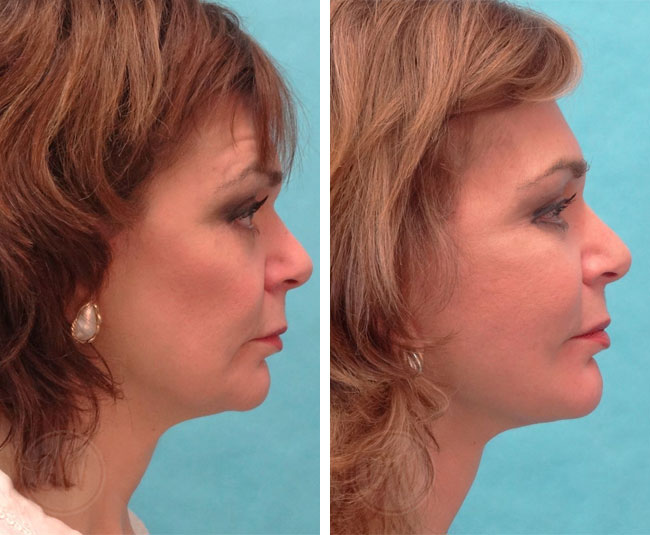
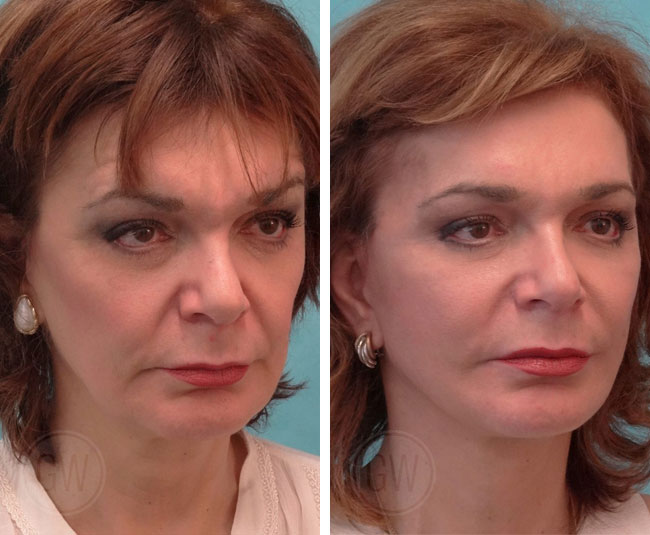
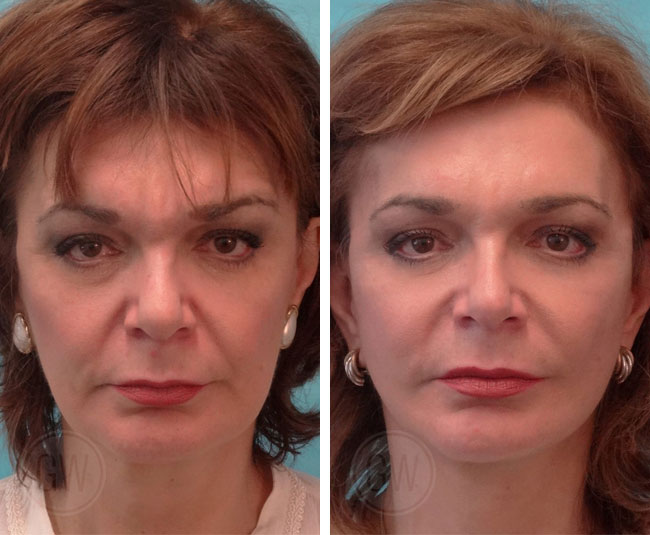
CLINICAL PHOTOGRAPHY: REVISION FACELIFT EXAMPLES
Clinical photography is used as part of surgical assessment and patient education. With appropriate consent and in accordance with Australian medical advertising regulations, before and after images may be shown during consultation to illustrate general surgical approaches.
These images are provided for educational purposes only. They do not predict individual outcomes and should not be interpreted as guarantees. Healing responses and tissue characteristics vary between individuals.
Dr Guy Watts discusses clinical photographs in context, focusing on anatomy, surgical planning, and variability between patients. Questions and discussion are encouraged during consultation.
FACELIFT BEFORE AND AFTER PHOTOS
Before and after photos may be discussed during consultation where appropriate and in accordance with AHPRA advertising requirements. Images should be understood as examples only, as individual anatomy, healing, scarring and surgical outcomes vary between patients.
HOW REVISION FACELIFT SURGERY IS PERFORMED
Revision facelift surgery is performed in an accredited hospital under general anaesthesia. The surgical plan is tailored to each patient based on their anatomy, previous procedures, and current concerns.
Key considerations during revision surgery include:
- Location and characteristics of existing scars
- Areas previously dissected
- Skin thickness and elasticity
- Blood supply to the skin and underlying tissues
- Age-related changes since the initial surgery
Where appropriate, incisions are placed along existing scars to limit additional scarring. In some cases, changes to incision placement are required to allow access to underlying structures.
The procedure may involve careful repositioning of deeper facial tissues, modification of skin tension and management of scarred areas. In selected patients, a deep-plane facelift approach may be considered depending on previous surgery, tissue planes and current anatomy. Revision surgery is technically demanding, and operative time varies depending on complexity.
Dr Guy Watts approaches revision facelift surgery with a measured technique that prioritises tissue care and patient safety.

POTENTIAL RISKS AND SURGICAL CONSIDERATIONS
All surgical procedures involve risk, and revision facelift surgery may carry additional considerations due to altered anatomy and scar tissue.
Potential risks include, but are not limited to:
- Bleeding or haematoma
- Infection
- Delayed wound healing
- Scarring that may remain visible or change over time
- Nerve irritation or weakness, which may be temporary or permanent
- Skin healing issues related to blood supply
- Differences between the two sides of the face or neck
- The possibility of further surgery
These risks are discussed in detail during consultation. Patients are encouraged to take time to consider this information and ask questions. No surgical outcome can be guaranteed, and understanding risk is a key part of informed consent.
Download Dr Watts’ Guide to Face and Neck Lift
Ultimate Guide To Face and Neck Lift
WHAT TO EXPECT AFTER REVISION FACELIFT SURGERY
Recovery following revision facelift surgery varies between individuals and depends on the extent of surgery performed. Swelling, bruising, and altered sensation are common in the early postoperative period.
In the initial weeks after surgery, patients may experience:
- Facial and neck swelling that settles gradually
- Bruising that changes in colour before resolving
- Sensations of firmness, tightness, or numbness
- Tiredness related to surgery and anaesthesia
Most patients require time away from work and social activities. Dr Guy Watts provides personalised guidance regarding activity modification, wound care, and follow-up appointments.
Final outcomes may take several months to become apparent as swelling resolves and tissues continue to settle.
ONGOING CARE AND FOLLOW-UP AFTER REVISION FACELIFT SURGERY
Longer-term care following revision facelift surgery focuses on monitoring healing and addressing concerns as they arise.
Follow-up appointments allow Dr Guy Watts to assess scar development, tissue position, and nerve function. Patients are encouraged to attend all scheduled reviews and to contact the clinic if concerns develop.
Skin care, sun protection, and general health maintenance support skin condition over time. While surgery may address specific concerns, the ageing process continues.
REQUEST AN APPOINTMENT
FEE CONSIDERATIONS FOR REVISION FACELIFT SURGERY
The cost of revision facelift surgery varies depending on the complexity of the procedure, hospital and anaesthetic fees, and postoperative care requirements. Because revision surgery is highly individual, fees can only be discussed following an in-person consultation.
During your appointment, Dr Guy Watts and his team explain what is included in the surgical fee to support informed decision-making. Pricing is not published online in accordance with professional guidelines.

REVISION FACELIFT FAQS
Can a revision facelift be considered many years after the original surgery?
Yes. Revision facelift surgery may be considered many years after a previous procedure, depending on current anatomy, skin behaviour, and general health. Time alone does not determine suitability, which is assessed during consultation.
Does revision surgery always involve the same areas as the first facelift?
Not necessarily. Revision surgery is often more targeted and may focus on specific areas that have changed over time rather than repeating the original surgical pattern.
Will existing scars always be reused during revision facelift surgery?
Where appropriate, existing scars may be used to limit additional scarring. In some situations, changes to incision placement are required to allow safe access to underlying tissues.
Is revision facelift surgery more complex than a first facelift?
Revision surgery often involves additional considerations due to scar tissue and altered anatomy. This means surgical planning is typically more detailed and individualised.
Can a revision facelift be combined with other facial procedures?
In some cases, revision facelift surgery may be performed alongside other procedures. This depends on overall health, surgical history, and whether combined surgery is appropriate.
Does previous non-surgical facial treatment affect revision facelift planning?
Prior non-surgical treatments may influence tissue characteristics and surgical planning. This is discussed during consultation to support informed decision-making.
How does smoking history affect revision facelift surgery?
Smoking can affect blood supply and healing, which is particularly relevant in revision surgery. Patients are advised to stop smoking well before surgery and discuss their history openly.
Will recovery from revision facelift surgery be different from the first procedure?
Recovery experiences vary between individuals and may differ from a previous operation. This depends on the extent of surgery and how tissues respond during healing.
Can revision facelift surgery address changes in comfort or tightness?
In some cases, revision surgery may be considered to manage areas of tightness or altered movement following earlier surgery. This depends on underlying anatomy and tissue condition.
How important is surgical history when considering revision facelift surgery?
A detailed surgical history is essential for planning revision surgery. Previous operative reports and timelines help guide decisions and reduce risk.
PREPARING FOR REVISION FACELIFT SURGERY
Preparation for revision facelift surgery begins well before the day of surgery. A structured consultation process supports patient understanding and appropriate planning.
Preparation may involve:
- Reviewing previous surgical records where available
- Medical assessment or specialist input if required
- Adjusting medications under medical guidance
- Ceasing smoking well in advance of surgery
- Planning time away from work and responsibilities
- Arranging postoperative support at home
Clear communication and preparation support recovery and postoperative care. Dr Guy Watts and his Perth-based team provide detailed preoperative instructions tailored to each patient.
TAKE OUR QUIZ, AND FIND OUT IF YOU ARE READY FOR SURGERY
FURTHER READING
- Read Dr Guy Watts’ Procedure Page on Facelift Surgery
- Read Dr Guy Watts’ Procedure Page on SMAS Facelift
- Read Dr Guy Watts’ Procedure Page on Deep Plane Facelift
- Read Dr Guy Watts’ Blog on Facelift Recovery after Surgery
- Read Dr Guy Watts’ Blog on How Age, Lifestyle And Skin Care Can Influence The Outcome Of A Facelift
Next Steps on Your Plastic Surgery Journey
PLEASE TAKE INTO CONSIDERATION
Any surgical or invasive procedure carries risks. Before proceeding, you should seek a second opinion from an appropriately qualified health practitioner.