


25 Feb Why You Should Not Remove The Salivary Gland During A Neck Lift
A defined neck and jawline may contribute to overall facial balance. For many women and men in Perth considering facial surgery, a neck lift is one way to address changes in the lower face that occur over time. However, some individuals exploring this procedure may come across the idea of salivary gland removal, particularly the submandibular gland, being included as part of the operation.
At Dr Guy Watts’ clinic in Perth, patients receive clear, evidence-based advice on every aspect of facial surgery. While each person has unique anatomy and personal goals, the removal of a salivary gland during a neck lift is NOT routinely recommended and should only be considered in carefully selected circumstances.
Dr Guy Watts, Specialist Plastic & Reconstructive Surgeon in Perth, Western Australia, takes a measured approach to neck surgery that prioritises both form and function. This article explains why preserving the salivary glands is typically preferred and outlines the potential risks of their removal.
Understanding The Role Of The Salivary Glands
The body contains several salivary glands that play important roles in oral function. Of these, the submandibular glands sit just beneath the lower jaw on both sides of the neck. They produce a large proportion of the saliva that helps lubricate the mouth, supports digestion and contributes to overall oral comfort.
These glands may become more noticeable in some individuals as natural changes in soft tissue, skin elasticity and fat distribution occur with time. In certain head positions or lighting, this can lead to a visible fullness under the jaw, which some may assume is due to fat or muscle changes.
Occasionally, this fullness is attributed to the salivary gland itself. Some surgical techniques have suggested removing or reducing the gland to change the shape of the area under the jaw. However, doing so is not typically necessary and involves important clinical considerations.
Take our quiz, and find out if you are ready for surgery
What A Neck Lift Typically Addresses
A neck lift, also known as platysmaplasty, is a surgical procedure designed to adjust changes in the lower face and neck. These changes may relate to:
- The position or tone of the platysma muscle
- Localised soft tissue beneath the chin
- Changes to skin support in the neck region
The procedure often involves modifying the muscle, removing select fat deposits, and adjusting skin positioning to support a smoother transition between the face and neck. Each neck lift performed by Dr Guy Watts in Perth is tailored to suit the individual, with careful attention to underlying anatomy and longer-term outcomes.
The salivary glands are not typically included in a standard neck lift. Altering or removing them introduces additional complexity and may affect oral function.
Why Salivary Gland Removal Is Rarely Part Of Aesthetic Surgery
While submandibular gland removal has been discussed in certain surgical literature, it is not routinely indicated in aesthetic neck surgery. Dr Guy Watts generally advises against it except in rare cases where there is a clearly identified clinical reason. The following considerations support this approach.
1. Nearby Structures Increase The Risk Of Nerve Injury
The submandibular gland sits close to several important anatomical features, including:
- The marginal mandibular nerve, which supports movement of the lower lip
- The lingual nerve, which is involved in tongue sensation
- The facial artery and vein, which supply the region
Surgical access to this area carries a risk of temporary or permanent disruption to these structures. Even small injuries can affect facial movement or sensation, which may impact daily functions such as speaking or eating.
For elective procedures such as a neck lift, the preservation of normal function is central to planning. Dr Guy Watts prioritises approaches that reduce the likelihood of complications and support a steady recovery.
2. Salivary Glands Support Important Physiological Functions
The submandibular glands are responsible for a significant amount of resting saliva production. Saliva plays a vital role in protecting oral tissues, preventing bacterial overgrowth and maintaining moisture in the mouth.
Removing a gland can reduce total saliva output, particularly in patients who may already have reduced flow due to age or certain medications. This may lead to dry mouth (xerostomia), which can affect oral comfort, dental health and speech.
These are meaningful changes that may have ongoing effects. As such, gland removal is only considered when there is a clinical need, and not simply to adjust the shape of the area beneath the jaw.
3. Postoperative Complications Can Occur
Procedures involving salivary gland removal may be associated with complications such as:
- Sialocele, a collection of saliva under the skin
- Salivary fistula, an abnormal drainage tract of saliva
- Haematoma or bleeding
- Swelling or fluid accumulation
- Infection or prolonged inflammation
These outcomes can extend recovery and may require further treatment. In the context of elective facial surgery, the risks involved with gland removal may outweigh the benefits, especially when other options are available to support the result.
4. Other Techniques Can Often Address Neck Appearance
In most cases, Dr Guy Watts can achieve the changes a patient is seeking by using more targeted and less invasive strategies, including:
- Submental fat removal to adjust volume under the chin
- Platysma modification to support the underlying neck structure
- Layered tissue repositioning to improve definition without deep dissection
- Skin adjustment to manage redundancy without excessive removal
These techniques aim to produce a result that suits the individual’s features while preserving deeper functional structures such as the salivary glands.
In some cases, if the gland is particularly prominent and clearly affecting the visual shape of the neck, limited modification may be discussed. This is always done with detailed consent, full explanation of the risks and only where clearly supported by the anatomy.
DOWNLOAD DR WATTS’ FACE AND NECK LIFT SURGERY GUIDE
Why A Thoughtful, Individualised Approach Matters
Dr Guy Watts, Specialist Plastic & Reconstructive Surgeon in Perth, has extensive experience in facial surgery and approaches each case individually. He considers not just the appearance of the neck, but also its function, tissue condition and how any changes may affect the patient over time.
Some individuals may feel concerned about a sense of fullness under the jaw or softness in the lower face. However, this is not always caused by the gland. Dr Watts performs a comprehensive examination to determine what structures are contributing to the concern.
The treatment plan is then developed using a careful balance of aesthetic goals and clinical judgement. Where possible, procedures are designed to protect essential structures and reduce the chance of complications. Gland removal is only considered when it is medically justifiable.
Long-Term Considerations For Neck Surgery
A neck lift is not only about short-term changes. The best results are those that are consistent, stable and integrated with the person’s natural features. Supporting healthy tissue, rather than removing it unnecessarily, helps preserve structure and function over time.
Salivary gland removal may not prevent the natural ageing process. Facial features will continue to change with time. In many cases, more conservative techniques offer a similar change in appearance with fewer potential side effects and a more predictable recovery.
Neck Lift Surgery Before and After Photos
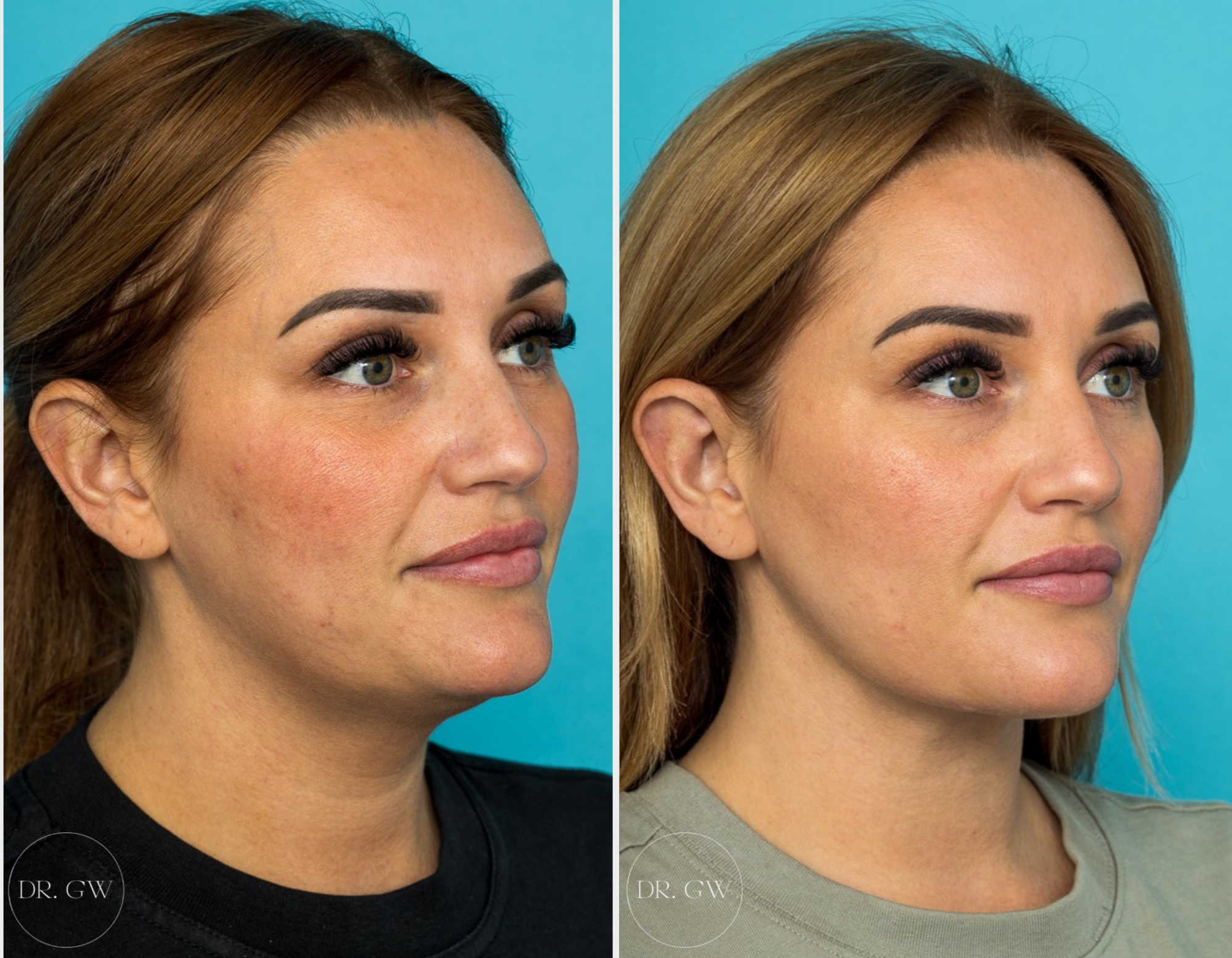
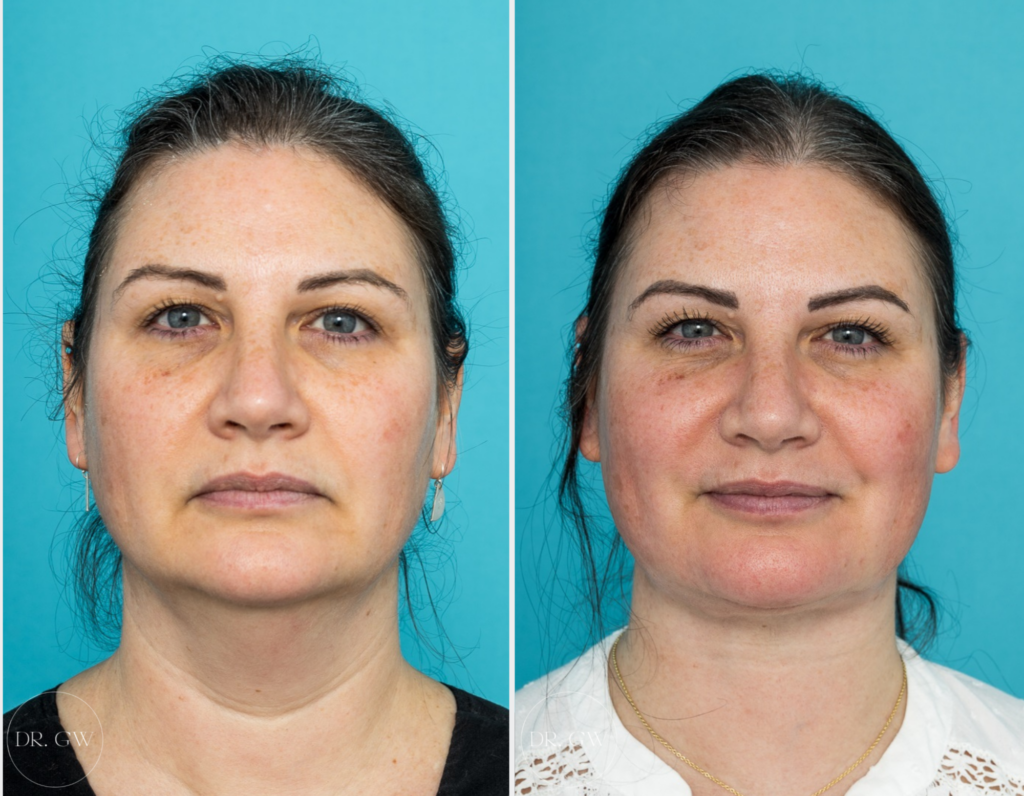
Photo disclaimer:
Each surgical procedure produces unique outcomes influenced by factors such as body composition, skin tone, laxity, age, and genetics. The before-and-after photographs displayed are of actual patients and are provided for informational purposes only.
What To Expect At Your Consultation In Perth
If you are considering neck lift surgery, or have questions about the structures beneath the jawline, an individual consultation is the best way to receive appropriate information.
During your visit with Dr Guy Watts in Perth, you can expect:
- A discussion about your concerns, lifestyle and expectations
- An anatomical assessment to determine which features are contributing to the appearance of the neck
- An explanation of treatment options tailored to your goals
- A detailed overview of the risks, benefits and recovery process
Dr Watts offers a supportive, respectful environment where patients can ask questions and make decisions at their own pace.

FAQs About Salivary Gland Management During Neck Lift Surgery
Do’s and Don’ts for Neck Lift Patients Considering Gland Visibility
Do’s
- Do discuss any specific observations you have noticed under the jawline
Sharing even small details helps Dr Watts understand what you are seeking to explore during your consultation. - Do ask for a clear explanation of which structures are being addressed
Understanding whether the procedure involves skin, fat, muscle or deeper tissues helps guide informed choices. - Do mention if you experience dry mouth or take medications that influence saliva production
This information may help determine which surgical options are suitable for you. - Do follow all postoperative care instructions carefully
This includes keeping your head elevated, avoiding pressure on the surgical area, and attending scheduled follow ups. - Do give your body time to settle before evaluating early changes
Healing involves stages. Dr Watts will explain what to expect and when you may begin to see more settled outcomes.
Don’ts
- Don’t assume that fullness under the jaw always relates to fat
It may reflect natural muscle shape, gland position or soft tissue characteristics. This is assessed individually. - Don’t request gland removal for cosmetic purposes unless recommended after assessment
In most cases, other approaches can address the concerns you raise without modifying deeper structures. - Don’t massage or apply pressure directly to the area after surgery
This may interfere with healing and increase swelling. - Don’t compare your outcome to others
Surgical planning is based on your anatomy and the approach that best supports your goals and overall health. - Don’t hesitate to ask about risks or uncertainties
Questions are encouraged. Understanding the benefits and risks of each option supports informed decision-making.
An Ethical, Experienced Approach To Facial Surgery
Dr Guy Watts is well regarded in Perth and Western Australia for his professionalism, specialist training and patient-centred approach. He brings years of experience in plastic and reconstructive surgery with a strong focus on facial procedures.
He does not include salivary gland removal as a routine part of neck lift surgery. Instead, he works closely with patients to develop a surgical plan that respects anatomy, prioritises wellbeing and reflects evidence-based care.
Patients can feel supported in knowing that their treatment is carefully considered and that no unnecessary procedures will be recommended.
Further Reading
- Read about Dr Guy Watts’ Blog on Recovery After A Deep Neck Lift
- Read about Dr Guy Watts’ Blog on Heavy Neck – Causes and Options
- Read about Dr Guy Watts’ Blog on What Is Chin Ptosis? – Options for Double Chin Treatment
- Read about Dr Guy Watts’ Blog on Anterior Neck-Lift Surgery: When It’s Considered And Why
About Dr. Guy Watts – MED0001539378
FRACS (Plas) – Specialist Plastic Surgeon In Perth WA

Dr. Guy Watts is a Specialist Plastic Surgeon (AHPRA MED0001539378) with an extensive career that spans across renowned plastic surgery clinics worldwide. His experience has been honed through invaluable experiences at esteemed establishments such as the New York Eye and Ear Infirmary and the renowned Pitanguy Clinic in Brazil.
Having collaborated with the foremost cosmetic plastic surgeons on a global scale, Dr. Watts has chosen to return to Perth after a 17-year journey of intensive training and invaluable professional experience to bring the latest practices and technology in cosmetic plastic surgery to his patients.
Dr. Watts is a Fellow of the Royal Australasian College of Surgeons (FRACS) and a Member of the Australian Society of Plastic Surgeons (ASPS), Australasian Society of Aesthetic Plastic Surgeons (ASAPS) and the International Society of Aesthetic Plastic Surgeons (ISAPS).
Read about the potential Risks and Complications of Surgery
Read the Patient Information and Resources
About CLINISPA
Clinispa is Dr Watts’ bespoke medical clinic performing Cosmetic Aesthetic treatments. At Clinispa, we offer advanced clinical treatments in a luxurious and calming environment, tailored to support your skin’s health and appearance.
Clinispa aesthetic services are performed by Dr Guy Watts’ nursing professionals, who have a passion for and solid understanding of facial aesthetics.
All Clinispa clients are considered individually, with a personalised treatment plan consisting of advanced scientific approaches to cosmetic aesthetics. We incorporate innovative technologies in conjunction with superiorly formulated skin care.
For more information about the full range of Clinispa Aesthetic of Cosmetic Treatments visit the Clinispa website
Sorry, the comment form is closed at this time.