

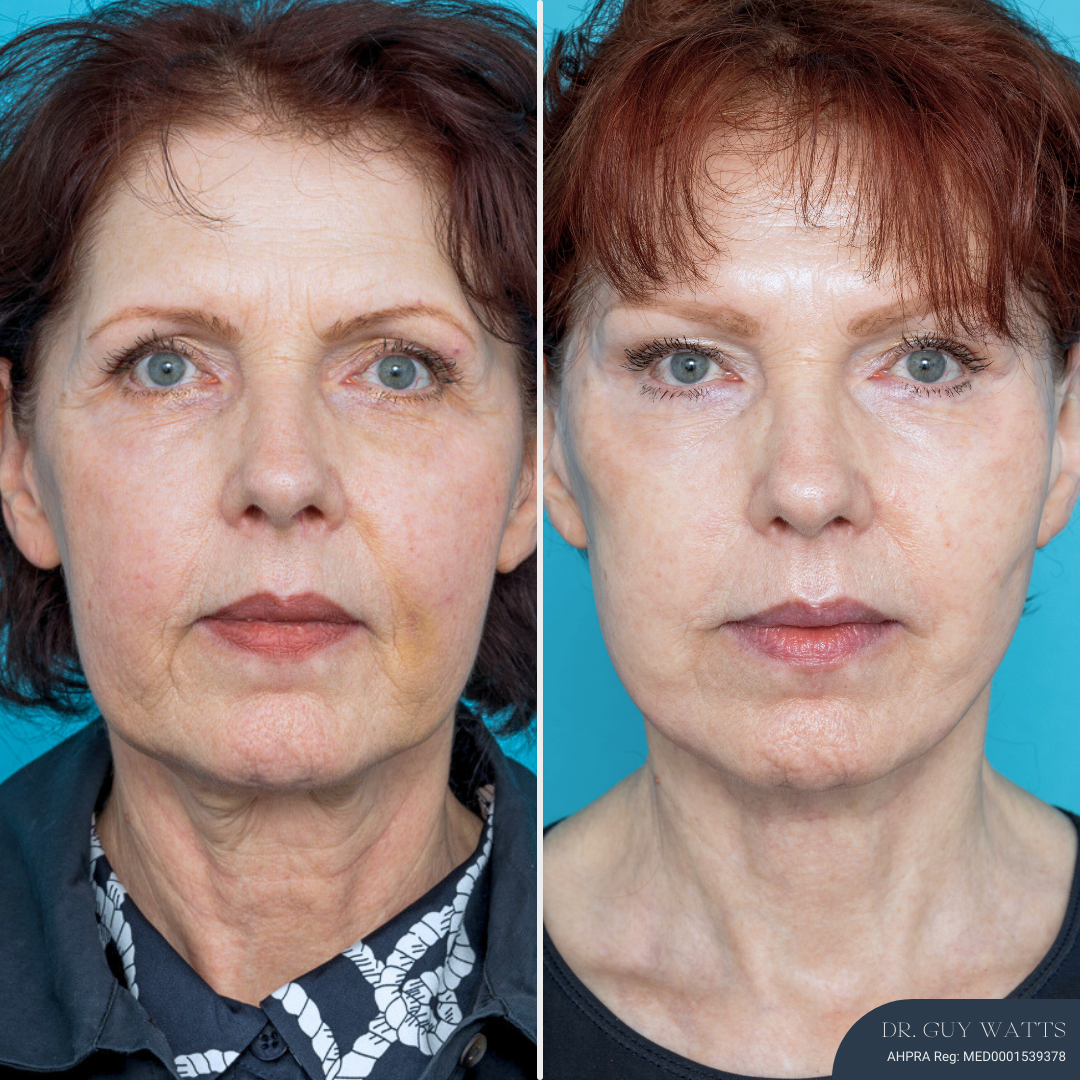
07 Apr Can You Have A Facelift Without A Neck Lift? Pros And Cons
For individuals in Perth exploring surgical options for the face, a common question arises: can a facelift be performed without including a neck lift? Many people begin to notice visible changes around the cheeks, jawline or folds beside the mouth while feeling that their neck appears relatively unchanged. Others may prefer to focus on one area at a time or adopt a gradual approach to treatment.
Understanding how the face and neck are linked is essential when planning any type of facial surgery. While these areas are often discussed separately, they are anatomically connected. The tissues of the face and neck interact structurally, and changes in one area often influence how the other is perceived.
Dr Guy Watts is a Specialist Plastic & Reconstructive Surgeon based in West Perth. With a focused practice in aesthetic facial surgery, Dr Watts offers individualised assessments and surgical planning that align with both clinical findings and patient goals. This article discusses whether a facelift without a neck lift is an appropriate option, including what it may involve, what it can address, and how it compares to combined procedures.
Take our quiz, and find out if you are ready for surgery
How The Face And Neck Change Over Time
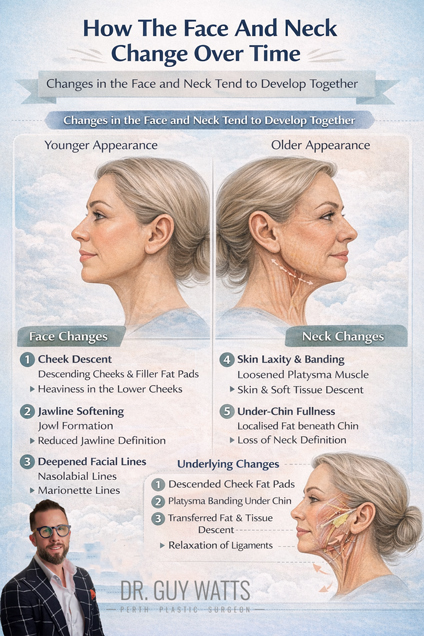
Facial and neck changes occur gradually over time and often develop in parallel. These changes are influenced by a combination of factors, including genetics, sun exposure, and the natural reduction of skin elasticity and tissue support. In the face, this may present as a softening of the jawline, heaviness in the lower cheeks, or more pronounced lines around the mouth and nose. These shifts typically reflect deeper structural changes in the supportive layers beneath the skin.
Although the neck is often considered separately, it is anatomically connected to the lower face. The soft tissue, muscle, and skin in the neck can begin to show changes in tone and structure, particularly under the chin or along the sides. This might include separation of the platysma muscle, soft tissue descent, or a change in how the skin moves or sits in profile.
Importantly, not all individuals experience these changes to the same degree or in the same areas. For some, the face may show earlier signs, while the neck remains relatively stable. For others, the opposite may be true. Dr Watts assesses both areas in detail during consultation, taking into account how structural changes in one region may affect the overall appearance. Surgical planning is then tailored accordingly.
What A Facelift Can Address
Facelift surgery focuses on the lower two-thirds of the face. This includes the area between the cheekbones and the jaw. It is intended to support tissues that may have moved from their original position, particularly around the cheeks, lower face and jawline.
The procedure involves repositioning underlying structures such as the SMAS layer (superficial musculoaponeurotic system) and then redraping the skin to reflect the new position. This approach allows for support at a deeper level, rather than relying on surface tightening.
A facelift may support:
- More definition along the lower face
- Reduced heaviness beside the mouth and jaw
- A change in how soft tissues sit around the cheeks
- A clearer transition between the mid and lower face
It is important to note that a facelift does not directly treat the neck. Any change observed beneath the chin or along the sides of the neck is usually a secondary effect from lifting tissues near the jawline. Individuals who are concerned about the neck specifically may need a different or combined approach.
DOWNLOAD DR GUY WATTS’ FACE AND NECK LIFT SURGERY GUIDE

What A Neck Lift Focuses On
A neck lift targets the region from beneath the chin down to the lower part of the neck. It addresses tissue changes that may appear due to shifting muscle, fat or skin.
This procedure may involve:
- Modifying the platysma muscle if it has begun to separate
- Adjusting fat beneath the chin or along the upper neck
- Repositioning skin to reflect the updated internal structure
The goal is to support a more defined shape under the chin and through the neck. In individuals who have visible changes in this area, a neck lift may be considered. The decision to include or separate procedures depends on the physical findings during assessment.
When A Facelift Without A Neck Lift May Be Suitable
There are many situations where a facelift surgery may be considered without the addition of a neck lift. This approach may be appropriate when changes in the lower face are more pronounced than those seen in the neck. For example, some individuals notice early heaviness along the jawline or around the cheeks but retain firm skin tone and good structure beneath the chin.
In these cases, the focus may be on repositioning soft tissues in the lower face to support a more defined facial structure, without altering the neck. This is often considered by patients in their 40s or 50s who have not yet experienced significant changes in the neck, or by those seeking a focused and individualised approach to surgery.
A facelift without a neck lift may also be part of a staged treatment plan. Some patients prefer to address one area first and reassess the need for further procedures over time. This approach can be suitable when the neck still appears supported and balanced in relation to the face. However, surgical planning always includes a full evaluation of the neck to ensure that excluding it will not lead to a visual imbalance after surgery.
Dr Watts bases his recommendations on clinical findings and the relationship between facial regions. If the neck does not show structural changes that require attention, it may be appropriate to proceed with a facelift alone. If the assessment suggests that combined treatment will provide better balance, this will be clearly explained.
Why Some Patients Choose To Focus On The Face First
Choosing to undergo a facelift without a neck lift may offer several advantages for the right patient. These may include a shorter procedure, a recovery that is more localised, and an approach that aligns more closely with specific areas of concern.
Limiting the procedure to the face can reduce overall theatre time. This may be preferable for patients whose changes are limited to one region. In terms of recovery, healing is generally concentrated around the ears, cheeks and jawline. Some individuals prefer to recover in stages rather than addressing multiple areas at once.
This approach also provides the option to reassess over time. In some cases, the neck may not require surgical adjustment for several years, or at all. If change does occur, a neck lift can be planned in the future with attention to preserving the integrity of the original facelift.
Dr Watts discusses these possibilities with each patient, helping them weigh their options clearly before moving forward.
Face Lift Surgery Before and After Photos
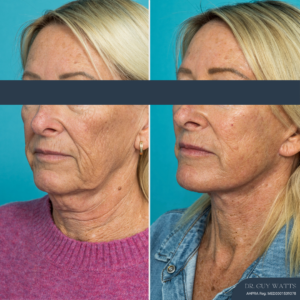
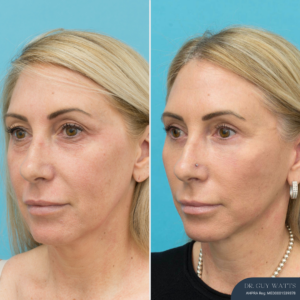
Photo disclaimer:
Each surgical procedure produces unique outcomes influenced by factors such as body composition, skin tone, laxity, age, and genetics. The before-and-after photographs displayed are of actual patients and are provided for informational purposes only.
Considerations When Excluding A Neck Lift
While a facelift without a neck lift may be suitable for some patients, it is important to understand the limitations of this approach.
If structural changes are already visible in the neck, these will remain unchanged following surgery. This includes skin that appears unsupported, visibility of the platysma muscle, or fullness under the chin. In these situations, leaving the neck untreated may result in a contrast between the face and neck, which could affect the overall outcome.
There is also the potential for patients to pursue a second procedure later if neck-related concerns become more prominent over time. While this is possible and often safe, combining both procedures when appropriate can avoid a second recovery period.
Dr Watts explains these considerations clearly during the consultation process. Each recommendation is based on the individual’s anatomy, goals and the visual relationship between regions.
When A Combined Approach May Be Advisable
In many patients, the face and neck change together. When both regions are affected, it may be appropriate to plan a combined procedure that addresses the lower face, jawline and upper neck as one anatomical unit. Patients can also read more about facelift and neck lift surgery in Perth and when both procedures may be considered together.
This combined approach allows for consistent modification of the SMAS and platysma muscle layers. It also supports a unified repositioning of overlying tissues, reducing the chance of visible mismatch between treated and untreated areas.
A combined facelift and neck lift may be advised when there is fullness under the chin, a visible change in the angle between the jaw and neck, or signs of muscle separation that extend beyond the jawline. Addressing both regions together may also be considered when the goal is to avoid multiple surgeries or when long-term structural support is a priority.
Dr Watts works with each patient to assess whether this approach aligns with their anatomy and long-term planning goals.

FAQs About Having A Facelift Without A Neck Lift
Planning For Long-Term Outcomes
Facial surgery aims to reposition and support soft tissue structures that have changed over time. However, no surgical procedure can stop the natural ageing process. Patients should understand that while surgery may provide durable improvements, future changes will continue to occur.
Maintaining results requires a thoughtful approach. This includes protecting the skin from sun exposure, adopting a consistent skincare routine, and reviewing other areas of the face such as the eyes or forehead as changes emerge.
Dr Watts assists patients in planning not only for their immediate surgical goals but also for future considerations. This may involve discussing staging, non-surgical skin support or revision planning if appropriate in the years to come.
Surgical Planning In Perth With Dr Guy Watts
Patients in Perth often seek individualised guidance on whether to focus on the face alone or consider treating the neck at the same time. There is no universal answer. Each case is different, and each person presents with their own pattern of anatomical change and surgical preference.
At his clinic in West Perth, Dr Guy Watts conducts detailed assessments of facial structure, tissue tone, skin condition and underlying support layers. These findings form the basis for a tailored surgical plan that considers proportion, balance and the relationship between regions.
His approach is based on anatomical understanding, surgical training and clear communication. Whether the plan includes a facelift alone, a neck lift or both, it is always developed in collaboration with the patient and designed to reflect appropriate clinical judgement.
8 Ventnor Avenue, West Perth, 6005
(08) 9286 1600
admin@guywattsplasticsurgeon.com.au
Further Reading
- Read more about Deep Plane Facelift
- Read more about Jaw Surgery (Orthognathic)
- Read more about Facial Reconstruction
- Read Dr Guy Watts’ Blog on How To Manage Deep Plane Face Lift Scars For Optimal Results
- Read Dr Guy Watts’ Blog on What Is the Difference between a Forehead Lift and Blepharoplasty?
- Read Dr Guy Watts’ Blog on Recovery After A Deep Neck Lift
- Read Dr Guy Watts’ Blog on Heavy Neck – Causes and Options
- Recovery after Facelift Surgery
- Recovery after Neck Lift
About Dr. Guy Watts – MED0001539378
FRACS (Plas) – Specialist Plastic Surgeon In Perth WA

Dr. Guy Watts is a Specialist Plastic Surgeon (AHPRA MED0001539378) with an extensive career that spans across renowned plastic surgery clinics worldwide. His experience has been honed through invaluable experiences at esteemed establishments such as the New York Eye and Ear Infirmary and the renowned Pitanguy Clinic in Brazil.
Having collaborated with the foremost cosmetic plastic surgeons on a global scale, Dr. Watts has chosen to return to Perth after a 17-year journey of intensive training and invaluable professional experience to bring the latest practices and technology in cosmetic plastic surgery to his patients.
Dr. Watts is a Fellow of the Royal Australasian College of Surgeons (FRACS) and a Member of the Australian Society of Plastic Surgeons (ASPS), Australasian Society of Aesthetic Plastic Surgeons (ASAPS) and the International Society of Aesthetic Plastic Surgeons (ISAPS).
Read about the potential Risks and Complications of Surgery
Read the Patient Information and Resources
About CLINISPA
Clinispa is Dr Watts’ bespoke medical clinic performing Cosmetic Aesthetic treatments. At Clinispa, we offer advanced clinical treatments in a luxurious and calming environment, tailored to support your skin’s health and appearance.
Clinispa aesthetic services are performed by Dr Guy Watts’ nursing professionals, who have a passion for and solid understanding of facial aesthetics.
All Clinispa clients are considered individually, with a personalised treatment plan consisting of advanced scientific approaches to cosmetic aesthetics. We incorporate innovative technologies in conjunction with superiorly formulated skin care.
For more information about the full range of Clinispa Aesthetic of Cosmetic Treatments visit the Clinispa website
Sorry, the comment form is closed at this time.