

02 Aug Receding Chin – What Is It, Causes and Solutions
Everything You Need to Know about a Receding Jawline
In this blog, we will discuss what a receding chin is, the significance of the jawline, and potential options to alter it.
Specialist Plastic Surgeon Dr Guy Watts has the necessary experience and skills to help you achieve your aesthetic goals with either surgical or non-surgical procedures for your receding jawline.
The Evolution of Jawline in Culture
Cultural Influences on Jawline Aesthetics
Cultural influences played a significant role in shaping the perception of jawline aesthetics. Different cultures have had varying ideals and preferences when it comes to facial features, including the jawline. For example, in some Asian cultures, a softer, more delicate jawline is often considered desirable. Whereas in Western cultures, a more angular and defined jawline is generally favoured. Cultural norms, historical context, and the interplay between societal standards and individual perception of aesthetics influence these preferences.
More about Jawline Anatomy
At the core of the jawline lies the mandible, known as the lower jawbone. This U-shaped bone provides the foundation for the entire jawline structure. It is one of the largest and strongest bones in the face, responsible for supporting the teeth and providing structural stability.
Understanding the anatomy of the jawline not only helps demystify its architecture but also sheds light on the potential causes of a receding chin.
Genetic factors, ageing, hormonal changes, and dental conditions can impact the development and structure of the jawline. By comprehending the underlying anatomy, we gain insights into the factors that contribute to a well-defined jaw and the potential challenges that may arise.
Take our quiz, and find out if you are ready for surgery
What Can Cause a Receding Chin?
Beyond genetics, there are numerous factors that can impact the structure of the jawline. One significant contributor is the process of ageing. As we grow older, our bones undergo changes, including resorption or loss of bone density. This can affect the strength and prominence of the jawline, resulting in a less definition. Additionally, the decrease in collagen and elastin production as we age can lead to excess skin and loss of facial volume, further exacerbating the appearance of a receding chin.
Hormonal changes
Hormonal changes also play a role in jawline structure. During puberty, the surge of hormones can cause growth and development of the jawline, contributing to a more prominent appearance. Conversely, hormonal imbalances, such as those experienced during menopause or certain medical conditions, can lead to bone loss and changes in facial contours, including the jawline. This highlights the intricate relationship between hormones and the jawline’s structure.
Lifestyle factors
Lifestyle factors can also influence the development of a receding jawline. Chronic teeth grinding or clenching, known as bruxism, can exert excessive pressure on the jaw, which can contribute to bone loss and changes in jawline shape over time. Additionally, poor oral posture, such as mouth breathing or improper tongue posture, can affect jaw development and contribute to a reduced definition in the jawline.
Dental conditions
Dental conditions and misalignment can also impact the jawline’s appearance. Malocclusion, a misalignment of the teeth or jaws, can alter the position of the jawline, causing it to appear recessed. Similarly, tooth loss or extraction can lead to bone resorption in the jaw, further affecting the jawline’s structure.
DOWNLOAD DR WATTS’ GUIDE TO JAW & CHIN SURGERY
Recognising the Signs of a Receding Chin
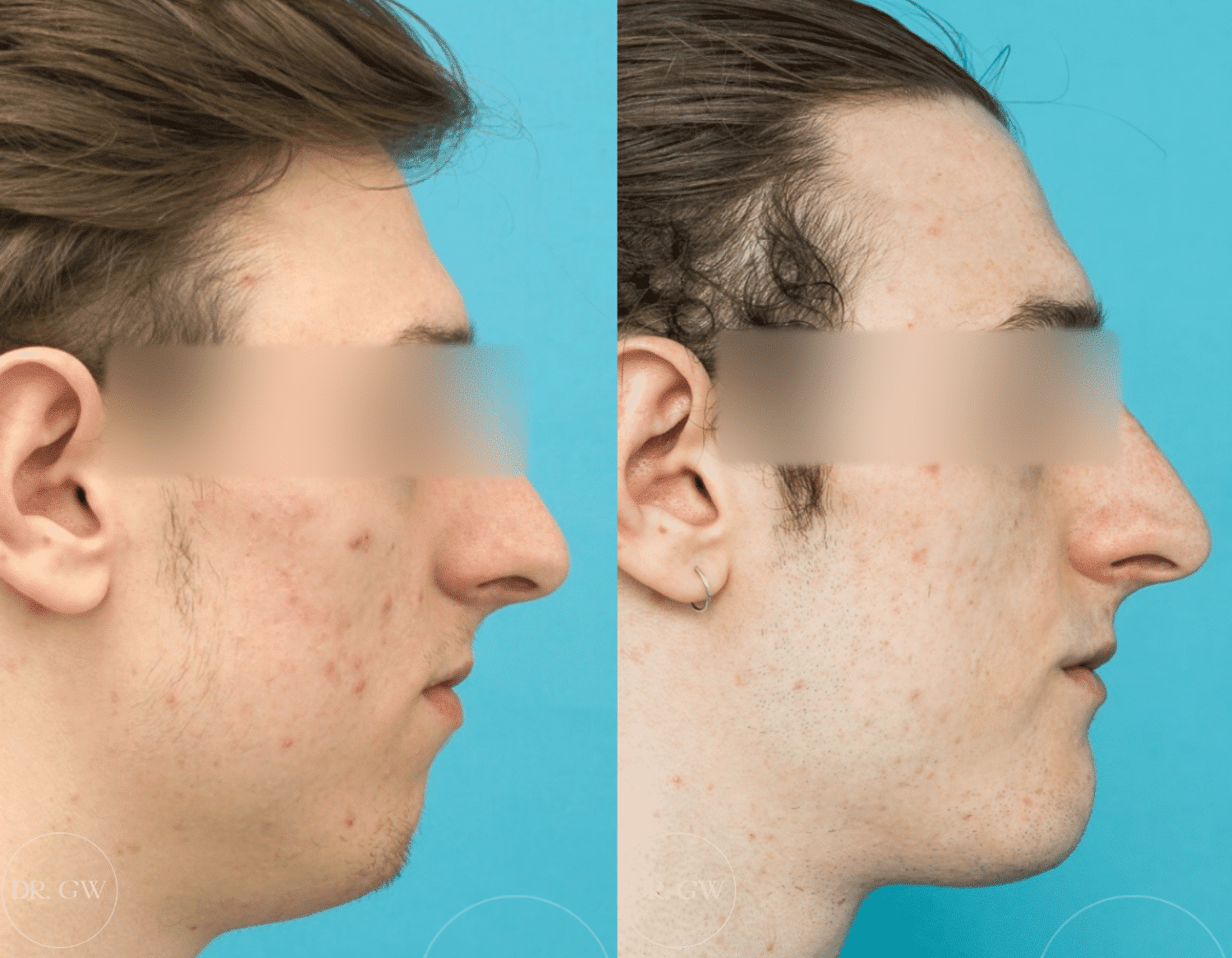
One of the key signs to watch for is a lack of definition along the jawline. A well-defined jawline is characterised by a distinct angle between the lower jaw and the neck, contributing to a sharp contour.
Another indication of a receding jawline is a diminished or recessed chin. The chin plays an integral role in framing the jawline and its projection. When the chin lacks forward projection, it can contribute to the overall appearance of a receding jawline.
In some cases, a receding jawline may be accompanied by the appearance of jowls or excess skin along the jawline. This can create a softer and less defined contour, further contributing to the perception of a receding jawline.
Options to Address a Receding Chin

Whether you seek non-surgical alternatives or desire the precision and permanence of surgical approaches, here are the options available to alter the jawline:
Non-Surgical Options
There is a diverse array of non-surgical possibilities to alter the shape and appearance of your jawline without resorting to surgery.
Non-invasive options present an opportunity to alter your jawline, allowing you to achieve aesthetically pleasing results without undergoing surgery.
- Facial exercises and jawline workouts. These targeted exercises focus on strengthening the muscles around the jawline, promoting muscle tone and definition.
- You can remodel and tighten the jawline area by engaging in specific movements and routines.
- Orthodontic treatments and braces also offer a non-surgical avenue for jawline alteration. By addressing dental misalignments or irregularities, orthodontic interventions can help alter bite alignment and contribute to altered jawline appearance.
- Braces or clear aligners gradually shift the teeth into their proper position, subsequently influencing the overall structure and alignment of the jawline.
- Dental appliances and oral devices, such as mandibular advancement devices (MADs), can provide non-surgical options for altering the appearance of a receding jawline caused by dental conditions or misalignments. These devices help reposition the jaw and change its alignment, helping to increase balance.
- Cosmetic Aesthetic Treatments
- Volumising Treatments can be strategically placed along the jawline to add volume and definition, addressing a lack of projection or contour irregularities.
- Wrinkle Treatments can be used to relax specific muscles around the jawline, reducing the appearance of a square jaw or reducing the prominence of the masseter muscles.
Non-surgical options for jawline alteration present several possibilities, offering you the chance to achieve your desired jawline aesthetics without the need for surgical interventions. These approaches provide flexibility, allowing for personalised treatments tailored to individual preferences and goals.
Surgical Options
For those seeking a more significant and precise approach to jawline alteration, surgical options offer the opportunity to more significantly alter the jawline. These interventions provide a long-lasting and customisable option, allowing you to achieve your desired results.
- Orthognathic surgery, also known as jaw repositioning surgery, is a surgical procedure that involves repositioning the jaws to alter both function and aesthetics. This comprehensive approach addresses underlying skeletal issues, such as malocclusion or severe jaw misalignment, which can contribute to a receding jawline.
- Jaw Augmentation is another surgical option that aims to increase the jawline’s projection and definition. This procedure involves using implants to add volume and structure to the jaw area. Implants are typically made of biocompatible materials and are carefully selected to provide the required shape and size, resulting in a more prominent jawline.
- Genioplasty, focuses on altering the appearance of the chin, which significantly contributes to the overall aesthetics of the jawline. This surgical procedure involves repositioning the chin bone to increase projection and balance with other facial features. By altering the chins appearance, Genioplasty can effectively alter the definition of the jawline, contributing to a stronger and more proportionate facial profile.
These procedures provide long-lasting results, though no results are permeant and ageing and lifestyle factors will impact the longevity of the results.

FAQs about Receding Jawline
Further Reading about Face Procedures with Dr Guy Watts
About Dr. Guy Watts – MED0001539378
FRACS (Plas) – Specialist Plastic Surgeon In Perth WA

Dr. Guy Watts is a Specialist Plastic Surgeon (AHPRA MED0001539378) with an extensive career that spans across renowned plastic surgery clinics worldwide. His experience has been honed through invaluable experiences at esteemed establishments such as the New York Eye and Ear Infirmary and the renowned Pitanguy Clinic in Brazil.
Having collaborated with the foremost cosmetic plastic surgeons on a global scale, Dr. Watts has chosen to return to Perth after a 17-year journey of intensive training and invaluable professional experience to bring the latest practices and technology in cosmetic plastic surgery to his patients.
Dr. Watts is a Fellow of the Royal Australasian College of Surgeons (FRACS) and a Member of the Australian Society of Plastic Surgeons (ASPS), Australasian Society of Aesthetic Plastic Surgeons (ASAPS) and the International Society of Aesthetic Plastic Surgeons (ISAPS).
Read about the potential Risks and Complications of Surgery
Read the Patient Information and Resources
About CLINISPA
Clinispa is Dr Watts’ bespoke medical clinic performing Cosmetic Aesthetic treatments. At Clinispa, we offer advanced clinical treatments in a luxurious and calming environment, tailored to support your skin’s health and appearance.
Clinispa aesthetic services are performed by Dr Guy Watts’ nursing professionals, who have a passion for and solid understanding of facial aesthetics.
All Clinispa clients are considered individually, with a personalised treatment plan consisting of advanced scientific approaches to cosmetic aesthetics. We incorporate innovative technologies in conjunction with superiorly formulated skin care.
For more information about the full range of Clinispa Aesthetic of Cosmetic Treatments visit the Clinispa website
Sorry, the comment form is closed at this time.