
27 Apr Facelift Recovery Timeline: What Perth Patients Should Know – Possible Duplicate
For many women and men in Perth, choosing to undergo a face lift is a considered step toward addressing changes in the face that develop naturally with time. These changes may include reduced skin support, shifting facial volume or visible creases that affect overall facial shape and position. While these features are part of the ageing process, some individuals explore surgical options to adjust specific areas in a clinically appropriate way.
A face lift (rhytidectomy) requires preparation and planning, and understanding the recovery process is a key part of that journey. A realistic view of the healing timeline helps patients know what to expect and how to support themselves in the weeks and months after surgery.
Dr Guy Watts is a Specialist Plastic & Reconstructive Surgeon based in Perth, Western Australia. With advanced training and a focused practice in facial surgery, Dr Watts offers patients individualised information about the face lift procedure and the recovery experience that follows. This article outlines each phase of face lift recovery and offers practical guidance tailored to the Perth setting.
Take our quiz, and find out if you are ready for surgery
What A Face Lift Involves
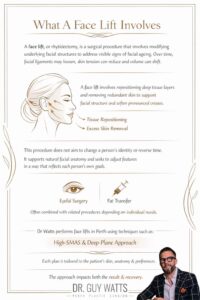
A face lift, or rhytidectomy, is a surgical procedure that involves modifying underlying facial structures to address visible signs of facial ageing. Over time, facial ligaments may loosen, skin tension can reduce and volume can shift. A face lift involves repositioning deep tissue layers and removing redundant skin to support facial structure and soften pronounced creases.
This procedure does not aim to change a person’s identity or reverse time. It supports natural facial anatomy and seeks to adjust features in a way that reflects each person’s own goals. The operation may be performed on its own or alongside related procedures such as eyelid surgery or fat transfer, depending on individual needs.
Dr Watts performs face lifts in Perth using techniques such as the high-SMAS or deep-plane method. Each surgical plan is tailored to the patient’s skin characteristics, underlying anatomy and personal preferences. The approach taken directly influences not only the result, but also the pace and nature of the recovery that follows.
First 24 Hours: Immediate Post-Operative Period
Once the procedure is complete, patients are taken to a monitored recovery area where the initial stages of healing begin. Depending on the surgical plan and overall health, some patients may return home the same day while others stay overnight.
In this early phase, it is common to experience:
- A sensation of tightness or heaviness in the face or neck
- Temporary swelling or bruising
- Reduced sensation or mild tingling in parts of the face
Dr Watts applies gentle compression dressings around the face to assist with swelling control and support the repositioned tissues. Some patients may have small drains in place to assist with fluid removal. These are usually removed within the first few days.
Pain is usually described as mild to moderate and is managed with prescribed medications. Dr Watts provides detailed post-operative instructions to support comfort and assist with wound care. These include advice about rest, head elevation during sleep, hydration and limiting unnecessary movement.
This initial phase is focused on stability. Activity is limited to walking short distances, avoiding facial strain and following instructions regarding hygiene and dressings.
Days 2 to 7: Initial Healing And Clinical Monitoring
During the first week, swelling and bruising are at their most noticeable. This is a normal response to surgery and usually peaks around day three. Patients should be prepared for changes in facial shape and temporary asymmetry during this phase.
Common features at this stage include:
- Visible swelling, especially around the cheeks, jawline and neck
- Sensations of facial tightness
- Limited facial expression due to swelling and protective instinct
Dr Watts reviews patients in his Perth clinic during the first post-operative week to assess healing, remove drains and address any questions. Bandages are replaced or removed as needed, and patients are shown how to clean the incision areas using sterile techniques.
Most patients choose to remain at home during this time, avoiding social interaction and minimising activity. Facial sensation may be reduced and movement restricted, but these effects are temporary and part of the standard recovery process.
Patients are advised to avoid:
- Bending over or lifting heavy items
- Heat exposure such as hot showers or cooking steam
- Applying skincare or makeup unless approved
A strong emphasis is placed on rest, reduced facial movement and hydration. Any concerns or unexpected changes should be reported to Dr Watts’ clinic without delay.
DOWNLOAD DR GUY WATTS’ FACE AND NECK LIFT SURGERY GUIDE
Weeks 2 to 3: Transition To Greater Comfort
By the second week, many patients begin to feel more physically settled. Swelling and bruising start to fade, and incisions begin to mature. Some patients return to light activities and begin to feel more at ease being seen in public.
Improvements during this stage include:
- Visible reduction in facial swelling
- Softening of incision areas
- Gradual return of facial movement
Although progress is noticeable, this stage still requires caution. The tissues are continuing to heal beneath the surface and remain vulnerable to strain. Facial sensation may still be altered in some regions, particularly near the ears or jawline.
Makeup may be permitted at this stage to conceal mild bruising, though only after the skin has closed completely. Dr Watts will guide patients on whether this is appropriate based on their surgical progress.
Light activities such as short walks, reading or non-strenuous work may be resumed if patients feel ready. However, any activity that raises blood pressure or involves significant movement should still be avoided.
Weeks 4 to 6: Reconnecting With Daily Routines
Between four and six weeks after surgery, most patients feel able to resume normal routines. Energy levels typically improve, and the face begins to feel less tight and more familiar.
At this point, patients often experience:
- More natural facial movement and expression
- Diminishing numbness or tingling
- A clearer view of the result as swelling reduces
Exercise may be gradually resumed during this period with Dr Watts’ guidance. He assesses each patient’s healing and advises whether it is safe to return to cardiovascular exercise, resistance training or yoga. It is important to avoid rushing this phase and to allow the body to complete the internal healing process.
Scars may still be visible but are usually improving. Dr Watts may suggest medical-grade silicone, massage or topical products to support scar care. Ongoing protection from sun exposure remains important to avoid pigmentation changes and promote consistent healing.
By the end of week six, many patients in Perth have returned to work, social activities and basic fitness routines. However, patients are reminded that this is not the end of the recovery process. Maturation of tissues continues for several more months.
Three Months And Beyond: Longer-Term Healing
At the three-month mark, most of the swelling has resolved and the result begins to stabilise. The face usually feels softer and more natural, and many patients describe greater ease in facial movement and comfort.
Key features at this stage include:
- Softened incision lines and blending with natural skin creases
- Improved symmetry and facial shape
- Minimal swelling or tightness
Although many patients consider themselves fully recovered by this point, internal healing and tissue adaptation continue for up to 12 months. This includes scar maturation, reabsorption of fluid and rebalancing of skin tone and texture.
Follow-up appointments with Dr Watts help track these changes, provide reassurance and allow for any additional support where needed. Some patients choose to discuss supportive treatments such as skin maintenance strategies, where suitable, to promote longer-term outcomes.
What Influences Recovery Experience
Face lift recovery is influenced by a range of factors that differ between individuals. Dr Watts provides personalised timelines for each patient based on:
✓ Age and skin characteristics
Younger skin with stronger support structures often heals faster. However, many older patients also experience steady recovery with well-planned aftercare.
✓ Health and medical history
Patients with chronic health conditions or those who smoke may experience slower wound healing. Dr Watts strongly advises all patients to stop smoking prior to surgery to support circulation and healing.
✓ Type of face lift performed
Different techniques involve varying depths of tissue repositioning. Deeper approaches may require longer recovery but are selected based on structural needs and individual goals.
✓ Adherence to aftercare guidance
Recovery is most successful when patients follow instructions closely, attend all follow-ups and avoid premature return to high-intensity activities.
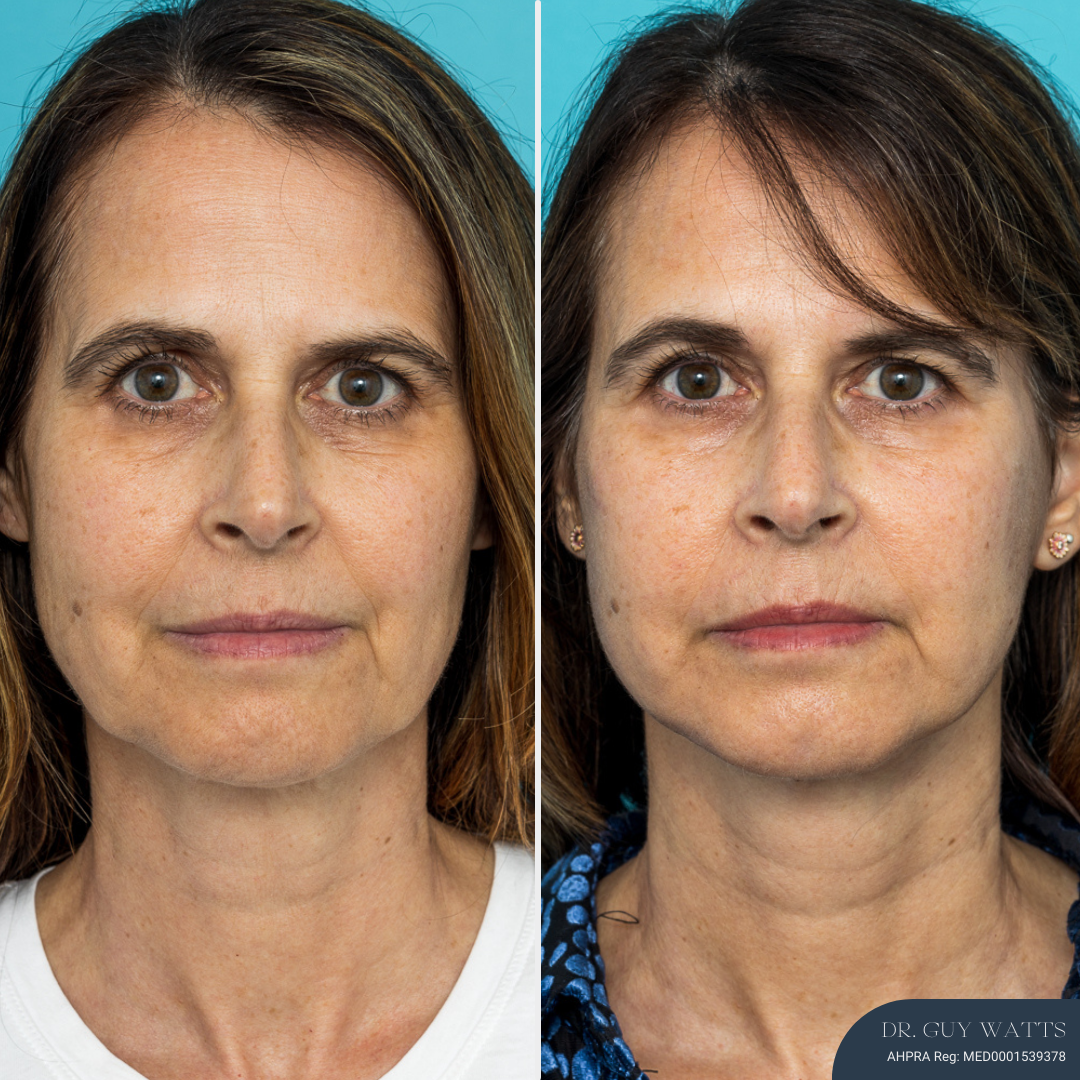
Face Lift Surgery Before and After Photos
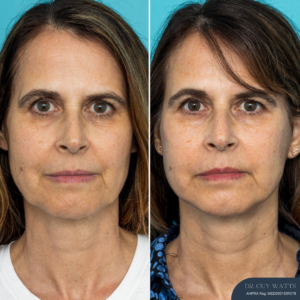
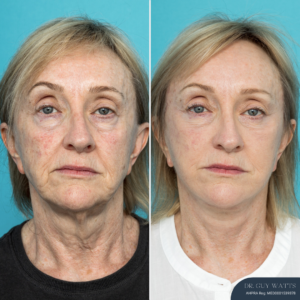
Photo disclaimer:
Each surgical procedure produces unique outcomes influenced by factors such as body composition, skin tone, laxity, age, and genetics. The before-and-after photographs displayed are of actual patients and are provided for informational purposes only.
Emotional Responses During Recovery
Recovery is not only physical. It often includes emotional phases as patients adjust to their new appearance. Early swelling and bruising can lead to feelings of doubt, even when the procedure has gone well.
It is common to go through a period of emotional adjustment while the face changes and settles. This is a normal experience and often resolves by the time swelling reduces and familiar facial expressions return.
Dr Watts and his Perth team are experienced in supporting patients through this period. Education, reassurance and consistent communication are key elements of care throughout the recovery process.
Signs To Watch For During Recovery
While most recoveries progress steadily, there are certain signs that should prompt medical review. These include:
- Sudden swelling or discomfort after initial improvement
- Redness, discharge or heat at the incision site
- High fever or signs of infection
- Difficulty with facial movement that appears suddenly
Patients are encouraged to contact the clinic promptly with any concerns. Early intervention can help manage issues before they develop further.
Do’s And Don’ts During Face Lift Recovery
Recovery after a face lift involves a series of steps that support healing and help patients feel more prepared for what to expect. The following do’s and don’ts are aligned with the care provided at Dr Guy Watts’ Perth clinic and reflect clinical best practices.
✓ Do’s
Do follow all post-operative instructions provided by your surgeon
Dr Guy Watts provides each patient with personalised recovery guidelines based on their surgical plan. These include information on wound care, sleeping positions, medications and activity limitations. Adhering to these instructions is key to a progressive and steady recovery.
Do sleep with your head elevated
Sleeping in an upright or slightly inclined position for at least one to two weeks can help reduce facial swelling and support fluid drainage. This can be achieved using extra pillows or a reclining chair.
Do attend all follow-up appointments
In-person reviews allow Dr Watts to monitor healing progress, adjust care recommendations and respond to any questions that may arise during recovery. These appointments are scheduled at regular intervals based on the patient’s healing timeline.
Do eat a nutritious, soft-food diet in the early days
Maintaining hydration and nutrition supports tissue healing. In the first week, soft foods are recommended to reduce facial strain while chewing.
Do take gentle walks to support circulation
Short walks around the home or garden can help maintain healthy blood flow and reduce the risk of complications such as blood clots. These should be performed within your comfort level.
Do protect your skin from sun exposure
Sun protection is essential during recovery. Healing skin and incision lines are sensitive to ultraviolet rays and may darken if exposed to sunlight. A wide-brimmed hat and broad-spectrum sunscreen (once approved) are recommended.
Do stay in contact with the clinic
If anything feels unusual or you are unsure about a symptom, contact Dr Watts’ Perth practice. The clinical team is available to assist with concerns, no matter how small they may seem.
✓ Don’ts
Don’t rush your recovery
Even if you feel well, internal healing continues for weeks after surgery. Avoid returning to work, exercise or social events before your surgeon has approved these activities.
Don’t engage in strenuous physical activity too early
Raising your heart rate or blood pressure in the first few weeks can increase swelling and impact incision healing. Activities such as running, weightlifting and intense stretching should be paused until advised.
Don’t expose incision sites to unfiltered water or harsh products
Swimming, hot tubs, steam rooms and heavily chlorinated water should be avoided. Skin should be kept clean and dry using gentle techniques as instructed by the clinic.
Don’t wear tight-fitting glasses or accessories near the ears
If incisions are placed near the ear or hairline, avoid pressure from eyewear, headbands or hats during the early stages of healing.
Don’t apply makeup or skincare until it is safe to do so
Using makeup or active skincare ingredients too early can irritate healing tissue. Wait until your surgeon confirms it is appropriate before resuming your regular routine.
Don’t compare your recovery to others
Every recovery is unique. Timeframes, swelling patterns and incision appearance differ between patients. Focus on your own progress and communicate openly with your surgical team if you have questions.
Don’t smoke or consume alcohol during the recovery period
Smoking significantly impairs wound healing and can increase the risk of complications. Alcohol may interfere with medications and delay recovery. Avoid both during the healing process and follow medical advice on when or if reintroduction is appropriate.
FAQs About Face Lift Recovery
Local Insights: Face Lift Recovery In Perth, WA
Recovering from face lift surgery in Perth comes with a few unique considerations that reflect the local climate, lifestyle and healthcare environment.
✓ Sun Exposure In Perth
Perth has one of the highest levels of ultraviolet (UV) radiation in the world. For patients recovering from facial surgery, protecting healing skin from sun exposure is essential. The strength of the sun, even in cooler months, can lead to long-term pigmentation changes, particularly in scar tissue. Patients are advised to:
- Wear a wide-brimmed hat when outdoors
- Use broad-spectrum sunscreen daily once cleared to do so
- Avoid outdoor exercise or gardening during peak UV hours (10am to 3pm)
Dr Watts’ clinic in Perth provides guidance on when and how to reintroduce sun-safe activities during the healing process.
✓ Work And Social Lifestyle In WA
Many of Dr Watts’ patients are active professionals or retirees who enjoy the outdoors, community events and travel. Planning surgery around work or social engagements is an important part of the consultation process.
For patients in industries such as education, hospitality, retail or client-facing roles, time away from work may need to be extended beyond the initial two weeks to accommodate visible signs of healing. Dr Watts assists with planning these timelines during the pre-operative process.
✓ Recovery Comfort At Home
Perth’s warm climate can be both helpful and challenging during recovery. While comfortable weather can make short walks more enjoyable, hot temperatures may increase swelling if patients become overheated. It is recommended to:
- Stay in a cool indoor environment with good airflow
- Avoid direct sun or exercise during warm weather
- Use cold compresses only if approved and applied correctly
Patients recovering during summer months may find early morning or evening walks most suitable. Winter recoveries, on the other hand, often offer more opportunities for indoor rest and recovery.
Access To Care And Support
Dr Watts’ clinic is centrally located in Perth and provides patients with ongoing support during recovery. Follow-up appointments are coordinated around the patient’s needs and travel arrangements, particularly for those coming from regional WA. The clinic team offers assistance via phone and email, with rapid access for post-operative concerns if required.
For those living outside metropolitan Perth, Dr Watts provides advice on accommodation, rest periods and transport requirements before and after surgery. Having support at home is encouraged, especially during the first week when movement may be limited.
Further Reading
- Read more about SMAS Facelift
- Read more about Deep Plane Facelift
- Read more about Eyelid Surgery – Blepharoplasty
- Read Dr Watts’ Blogs on How To Manage Face Lift Scars For Optimal Results
- Read Dr Watts’ Blogs on When to Resume Exercising after Facelift Surgery
- Read Dr Watts’ Blogs on 7 Tips to Reduce Bruising after Facelift Surgery
- Read Dr Watts’ Blogs on How To Manage Deep Plane Face Lift Scars For Optimal Results
About Dr. Guy Watts – MED0001539378
FRACS (Plas) – Specialist Plastic Surgeon In Perth WA

Dr. Guy Watts is a Specialist Plastic Surgeon (AHPRA MED0001539378) with an extensive career that spans across renowned plastic surgery clinics worldwide. His experience has been honed through invaluable experiences at esteemed establishments such as the New York Eye and Ear Infirmary and the renowned Pitanguy Clinic in Brazil.
Having collaborated with the foremost cosmetic plastic surgeons on a global scale, Dr. Watts has chosen to return to Perth after a 17-year journey of intensive training and invaluable professional experience to bring the latest practices and technology in cosmetic plastic surgery to his patients.
Dr. Watts is a Fellow of the Royal Australasian College of Surgeons (FRACS) and a Member of the Australian Society of Plastic Surgeons (ASPS), Australasian Society of Aesthetic Plastic Surgeons (ASAPS) and the International Society of Aesthetic Plastic Surgeons (ISAPS).
Read about the potential Risks and Complications of Surgery
Read the Patient Information and Resources
About CLINISPA
Clinispa is Dr Watts’ bespoke medical clinic performing Cosmetic Aesthetic treatments. At Clinispa, we offer advanced clinical treatments in a luxurious and calming environment, tailored to support your skin’s health and appearance.
Clinispa aesthetic services are performed by Dr Guy Watts’ nursing professionals, who have a passion for and solid understanding of facial aesthetics.
All Clinispa clients are considered individually, with a personalised treatment plan consisting of advanced scientific approaches to cosmetic aesthetics. We incorporate innovative technologies in conjunction with superiorly formulated skin care.
For more information about the full range of Clinispa Aesthetic of Cosmetic Treatments visit the Clinispa website
Sorry, the comment form is closed at this time.