

18 Jan Will Medicare Cover Split Muscle Surgery?
For many women in Perth, changes to the abdominal wall after pregnancy, significant weight changes or previous surgery can result in ongoing discomfort and challenges with daily activities. A common cause is rectus diastasis, where the abdominal muscles separate along the midline. In more significant cases, this condition may affect posture, core support and even breathing. As a result, some individuals explore the possibility of surgical repair.
In Australia, Medicare does not cover all types of plastic or reconstructive surgery. However, in specific cases of abdominal muscle separation, Medicare Benefits Schedule (MBS) Item 30175 may apply. Understanding this item number, who qualifies, and what it includes is essential for patients considering their treatment options.
Dr Guy Watts, Specialist Plastic and Reconstructive Surgeon, regularly sees patients at his Perth practice who are experiencing functional symptoms linked to rectus diastasis. This article outlines the clinical role of MBS Item 30175 and explains how Medicare may support eligible cases.
Take our quiz, and find out if you are ready for surgery
Understanding Medicare and Plastic Surgery in Australia
Australia’s Medicare system provides access to publicly funded healthcare, including certain medically necessary surgical procedures. However, not all types of surgery are covered—particularly those that are elective or performed for aesthetic reasons.
Broadly, plastic surgery falls into two categories:
- Reconstructive surgery, which is performed to restore function due to trauma, birth defects or medical conditions
- Aesthetic or cosmetic surgery, which is performed to alter appearance without functional impairment
Only reconstructive procedures that meet specific criteria on the MBS are eligible for a Medicare rebate. Clinical documentation and diagnosis are critical in determining whether a patient qualifies.
What Is MBS Item 30175?
MBS Item 30175 refers to a surgical procedure called radical abdominoplasty with repair of rectus diastasis. This involves correcting significant abdominal muscle separation and is classified as a functional operation. The aim is to support abdominal wall function – not to address appearance alone.
Rectus diastasis occurs when the left and right rectus abdominis muscles (commonly referred to as “six-pack muscles”) stretch and separate. It often develops during pregnancy but can also result from major weight changes or previous abdominal surgery.
For some people, the muscles remain separated, even with physiotherapy or other non-surgical strategies. In these cases, symptoms may include:
- Lower back discomfort
- Weak core support
- Reduced postural stability
- Visible abdominal bulging with movement or straining
- Difficulty with physical activity
Surgery under Item 30175 involves tightening the separated muscles and removing associated excess skin and fat, helping restore the abdominal wall’s function.
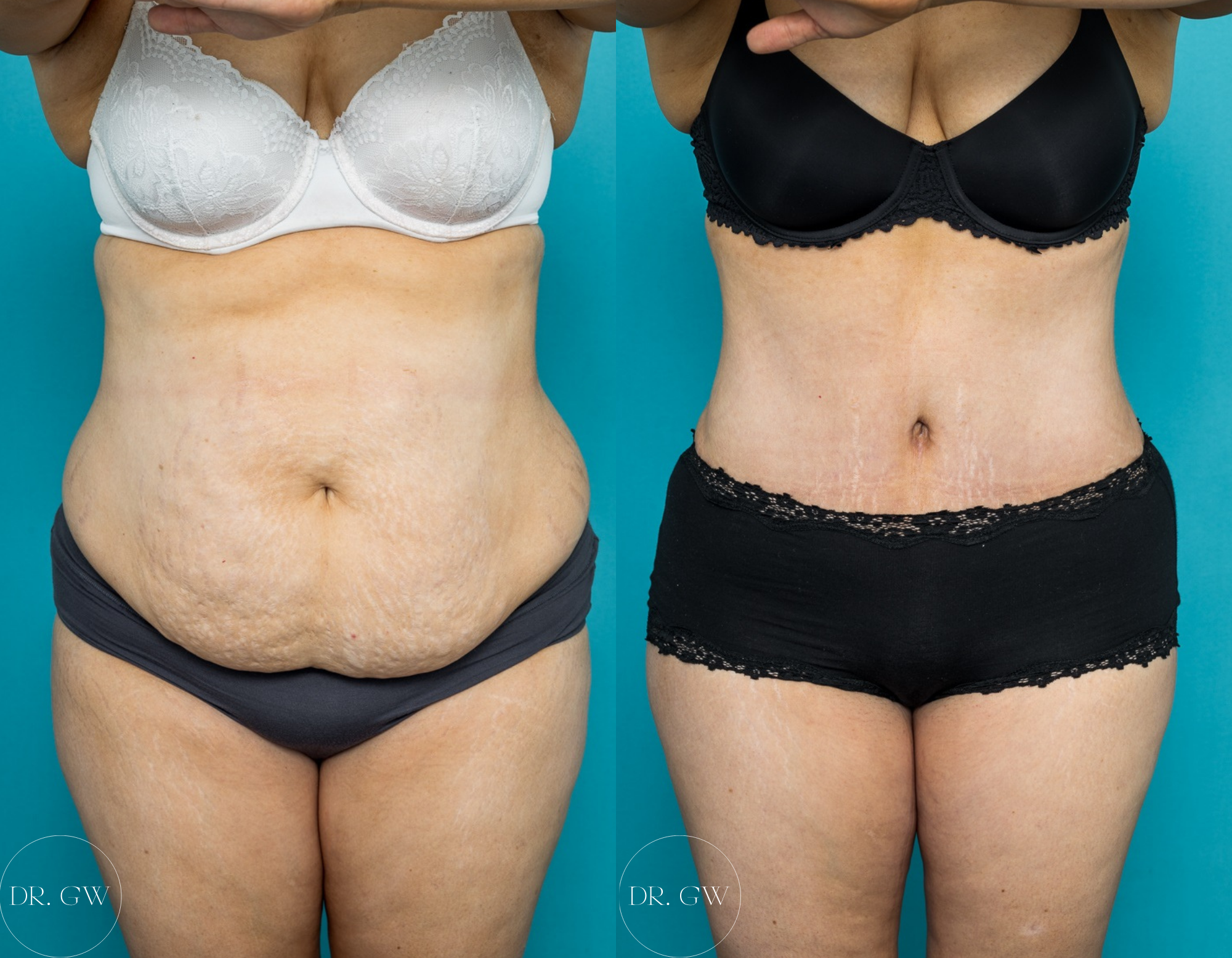
Abdominoplasty + 360 Liposuction Before and After Photos
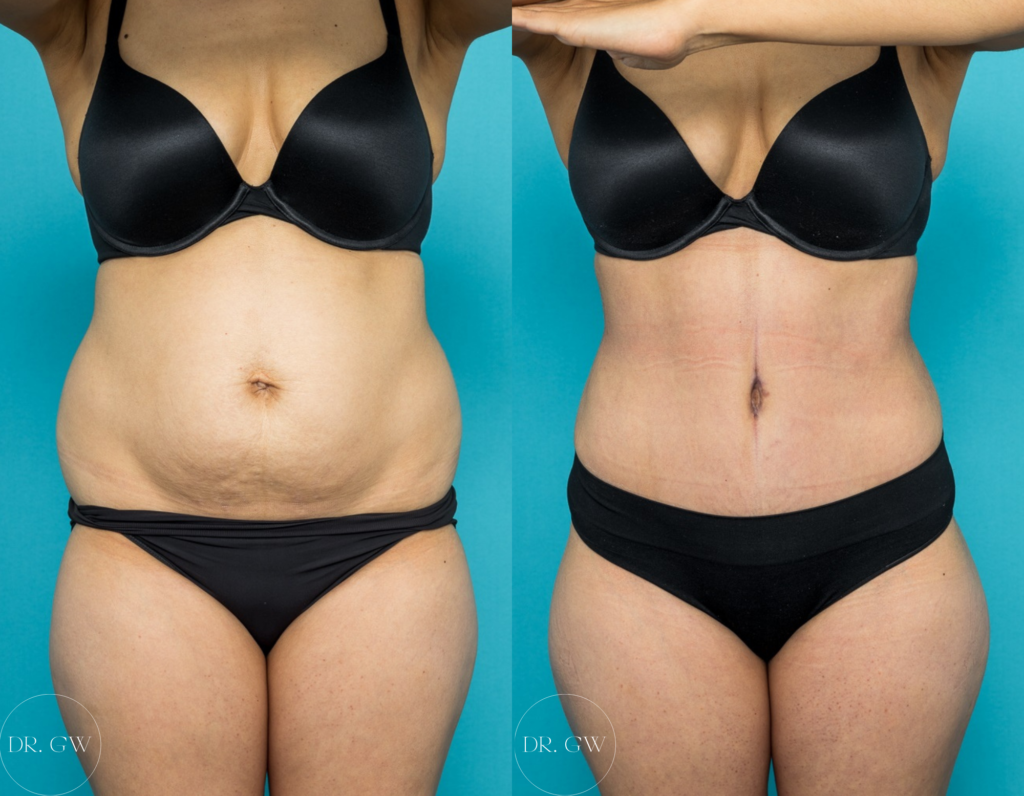
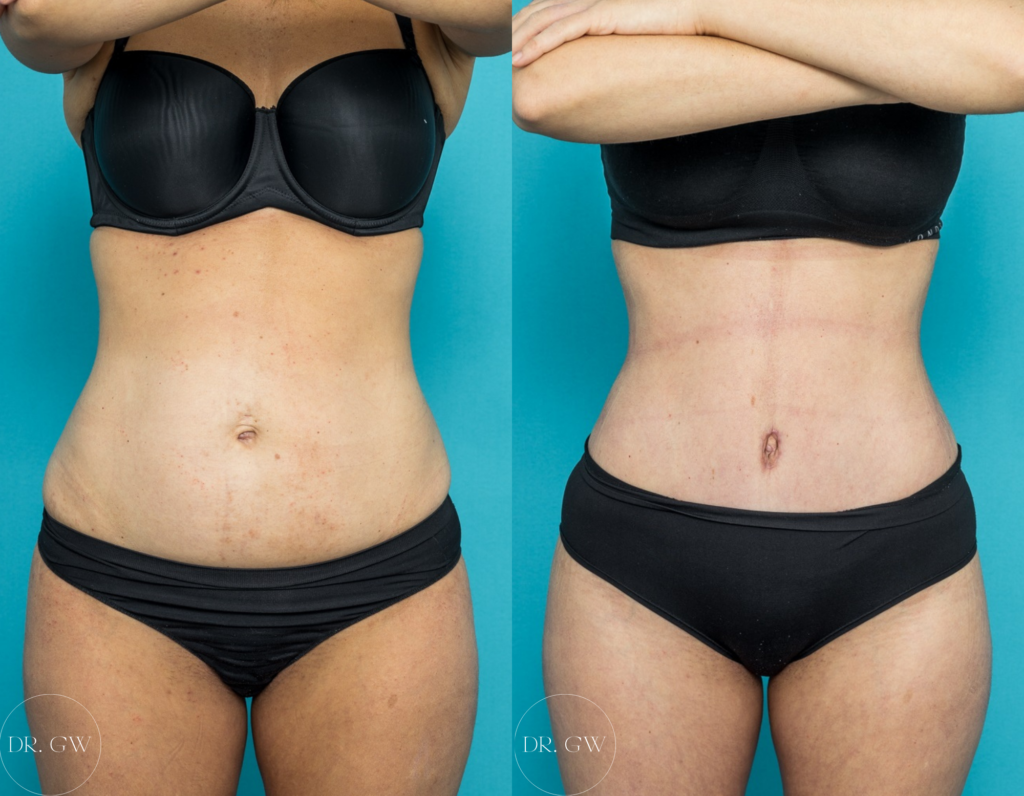
Photo disclaimer:
Each surgical procedure produces unique outcomes influenced by factors such as body composition, skin tone, laxity, age, and genetics. The before-and-after photographs displayed are of actual patients and are provided for informational purposes only.
Eligibility Criteria for Medicare Item 30175
Not every case of abdominal muscle separation qualifies for a Medicare rebate. The MBS outlines specific eligibility criteria, which are regularly reviewed.
To be eligible under Item 30175, the following must apply:
- The rectus diastasis measures at least 3 centimetres, confirmed by diagnostic imaging
- The patient is a postpartum woman who has not been pregnant in the last 12 months
- There are documented functional symptoms, such as lower back pain, instability, or limitations in daily tasks
- The patient has completed at least six months of non-surgical treatment, such as physiotherapy, without satisfactory improvement
- A GP referral is required for consultation with a Specialist Plastic and Reconstructive Surgeon
If these conditions are met, Medicare may contribute to the cost of the procedure. The presence of diastasis alone is not sufficient—functional symptoms and a trial of conservative management must be documented.
Why Some Surgeries Don’t Qualify
Many patients seeking abdominal wall surgery have a combination of functional and aesthetic concerns. However, Medicare does not support procedures aimed solely at altering appearance.
Cases that do not qualify for MBS Item 30175 include:
- Procedures performed less that 12 months since last pregnancy
- Surgery requested primarily for cosmetic appearance or contouring
- Muscle separation under 3 centimetres without significant symptoms
- Cases where physiotherapy or similar treatment has not been trialled
- Muscle separation in men or women who have not given birth (as per current MBS criteria)
Although this limitation has been raised in surgical discussions, current federal guidelines restrict Item 30175 to postpartum women.
Assessing Eligibility in Perth
At his West Perth practice, Dr Guy Watts conducts detailed, face-to-face assessments for individuals experiencing symptoms associated with rectus diastasis. These consultations are tailored to ensure that patients receive clear guidance regarding both their clinical condition and Medicare eligibility.
During the assessment, Dr Watts will:
- Perform a thorough physical examination to evaluate the abdominal wall, assess the degree of muscle separation, and check for any associated hernias or complications
- Review your medical history, including any previous pregnancies, abdominal surgeries, or relevant health conditions
- Investigate your history of non-surgical management, such as physiotherapy, core strengthening exercises, or use of support garments
- Coordinate with your general practitioner to ensure all referral documentation is complete and compliant with MBS requirements
- Assist with medical photography, which is a necessary part of Medicare submission for those who meet criteria
- Discuss the likely treatment pathways, including what is eligible under Medicare and what may require private options
This initial consultation also allows time to explain the expected surgical steps, recovery considerations, and whether any additional investigations, such as imaging, are needed. Dr Watts ensures patients have the opportunity to ask questions and leave with a comprehensive understanding of the next steps.
DOWNLOAD DR WATTS’ GUIDE TO COST OF SURGERY
What to Expect During Recovery
Recovery following abdominal muscle repair is a progressive and carefully monitored process. It’s essential for patients to prepare both physically and practically for the post-operative period to optimise healing and minimise complications.
✓ Immediately after surgery: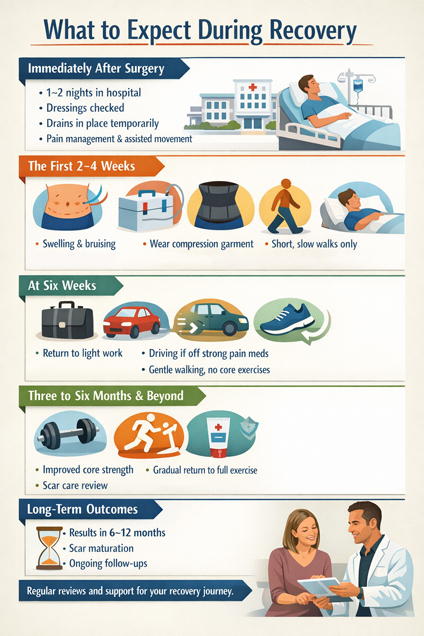
- Patients typically remain in hospital for one to two nights for monitoring
- Dressings are checked and changed as needed
- Small surgical drains may be placed to remove excess fluid and are generally removed before discharge
- Pain relief is prescribed to manage discomfort, and light assisted movement is encouraged early to reduce the risk of blood clots
✓ The first two to four weeks:
- Swelling, bruising and tightness across the abdominal region are expected
- A post-surgical support garment must be worn continuously to stabilise the area and reduce tension on the suture line
- Activity is limited to short, slow walks around the home; patients are advised to avoid any lifting, twisting, or bending
- Wound care instructions are provided, and patients are encouraged to rest in a slightly flexed position when lying or sleeping
✓ At six weeks:
- Most patients can return to light, non-physical work (such as desk-based roles) if recovery is progressing well
- Driving may be resumed once the patient is no longer reliant on strong pain relief and can move safely
- Low-impact exercises like walking can continue, but core-focused or resistance training is not advised
✓ Three to six months and beyond:
- Core strength may begin to improve, and abdominal tightness tends to settle
- High-impact activities and full exercise routines are typically phased back in only after review by Dr Watts
- Scar care instructions are reviewed to support optimal healing
✓ Long-term outcomes:
- Final results may take up to 12 months, particularly for deep muscle repair, internal healing and scar maturation
- Patients are reviewed periodically to monitor progress and address any emerging concerns
Dr Watts and his team provide a structured post-operative care plan, ensuring each patient understands their recovery timeline, restrictions, and review schedule. Education around wound care, activity planning and support garments is offered before discharge to help patients feel informed and prepared.
Understanding Appearance vs. Function
It is natural to feel disappointed if Medicare criteria are not met. However, the MBS exists to support procedures that are deemed medically necessary.
Dr Watts acknowledges that appearance and function are closely linked. Yet, eligibility must be based on objective findings—not emotional wellbeing or visual assessment alone. If surgery is sought for reasons outside Medicare scope, private care may still be available with informed understanding of the benefits, risks, and limitations.
FAQs About Abdominal Muscle Separation and Medicare
Next Steps for Patients in Perth
If you’re experiencing symptoms such as abdominal weakness, lower back discomfort or postural difficulty following pregnancy, the first step is to visit your general practitioner. A GP referral is necessary to see a Specialist Plastic and Reconstructive Surgeon.
Dr Guy Watts offers detailed assessments at his Perth practice and can advise whether your case aligns with Medicare Item 30175. His team assists with imaging, documentation, and preparation for surgery if applicable. Even if Medicare funding is not available, your options can still be explored.
Seeking accurate, evidence-based advice is the foundation of good surgical care. Patients are encouraged to schedule a consultation to better understand what is available and appropriate for their individual needs.
Further Reading
- Read about Dr Guy Watts’ Blog about What Do Torn Stomach Muscles Feel Like
- Read about Dr Guy Watts’ Blog abou How to Tell If Your Abdominal Muscles Were Damaged or Torn During Pregnancy
About Dr. Guy Watts – MED0001539378
FRACS (Plas) – Specialist Plastic Surgeon In Perth WA

Dr. Guy Watts is a Specialist Plastic Surgeon (AHPRA MED0001539378) with an extensive career that spans across renowned plastic surgery clinics worldwide. His experience has been honed through invaluable experiences at esteemed establishments such as the New York Eye and Ear Infirmary and the renowned Pitanguy Clinic in Brazil.
Having collaborated with the foremost cosmetic plastic surgeons on a global scale, Dr. Watts has chosen to return to Perth after a 17-year journey of intensive training and invaluable professional experience to bring the latest practices and technology in cosmetic plastic surgery to his patients.
Dr. Watts is a Fellow of the Royal Australasian College of Surgeons (FRACS) and a Member of the Australian Society of Plastic Surgeons (ASPS), Australasian Society of Aesthetic Plastic Surgeons (ASAPS) and the International Society of Aesthetic Plastic Surgeons (ISAPS).
Read about the potential Risks and Complications of Surgery
Read the Patient Information and Resources
About CLINISPA
Clinispa is Dr Watts’ bespoke medical clinic performing Cosmetic Aesthetic treatments. At Clinispa, we offer advanced clinical treatments in a luxurious and calming environment, tailored to support your skin’s health and appearance.
Clinispa aesthetic services are performed by Dr Guy Watts’ nursing professionals, who have a passion for and solid understanding of facial aesthetics.
All Clinispa clients are considered individually, with a personalised treatment plan consisting of advanced scientific approaches to cosmetic aesthetics. We incorporate innovative technologies in conjunction with superiorly formulated skin care.
For more information about the full range of Clinispa Aesthetic of Cosmetic Treatments visit the Clinispa website
Sorry, the comment form is closed at this time.