
05 Dec Will Medicare Cover My Rhinoplasty?
If you have been considering rhinoplasty and are unsure whether Medicare in Australia may provide financial support, it is important to understand the difference between procedures performed for medical purposes and those considered cosmetic. At Dr Guy Watts’ practice in Perth, many patients seek information on this topic before taking the next steps in their care.
Dr Guy Watts is a Specialist Plastic & Reconstructive Surgeon based in West Perth, Western Australia. His clinical practice includes consultations with individuals across a broad age range, from their 20s through to their 60s, who wish to understand whether part of their rhinoplasty procedure may be considered under Medicare’s criteria. This article explains how the Medicare Benefits Schedule (MBS) item numbers 45641 and 41693 apply, what evidence is required, and how these considerations are addressed in practice.
Take our quiz, and find out if you are ready for surgery
Understanding What Medicare Considers a Medically Necessary Rhinoplasty
The Medicare Benefits Schedule (MBS) is the list of medical services subsidised by the Australian Government. Rhinoplasty is not automatically eligible under Medicare. To be considered, there must be a medically necessary reason for the procedure, typically involving functional impairment or anatomical deviation due to trauma, congenital issues, or development.
Common indications include breathing difficulties, airway obstruction, or nasal deformities that affect nasal function. These indications must be objectively measurable and supported by documentation. On the other hand, if the motivation for surgery is based on a person’s dissatisfaction with the size, shape, or general appearance of the nose without functional symptoms, the procedure is categorised as cosmetic. Medicare does not provide funding for cosmetic rhinoplasty.
Dr Guy Watts explains to patients during consultations that eligibility for Medicare-related support relies not only on symptoms but also on specific supporting documentation. This includes clinical notes, objective assessments, and in many cases, photographs to demonstrate the concern.
MBS Item 45641: Total Rhinoplasty with Functional or Structural Indication
MBS item 45641 relates to total rhinoplasty procedures that involve adjusting both the bony and cartilaginous components of the nose. However, this item number can only be applied where the patient meets strict clinical criteria outlined by Medicare.
The use of this item number is considered when one of the following applies: the patient reports nasal obstruction with a NOSE Scale score greater than 45, or there is a notable congenital, developmental or acquired nasal deformity that is documented through clinical findings or photographic evidence.
This item includes both internal nasal structures and external features that may be affecting function. It may apply in cases involving significant septal deviation, facial trauma, or congenital asymmetries that interfere with breathing.
To support the use of item 45641, a patient is usually required to have the following: a current referral from a general practitioner, a completed NOSE Scale assessment, examination findings from a physical nasal assessment, standardised clinical photographs, and surgical documentation from the treating specialist.
The NOSE Scale (Nasal Obstruction Symptom Evaluation) is a validated patient-reported tool used to assess the extent of nasal airflow impairment. A score above 45 is generally used to help indicate a potential medical requirement for surgery. Personal reports of breathing difficulty alone are not sufficient. These concerns must be measured and supported through examination.
Dr Watts follows a structured assessment process at his Perth clinic, helping to gather documentation in line with MBS expectations.
DOWNLOAD DR WATTS’ GUIDE TO COST OF SURGERY
MBS Item 41693: Septoplasty for Nasal Septum Deviation
Item 41693 applies to a septoplasty, which is a procedure performed to adjust the position of the nasal septum, the structure that separates the two nasal passages. A deviated septum can impact airflow, leading to nasal obstruction, difficulty breathing through the nose, recurrent sinus infections, or other symptoms.
Septal deviation may be present from birth, develop over time, or result from trauma. If clinical examination confirms that the deviation contributes to functional symptoms, and conservative measures have not been effective, item 41693 may be considered.
In certain cases, this item is used in combination with item 45641, particularly when there is both internal deviation and external nasal asymmetry that need to be addressed to support nasal airflow. Dr Watts evaluates each individual’s presentation to determine whether these item numbers may be suitable.
Medicare only offers partial rebates. Even if item 41693 is applicable, it does not cover all associated costs.
What Medicare May Cover
Even where an MBS item number applies, Medicare rebates do not cover the total cost of surgery. The rebate is calculated based on the government-determined schedule fee for that service.
Most Specialist Plastic & Reconstructive Surgeons charge above the schedule fee due to the complexity, time, and training involved in these procedures. Other associated costs that are not covered by Medicare include private hospital theatre fees, anaesthetist services, assistant fees, post-surgical dressings and garments, review appointments, and splints when required.
Private health insurance may provide additional support for hospital-related fees, depending on the patient’s level of cover. However, even with private insurance, there are likely to be out-of-pocket costs. If the procedure is determined to be cosmetic only, Medicare and private health insurance will not provide any rebate or cover.
At Dr Watts’ West Perth clinic, patients are provided with clear information on the MBS item numbers applicable to their situation and the limits of any financial support that may be available. Each assessment is based on clinical need and current documentation.
Clinical Presentations That May Be Considered Under MBS Criteria
There are a number of clinical scenarios in which Medicare rebates may be considered. For example, if a person has sustained facial trauma and now experiences difficulty breathing or visible nasal deviation, these concerns may meet the criteria for MBS item 45641.
Similarly, individuals with congenital asymmetries or developmental differences in nasal structure may be considered where there is an associated functional concern. Patients who experience difficulty breathing due to a deviated septum may be assessed for item 41693.
Each scenario must be supported by clinical evidence. A detailed medical history, nasal examination, appropriate scoring tools, and photographic documentation are used to evaluate eligibility. Dr Watts assists patients in collecting this documentation where required.
Rhinoplasty Surgery Before and After Photos
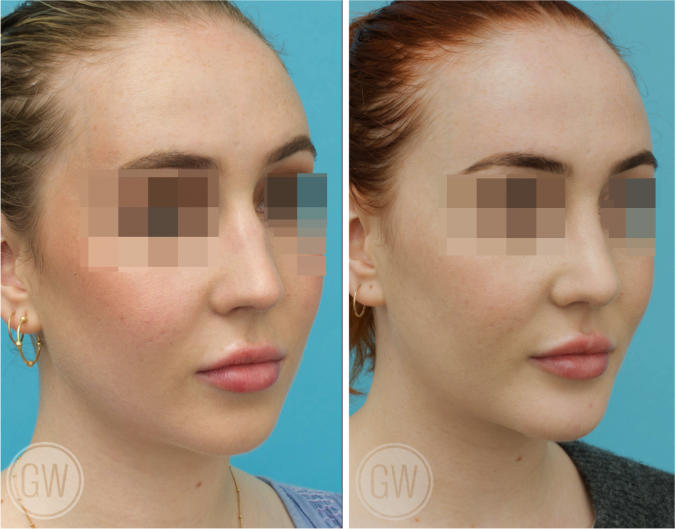
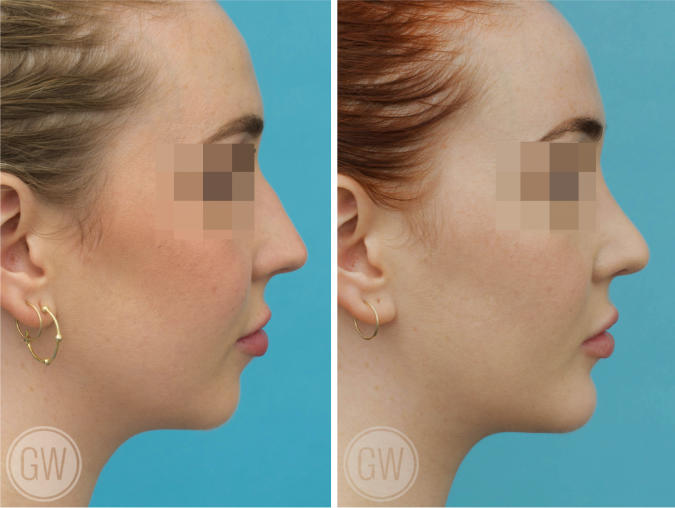
Photo disclaimer:
Each surgical procedure produces unique outcomes influenced by factors such as body composition, skin tone, laxity, age, and genetics. The before-and-after photographs displayed are of actual patients and are provided for informational purposes only.
What to Expect During a Consultation with Dr Guy Watts
When attending a rhinoplasty consultation at Dr Guy Watts’ clinic in Perth, the evaluation process includes a detailed assessment of both function and structure. Dr Watts is a Specialist Plastic & Reconstructive Surgeon with clinical experience managing both cosmetic and medically indicated nasal concerns.
During the consultation, a full nasal and medical history is reviewed. Where relevant, the NOSE Scale questionnaire is completed. A clinical nasal examination is then performed to evaluate airflow, septal deviation, nasal valve function, and the external nasal structure. Clinical photographs may be taken where appropriate.
If Medicare item numbers may be relevant, this is discussed in relation to the patient’s clinical presentation. Patients are also given a written quotation, which includes all applicable item numbers. Any correspondence with referring GPs is maintained for continuity of care.
This approach supports informed decision-making and is backed by appropriate documentation. Dr Watts’ clinic encourages patients to ask questions and takes time to explain the rationale for each recommendation.
The Role of Documentation in Medicare Eligibility
Medicare rebates are based on clinical evidence. Without the correct documentation, even cases with clear symptoms may not qualify for a rebate. Supporting evidence typically includes a GP referral, NOSE Scale scores, clinical examination notes, photographs, and, if revision surgery is being considered, previous operative reports.
In some cases, reports from ENT specialists or respiratory physicians may be required, particularly where functional symptoms are complex. Dr Watts works with patients to coordinate this documentation where necessary and guides them through the process.
Occasionally, patients believe they may qualify for a rebate based on symptoms, but further assessment reveals that the criteria are not met. Dr Watts provides each patient with current, clear information regarding eligibility, expectations, and remaining costs.
When Rhinoplasty Is Cosmetic
Some individuals seek rhinoplasty for personal or aesthetic reasons only. Common concerns may include the size of the nose, its profile, symmetry, or other appearance-related features. These concerns are not eligible for Medicare rebates, regardless of their psychological impact.
In these cases, surgery can still be discussed, but it is important to understand that no part of the procedure will be covered by Medicare or private health insurance. Dr Watts supports patients in understanding this distinction so they can make decisions based on accurate expectations.
Aesthetic considerations remain a valid reason for seeking consultation, but expectations must be aligned with the boundaries of the MBS and insurance systems in Australia.
FAQs About Medicare and Rhinoplasty
A Final Word for Perth Patients
Understanding Medicare’s approach to rhinoplasty can be complex, especially when considering item numbers such as 45641 and 41693. Each case is unique. The presence of symptoms does not automatically indicate eligibility, and not all breathing concerns will qualify for funding under the MBS.
For individuals in Perth or regional Western Australia who are exploring rhinoplasty due to structural or breathing-related concerns, a consultation with a qualified Specialist Plastic Surgeon may assist in determining whether the issue aligns with Medicare’s clinical criteria.
Dr Guy Watts provides thorough assessments for individuals aged 20 to 70, focusing on the evaluation and documentation required to support potential MBS eligibility. Consultations at his West Perth clinic are centred on clinical needs and evidence-based indications for surgery.
Contact Dr Guy Watts
If you are considering rhinoplasty for functional or structural concerns, a personalised consultation with Dr Guy Watts in West Perth can help clarify your eligibility under the MBS. Each patient is assessed individually, and advice is based on current clinical findings.
Dr Guy Watts – Specialist Plastic & Reconstructive Surgeon
8 Ventnor Avenue, West Perth, 6005
p. (08) 9286 1600
e. admin@guywattsplasticsurgeon.com.au
Further Reading
- Read more about How to Fund Your Plastic Surgery
- Read more about Rhinoplasty for a Bulbous Nose
About Dr. Guy Watts – MED0001539378
FRACS (Plas) – Specialist Plastic Surgeon In Perth WA

Dr. Guy Watts is a Specialist Plastic Surgeon (AHPRA MED0001539378) with an extensive career that spans across renowned plastic surgery clinics worldwide. His experience has been honed through invaluable experiences at esteemed establishments such as the New York Eye and Ear Infirmary and the renowned Pitanguy Clinic in Brazil.
Having collaborated with the foremost cosmetic plastic surgeons on a global scale, Dr. Watts has chosen to return to Perth after a 17-year journey of intensive training and invaluable professional experience to bring the latest practices and technology in cosmetic plastic surgery to his patients.
Dr. Watts is a Fellow of the Royal Australasian College of Surgeons (FRACS) and a Member of the Australian Society of Plastic Surgeons (ASPS), Australasian Society of Aesthetic Plastic Surgeons (ASAPS) and the International Society of Aesthetic Plastic Surgeons (ISAPS).
Read about the potential Risks and Complications of Surgery
Read the Patient Information and Resources
About CLINISPA
Clinispa is Dr Watts’ bespoke medical clinic performing Cosmetic Aesthetic treatments. At Clinispa, we offer advanced clinical treatments in a luxurious and calming environment, tailored to support your skin’s health and appearance.
Clinispa aesthetic services are performed by Dr Guy Watts’ nursing professionals, who have a passion for and solid understanding of facial aesthetics.
All Clinispa clients are considered individually, with a personalised treatment plan consisting of advanced scientific approaches to cosmetic aesthetics. We incorporate innovative technologies in conjunction with superiorly formulated skin care.
For more information about the full range of Clinispa Aesthetic of Cosmetic Treatments visit the Clinispa website
Sorry, the comment form is closed at this time.