For many men and women considering plastic surgery in Perth and the surrounding areas, lower neck lift (Platysmaplasty) surgery may help address visible changes related to skin laxity in the lower face and neck region. However, the focus is not only on the operation itself. The recovery period is equally important. In fact, the experience in the weeks and months following surgery can significantly influence how individuals perceive the process overall.
Dr Guy Watts, Specialist Plastic & Reconstructive Surgeon based in Perth, prioritises comprehensive education for every individual considering neck lift surgery. Understanding the recovery timeline, knowing what is typical versus what may require medical attention, and learning how to support the body during the healing phase are all important components of preparation. While each person’s recovery will be unique, general milestones and evidence-based guidance help provide clarity.
This article offers an in-depth exploration of the recovery journey following a lower neck lift, tailored for patients in the Perth region. From the immediate post-operative period to longer-term settling, it outlines what to expect, how to promote steady healing, and why a personalised care plan matters.
Take our quiz, and find out if you are ready for surgery
The First Hours After Surgery: Supporting Early Healing
Recovery begins immediately in the operating theatre. Once the lower neck lift (Platysmaplasty) is completed under general anaesthesia, the patient is transferred to a monitored recovery area where vital signs, comfort, and dressings are observed closely. If you’re unsure whether a neck-lift procedure is right for you, read our guide on anterior neck-lift surgery and its indications. Depending on individual health status and the complexity of surgery, patients may either return home on the same day or remain overnight under clinical observation.
In the first few hours after surgery, sensationwhens of tightness or fullness in the lower face and neck are common. These responses are expected and relate to both the surgical technique and initial swelling. Temporary drowsiness or grogginess may persist due to anaesthetic medications, and discomfort is usually well managed with prescribed pain relief. Most patients wear a soft compression garment around the neck and lower face, which supports the healing tissue and helps reduce swelling.
Postoperative instructions are provided in detail. These include guidance on how and when to wear the garment, medication timing, incision care, and physical activity restrictions. Elevating the head while resting or sleeping helps reduce pressure and encourages fluid drainage from the treated area. For the first 24 to 48 hours, rest and assistance from a family member or support person are recommended.
The First Week: Physical Changes and Wound Care
The initial seven days following surgery typically involve the most noticeable swelling and changes in sensation. Puffiness in the neck and jawline is normal, and bruising may extend to the upper chest or near the ears. These effects are part of the body’s standard inflammatory response to surgery. Mild numbness or a pulling sensation when turning the head may also be present. These are temporary and typically resolve as healing progresses.
Dr Guy Watts’ Perth clinic provides follow-up care during this phase. Incision sites are assessed regularly. Where external sutures are used, they are usually removed between days five and seven. If dissolvable sutures are in place, these are naturally absorbed by the body. In some cases, temporary drains are inserted during surgery to assist with fluid management and are removed early in the recovery process under sterile conditions.
Patients are encouraged to maintain gentle mobility and follow wound care instructions carefully. Activities that involve sudden neck movement, lifting, or bending should be avoided. Although some individuals begin to feel physically better by the end of the week, swelling and bruising may remain visible. This is considered a normal part of the healing process and not usually cause for concern.
It is also worth noting that emotional responses can vary during early recovery. Feelings of uncertainty, mood fluctuations, or even brief regret are not uncommon and tend to ease as physical healing progresses. Ongoing communication with the clinic is encouraged for reassurance and support.
DOWNLOAD DR WATTS’ GUIDE TO COST OF SURGERY
Ultimate Guide To The Cost of Surgery
Two Weeks After Surgery: Reintroducing Daily Activities
By the second week, the most intense swelling typically begins to settle. Many patients feel ready to resume light daily activities, although they are still in the active healing phase. Residual swelling may become more localised and softer in texture. Bruising, where still present, often begins to change colour as the body gradually reabsorbs the blood from beneath the skin.
Tingling, sensitivity, or numbness near the jawline, chin, or ears may still be present. These effects reflect nerve recovery and usually resolve in the weeks to months ahead. Incisions will still be noticeable, but are usually concealed in natural creases or behind the ears. Early scars may appear pink or raised but tend to become less visible over time with appropriate care.
Patients in sedentary roles may feel comfortable returning to work during this period, provided they are no longer using prescription pain medication. Those in physically demanding occupations or roles involving extensive speaking or public interaction may prefer to wait until external signs of surgery are less apparent.
Compression garments are typically still worn at night or while resting. Avoiding direct sun exposure remains important, particularly in Perth’s climate. Incisions exposed to ultraviolet radiation may experience pigmentation changes. High-SPF sunscreen and protective clothing are recommended.
One Month After Surgery: Tissue Settling and Early Adjustments
Around the four-week mark, visible changes begin to emerge. Swelling has generally reduced, and most bruising has faded. While the area may look more settled, deeper tissue layers continue to heal. Some firmness or tightness under the skin is normal as scar tissue forms and softens over time.
Mild asymmetry or lingering puffiness may still be present and does not typically indicate a complication. Thesefeatures often resolve as inflammation continues to subside and the skin adapts to its adjusted position. It is still too early to assess the final surgical outcome.
Patients are often cleared to return to light exercise, including walking or low-impact movement. However, activities involving vigorous exertion, contact sports, or lifting weights should only resume following discussion with Dr Watts during a review consultation.
Many individuals find this stage encouraging. Daily activities usually become more manageable, and healing becomes more predictable. Nonetheless, expectations should remain realistic, as complete results continue to develop in the months ahead.
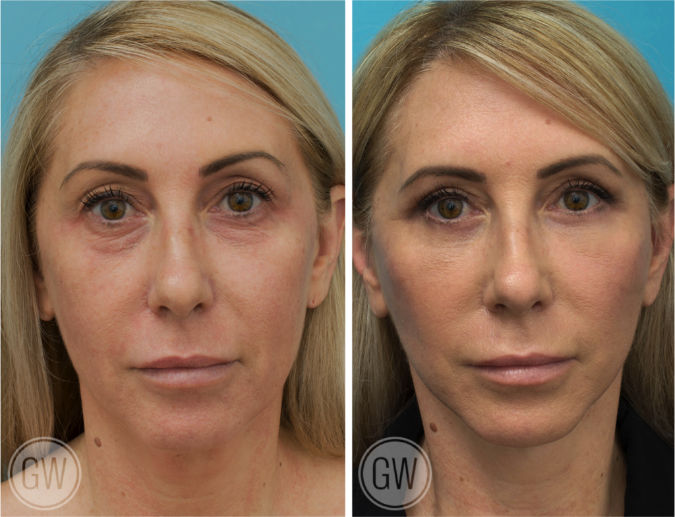
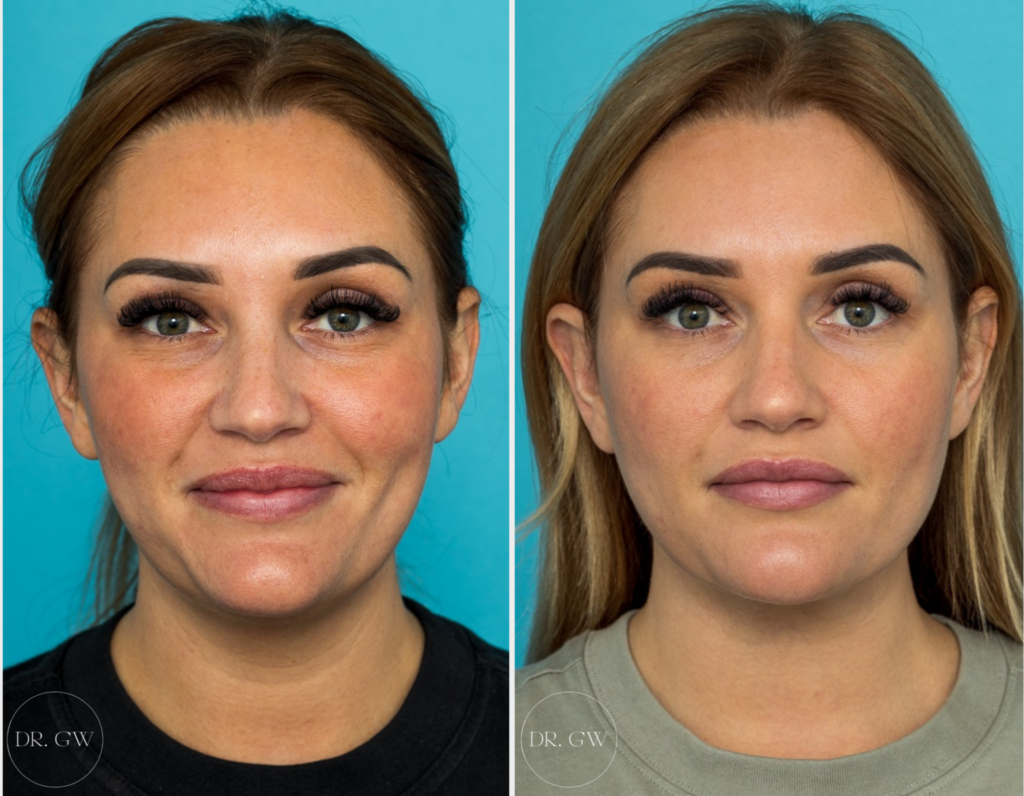
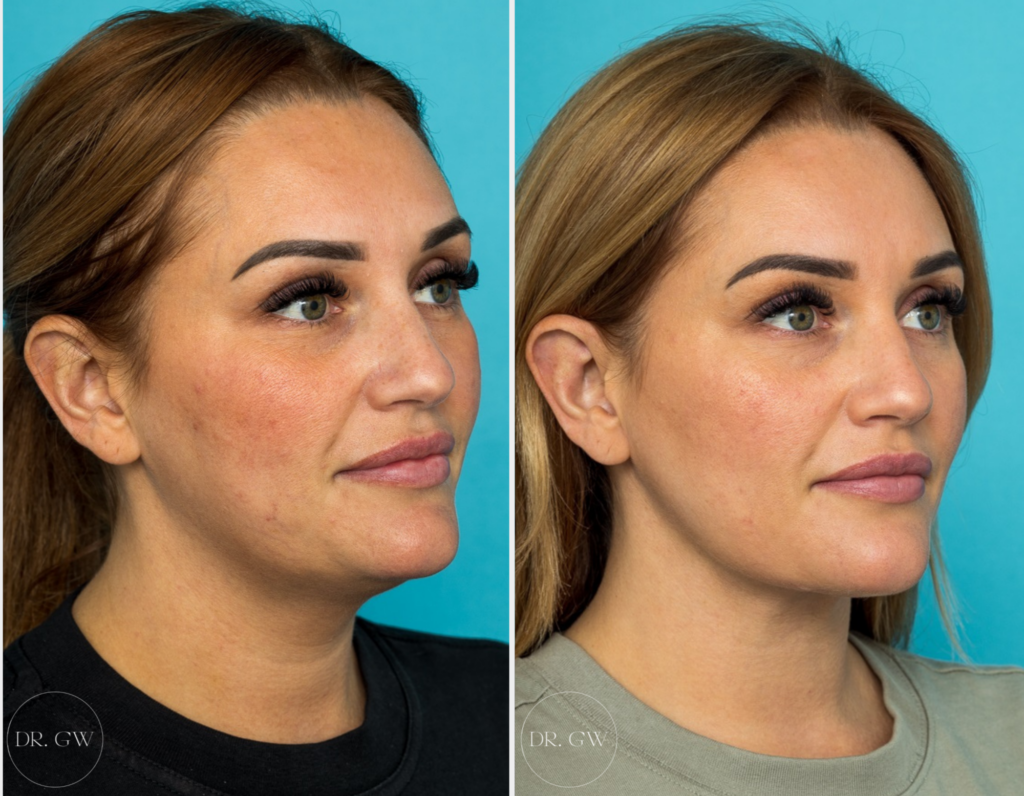
Neck Lift Before and After Photos
Photo disclaimer: Each surgical procedure produces unique outcomes influenced by factors such as body composition, skin tone, laxity, age, and genetics. The before-and-after photographs displayed are of actual patients and are provided for informational purposes only.
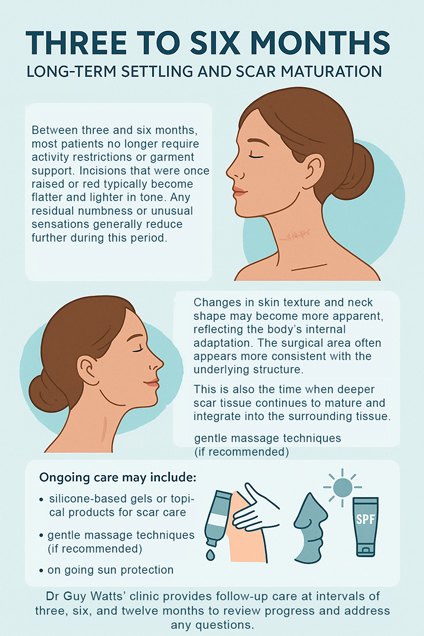
Three to Six Months: Long-Term Settling and Scar Maturation
Between three and six months, most patients no longer require activity restrictions or garment support. Incisions that were once raised or red typically become flatter and lighter in tone. Any residual numbness or unusual sensations generally reduce further during this period.
Changes in skin texture and neck shape may become more apparent, reflecting the body’s internal adaptation. The surgical area often appears more consistent with the underlying structure. This is also the time when deeper scar tissue continues to mature and integrate into the surrounding tissue.
Ongoing care may include the use of silicone-based gels or topical products for scar care, gentle massage techniques (if recommended), and ongoing sun protection. Regular use of sunscreen is essential for long-term scar protection.
Dr Guy Watts’ clinic provides follow-up care at intervals of three, six, and twelve months to review progress and address any questions.
Long-Term Recovery: Adjustments Over Time
While many individuals feel physically healed by six months, it is important to recognise that recovery continues at a slower pace for up to a year or more. Nerve recovery, softening of scar tissue, and subtle changes in skin quality are all part of this ongoing process.
The outcomes of a lower neck lift are intended to be long lasting. The surgical repositioning of tissue and adjustment of excess skin generally supports more structured anatomy in the treated area. Ageing continues, but the changes made during surgery may remain apparent for several years.
Maintaining a steady weight, avoiding smoking, and limiting UV exposure can help support surgical outcomes. These lifestyle factors contribute to skin quality and long-term satisfaction.
The Importance of Personalised Recovery Planning
Each person’s recovery is different. Factors such as age, overall health, skin characteristics, and whether prior treatments have occurred all influence healing. Individuals who have had energy-based treatments or injectables may experience longer recovery times due to existing tissue changes.
Dr Guy Watts takes a personalised approach to recovery planning. Every surgical plan is developed with consideration for the individual’s health profile and history. This process helps reduce uncertainty and supports a more structured post-operative experience. Recovery is not only physical but involves emotional and practical aspects as well. Ongoing follow-up and communication with the clinic are key components of that support.
Recovery in the Perth Climate: Local Factors to Consider
Perth’s warm climate and high UV index are relevant considerations during the recovery phase. Higher temperatures and humidity, particularly in summer, may increase the sensation of swelling or discomfort. Some individuals choose to schedule their procedure during the cooler months between April and August for this reason.
Sun exposure should be minimised, especially on areas with healing incisions. Wearing protective clothing, remaining indoors during peak hours, and applying broad-spectrum SPF 50+ sunscreen are recommended practices.
For regional patients or those flying into Perth, travel should ideally be delayed until after the first post-operative review. Air travel in the early stages can increase swelling due to changes in cabin pressure and reduced movement. Compression garments and hydration may help if flying is unavoidable.
Being based in Perth, Dr Guy Watts’ clinic provides accessible follow-up care for local patients. Prompt assessment of any concerns and structured post-operative support are important advantages of choosing a locally based specialist.
FAQs About Recovery After Neck Surgery
What if I have had energy-based treatments like Ultherapy or RF on my neck – will recovery be different?
Previous treatments can affect tissue characteristics and healing time. This is considered during your consultation so that your care plan is adjusted accordingly.
Could Perth’s sun and heat affect how my scars heal?
Yes. The high UV index in Perth may increase the risk of pigmentation changes or prolonged redness at incision sites. Sun protection and timing your procedure seasonally may help support more stable outcomes.
Will I experience numbness, and how long will it last?
It is common to experience temporary numbness or tingling in the lower face, neck or near the ears. These sensations often improve as nerve function gradually returns. Most changes resolve within a few weeks to months.
If I need to fly into Perth from a regional area, will travel affect my healing?
Air travel during the first week after surgery may lead to increased swelling. Where possible, flying is postponed until the first follow-up visit. If travel is necessary, wearing a compression garment and staying well hydrated may assist.
When can I wear scarves, jewellery or high-neck clothing again?
These items should be avoided in the first week as they may place pressure on healing areas. Once swelling has subsided and wounds have closed, typically after 7 to 10 days, these items can usually be worn again. Specific timing will be discussed during your review.
What if I gain or lose weight during recovery – will it affect the final result?
Yes. Significant weight fluctuations can affect how the neck appears after surgery. A consistent weight is generally encouraged both before and after the procedure to support stable outcomes.
Supporting recovery after neck lift surgery involves more than physical rest. Patients are encouraged to keep their head elevated during sleep, wear the compression garment as instructed, and avoid sudden neck movements or heavy lifting. Avoiding accessories or clothing that apply pressure near incisions is important until the area has healed sufficiently.
Incision sites should be kept clean and untouched unless advised otherwise. Makeup, oils, or creams should not be applied until the skin is assessed and cleared during follow-up. Dr Guy Watts provides tailored care guidance throughout this period and monitors progress through scheduled reviews. Avoiding smoking and alcohol, maintaining hydration, and eating a diet rich in nutrients like protein, vitamin C, and iron can all support recovery.
Healing timelines vary. It is normal for the final outcome to take several months. Comparing one’s healing to others may lead to confusion. If there are concerns at any stage, patients are encouraged to contact the clinic for review.
About Dr. Guy Watts – MED0001539378
FRACS (Plas) – Specialist Plastic Surgeon In Perth WA
Dr. Guy Watts is a Specialist Plastic Surgeon (AHPRA MED0001539378) with an extensive career that spans across renowned plastic surgery clinics worldwide. His experience has been honed through invaluable experiences at esteemed establishments such as the New York Eye and Ear Infirmary and the renowned Pitanguy Clinic in Brazil.
Having collaborated with the foremost cosmetic plastic surgeons on a global scale, Dr. Watts has chosen to return to Perth after a 17-year journey of intensive training and invaluable professional experience to bring the latest practices and technology in cosmetic plastic surgery to his patients.
Clinispa is Dr Watts’ bespoke medical clinic performing Cosmetic Aesthetic treatments. At Clinispa, we offer advanced clinical treatments in a luxurious and calming environment, tailored to support your skin’s health and appearance.
Clinispa aesthetic services are performed by Dr Guy Watts’ nursing professionals, who have a passion for and solid understanding of facial aesthetics.
All Clinispa clients are considered individually, with a personalised treatment plan consisting of advanced scientific approaches to cosmetic aesthetics. We incorporate innovative technologies in conjunction with superiorly formulated skin care.
For more information about the full range of Clinispa Aesthetic of Cosmetic Treatments visit the Clinispa website




Sorry, the comment form is closed at this time.