Eyelid surgery, medically known as blepharoplasty, is a procedure some individuals consider to address functional or appearance-related concerns in the eyelid region. While the surgical process is often straightforward, understanding the recovery after eyelid surgery is essential for planning, preparation and supporting the healing process.
Dr Guy Watts, Specialist Plastic & Reconstructive Surgeon based in West Perth, works with patients across Perth and regional Western Australia. His focus is on delivering a structured and well-informed experience before and after surgery. Knowing what to expect during recovery can reduce uncertainty and assist patients in making appropriate short-term adjustments to their routine.
In this article, Dr Guy Watts offers a comprehensive and practical guide to the recovery process after eyelid surgery, along with realistic tips to assist patients during each phase.
Take our quiz, and find out if you are ready for surgery
Why People in Perth Consider Eyelid Surgery
Blepharoplasty may be recommended to address functional changes that impact vision, or to support patients seeking to adjust the appearance of the eyelid region. For example, some individuals experience excess upper eyelid skin that may affect their peripheral vision. Others may notice puffiness or fullness around the eyes that they wish to address.
Ageing, genetic predisposition, environmental exposure and long-term lifestyle factors can contribute to changes in the eye area. Over time, skin in the upper or lower eyelids may become thinner, or the supportive structures beneath the skin may alter. While these are natural changes, some people find they interfere with daily comfort or give an appearance they feel does not reflect how they feel internally.
As a Specialist Plastic & Reconstructive Surgeon, Dr Guy Watts tailors each procedure to the patient’s anatomy, skin characteristics and treatment goals. Whether the intention is to adjust the visual field, modify the eyelid area, or both, the approach is grounded in evidence-based practice and clinical precision.
At his West Perth clinic, Dr Watts consults with a diverse range of patients. Some are in their 30s who have noticed early eyelid changes. Others may be older and wish to address persistent eyelid heaviness or volume beneath the eyes. In all cases, individualised assessment is key to developing a plan that reflects the patient’s anatomy and surgical goals.
Blepharoplasty may involve the upper eyelids, lower eyelids, or both. In some cases, the procedure is combined with other facial surgery to address multiple areas at once. Dr Watts will guide patients through the risks, benefits and expected outcomes based on their specific presentation.
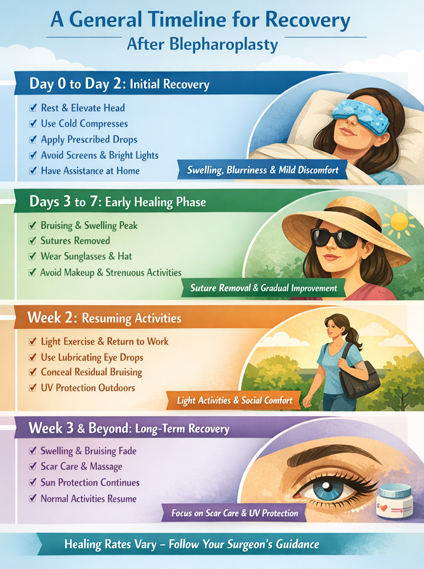
A General Timeline for Recovery
Recovery following blepharoplasty can differ based on age, skin type, procedure type and overall health. While healing varies between individuals, a general recovery timeline can assist patients with planning return to work, travel, and social activities.
Understanding this timeline can also support more realistic expectations about what recovery will look and feel like. It is important to recognise that every person heals at their own pace, and some variation in recovery progress is completely normal.
✓ Day 0 to Day 2 – Initial Recovery at Home
After surgery, patients are discharged home with detailed postoperative instructions. It is common to experience swelling, tightness, mild discomfort and temporary blurriness of vision. These are expected effects that typically improve with rest, proper head elevation and prescribed care.
Some individuals may also experience mild tearing or dryness of the eyes, a sensation of heaviness, or light sensitivity. The goal during this period is to minimise strain and support the early healing response.
During the first 48 hours, Dr Guy Watts recommends:
Keeping your head elevated at all times, including while sleeping
Using cold compresses regularly to help reduce swelling
Applying all prescribed ointments and eye drops as directed
Avoiding activities that strain the eyes such as reading or screen use
Keeping lights dimmed and avoiding bright outdoor exposure
It is essential to have someone available to drive you home and stay with you for the first 24 hours. Prearranging meals and assistance with household tasks is also encouraged during this phase.
Over-the-counter medications for pain or discomfort may be recommended, but only under guidance from Dr Watts’ team. Patients should avoid anti-inflammatory medications or supplements unless specifically advised.
✓ Days 3 to 7 – Early Healing Phase
Swelling and bruising generally peak around day three, followed by gradual improvement. Patients often describe a tight or pulling sensation around the eyes. This is part of the expected tissue response as the eyelids begin to heal.
By day five, many patients begin to notice improvement in the shape and comfort of the eyelids, although swelling may still be visible. Sleeping with the head elevated and continuing cold compresses can assist with further swelling management.
Between day five and day seven, sutures may be removed at a follow-up appointment at Dr Watts’ West Perth clinic. During this review, early healing progress is assessed and the next steps of your care plan are discussed.
Tips for this phase:
Avoid eye makeup and contact lenses
Stay out of sun, wind or dusty environments
Wear dark sunglasses and a wide-brimmed hat when outdoors
Keep activities light and avoid bending, lifting or straining
Maintain gentle eyelid hygiene as advised by Dr Watts
Some temporary asymmetry or unevenness is common during this period. It does not usually indicate a complication and often resolves as swelling subsides.
✓ Week Two – Resuming Light Daily Activities
Most patients feel more comfortable resuming light, non-physical tasks by the second week. While some residual swelling or bruising may remain, it is typically minor and can often be concealed with sunglasses or, if appropriate, concealer.
At this stage:
Gentle walking is generally well tolerated
Makeup and contact lenses may be reintroduced under guidance
UV protection is essential during any time spent outdoors
Lubricating eye drops may be recommended to assist with dryness or sensitivity
It is also common for the eyelids to feel firmer to touch or slightly numb. These sensations are usually temporary and resolve over time as nerve endings and tissue adjust during healing.
Patients may begin to feel more socially comfortable attending public settings or returning to work, especially in indoor or desk-based roles. However, care should still be taken to avoid fatigue or activities that increase blood pressure around the eyes.
✓ Week Three and Beyond – Supporting Long-Term Recovery
From the third week onward, most of the visible swelling and bruising have significantly reduced. The eyelid region may feel firmer or slightly tight, but this typically improves with time. While other people may not notice any lingering signs, patients may still experience mild sensations during healing.
From this point, most day-to-day activities can usually resume, and scar care may begin using silicone-based products or gentle massage if recommended. Continued sun protection remains important, particularly as the skin around the eyes is highly sensitive to UV exposure. Although visible signs of surgery may have improved, internal healing continues for several months, and long-term outcomes depend on consistent aftercare.
DOWNLOAD DR WATTS’ GUIDE TO COST OF SURGERY
Ultimate Guide To The Cost of Surgery
Postoperative Support from Dr Watts’ West Perth Clinic
Comprehensive follow-up care is a key component of postoperative recovery. Dr Guy Watts provides patients with detailed instructions for each stage, including wound care, medication use, physical activity, driving and return-to-work planning.
His team offers support by:
Providing written and verbal instructions tailored to your procedure
Reviewing your progress at regular intervals
Offering advice on skin protection and sun avoidance
Assisting with questions or concerns that arise during recovery
All postoperative appointments are held at Dr Watts’ West Perth clinic, where healing is monitored, questions are addressed and care plans adjusted where necessary. Patients are supported throughout the healing period with timely reviews and ongoing communication.
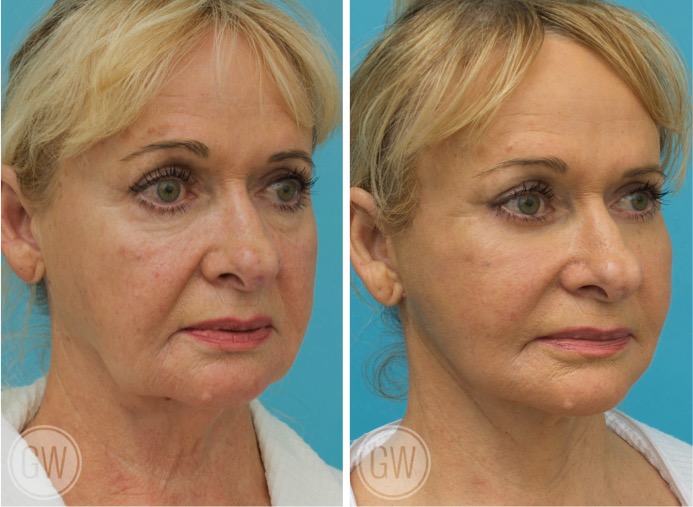
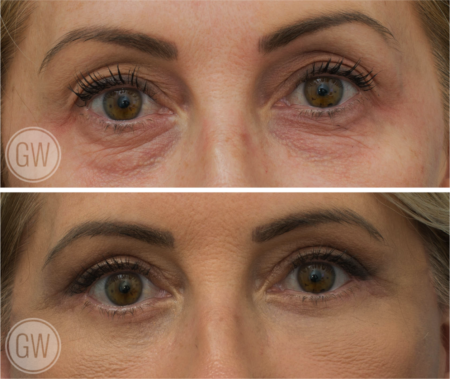
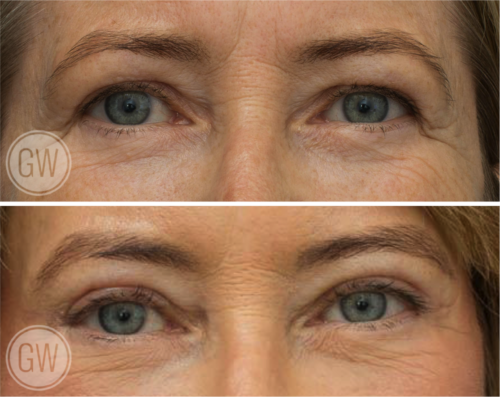
Lower Blepharoplasty Surgery Before and After Photos
Photo disclaimer: Each surgical procedure produces unique outcomes influenced by factors such as body composition, skin tone, laxity, age, and genetics. The before-and-after photographs displayed are of actual patients and are provided for informational purposes only.
Helpful Habits After Eyelid Surgery
Helpful recovery habits include keeping your head elevated while resting or sleeping during the first week, which may support the reduction of swelling. Using cool compresses during the first 48 hours can also help manage swelling around the eyes. Wearing sunglasses outdoors protects the eye area from wind and UV exposure, both of which can affect healing skin. Staying well hydrated and following a nutrient-rich diet may assist tissue repair, while taking all medications and applying ointments exactly as directed helps promote a steady recovery. Limiting screen use in the first few days may also reduce eye strain and support comfort.
What to Avoid During Early Recovery
There are a number of activities that should be avoided to help support uncomplicated healing. Patients are advised to avoid bending, lifting, or engaging in any strenuous physical activity for at least two weeks. Applying makeup to the eyelids should be delayed until the incisions have fully healed and you are cleared to do so. Contact lenses should also be avoided unless approved by Dr Watts. Exposure to chlorinated pools, saunas, hot tubs and natural water sources like oceans should be avoided until the area is fully healed to reduce the risk of irritation or infection. Smoking and alcohol consumption can negatively affect tissue repair and are best avoided during early recovery. High-impact exercise or activities that increase blood pressure should be postponed until advised it is safe to resume.
FAQs About Recovery After Eyelid Surgery
Can I wear my prescription glasses after surgery?
Yes, prescription glasses can typically be worn immediately after surgery as they do not press on the surgical site. If your frames sit heavily on the eyelids, temporary adjustments may be needed.
What if I sneeze or cry in the first few days?
Sneezing or crying during the early healing phase may feel uncomfortable but generally does not affect healing. If you have allergies or are unwell, Dr Watts may recommend supportive treatments to help reduce irritation.
How soon can I travel home if I live in regional WA?
Patients are advised not to drive themselves. For longer travel, including flights, it is recommended to wait several days and confirm suitability at your follow-up appointment.
Can I laugh or smile normally after surgery?
Yes. Normal facial expressions are unlikely to affect the healing process. You may feel mild tightness in the first week, but this typically resolves with time.
When can I resume screen time or watch TV?
Screen time should be avoided for the first 48 hours. Short periods may then be reintroduced gradually based on comfort and eye sensitivity.
What precautions should I take if I work outdoors in the Perth sun?
Extended sun exposure can impact healing. If you work outdoors, it’s important to use sunglasses, a wide-brimmed hat and a suitable physical sunscreen. Additional healing time may be required before returning to these environments.
Are there foods or drinks I should avoid during recovery?
Salty foods and alcohol can increase swelling and are best avoided during the first week. A balanced diet with adequate protein and hydration can assist recovery.
Why does one eyelid look different from the other during healing?
It is common for one side to heal faster or appear more swollen than the other. This is generally temporary and monitored closely during your follow-ups.
Can I swim in a pool or ocean once my stitches are removed?
It is best to wait at least two to three weeks or until the area has fully healed before swimming. This helps reduce the risk of infection or irritation.
How do I know if my scars are healing properly?
Eyelid scars are typically placed within natural skin folds and often become less visible over time. Firmness or slight elevation is normal early on. Dr Watts will assess this at each follow-up visit.
Medical References
Hollander MHJ et al. Impact of upper blepharoplasty, with or without orbicularis oculi muscle excision, on dry eye symptoms and tear film. Acta Ophthalmol. 2022. https://onlinelibrary.wiley.com/doi/10.1111/aos.15036
Pruksapong C et al. Upper eyelid blepharoplasty: electrocautery versus scalpel – a randomized controlled trial and systematic review. Aesthetic Plast Surg. 2023. https://pmc.ncbi.nlm.nih.gov/articles/PMC10256415/
Perth Lifestyle Considerations
Perth’s climate offers a sunny, outdoor-focused lifestyle, but this also presents some challenges during postoperative recovery.High UV exposure can affect healing skin, especially around the delicate eye area. Wearing high-quality sunglasses, wide-brimmed hats and using broad-spectrum sunscreen are essential during the recovery phase and beyond.
Patients travelling from regional WA can expect support with logistical planning, including postoperative reviews and advice about access to local pharmacy services or allied health providers if required.
Dr Watts’ team is experienced in helping regional patients organise the appropriate timing for return travel and can advise on whether a short stay in Perth may be required before heading home.
Start With a Personalised Consultation
If you are considering eyelid surgery and would like to understand the recovery process further, arranging a consultation with Dr Guy Watts is an appropriate first step. His approach is built around detailed surgical planning, open communication and ongoing care.
With specialist qualifications in Plastic & Reconstructive Surgery and many years of clinical experience, Dr Guy Watts provides care from his dedicated West Perth practice, supporting patients through each phase of their surgical experience.
About Dr. Guy Watts – MED0001539378
FRACS (Plas) – Specialist Plastic Surgeon In Perth WA
Dr. Guy Watts is a Specialist Plastic Surgeon (AHPRA MED0001539378) with an extensive career that spans across renowned plastic surgery clinics worldwide. His experience has been honed through invaluable experiences at esteemed establishments such as the New York Eye and Ear Infirmary and the renowned Pitanguy Clinic in Brazil.
Having collaborated with the foremost cosmetic plastic surgeons on a global scale, Dr. Watts has chosen to return to Perth after a 17-year journey of intensive training and invaluable professional experience to bring the latest practices and technology in cosmetic plastic surgery to his patients.
Clinispa is Dr Watts’ bespoke medical clinic performing Cosmetic Aesthetic treatments. At Clinispa, we offer advanced clinical treatments in a luxurious and calming environment, tailored to support your skin’s health and appearance.
Clinispa aesthetic services are performed by Dr Guy Watts’ nursing professionals, who have a passion for and solid understanding of facial aesthetics.
All Clinispa clients are considered individually, with a personalised treatment plan consisting of advanced scientific approaches to cosmetic aesthetics. We incorporate innovative technologies in conjunction with superiorly formulated skin care.
For more information about the full range of Clinispa Aesthetic of Cosmetic Treatments visit the Clinispa website




Sorry, the comment form is closed at this time.