


23 Jan How To Manage Deep Plane Face Lift Scars For Optimal Results
Facial procedures involve personal decisions shaped by a wide range of physical, functional, and individual considerations. For patients in Perth who are exploring a face lift, one area of interest often includes the incisions and how the skin heals over time.
Dr Guy Watts, Specialist Plastic & Reconstructive Surgeon in Perth, Western Australia, offers care that supports informed, patient-led decisions. With every face lift procedure, there is thoughtful planning of incision placement and a commitment to helping patients understand how to look after their skin during recovery. This guide focuses on supporting recovery and managing scars following a deep plane face lift procedure, with an emphasis on healing over time and supporting skin integrity.
Whether you are in the early stages of exploring your options or planning for recovery, understanding what to expect with healing is an important part of the decision-making process.
Understanding The Deep Plane Face Lift Approach
The deep plane face lift is designed to address underlying structural changes that can develop with age, including descent of facial soft tissue and increased skin laxity. Unlike approaches that work mainly at the skin level, the deep plane method involves repositioning deeper structures. This technique may reduce the need for significant tension on the skin, which can influence how the incisions heal.
This procedure involves accessing the layer beneath the SMAS (superficial musculoaponeurotic system), allowing movement of the midface and jawline structures. Because of this internal approach, changes are made beneath the surface, rather than relying on the skin to provide hold or lift. This adjustment to the deeper layers may help support smoother healing at the skin level, as skin edges are not under significant pull when the incision is closed.
While all surgical incisions result in scars, many patients feel more comfortable when they understand how scar planning, surgical method, and skin care during healing all contribute to a refined and discreet result.
Where Incisions Are Made
Dr Watts plans incision placement to align with natural hairlines and skin creases, supporting discreet healing. In most deep plane face lift procedures, incisions are placed:
- Along the hairline near the temples
- Around the natural curves of the ear
- Behind the earlobe and into the hair-bearing scalp
- Occasionally under the chin, especially if neck structures are adjusted as part of the procedure
These locations are selected based on individual facial structure and are designed to blend with natural shadows and transitions. While incisions are permanent, with time and care, many patients find they soften, flatten and become less noticeable.
Every person heals differently, and the final appearance of a scar depends on how the skin responds during the different phases of healing.
Take our quiz, and find out if you are ready for surgery
The Healing Timeline – What To Expect After Surgery
Scar healing does not happen all at once. It occurs in phases that typically extend over 12 months or more. Understanding each stage may help reduce worry or confusion as the appearance of the scar changes over time.
✓ Initial Healing Phase – First Two Weeks
This is the body’s response to injury and involves clotting, inflammation, and beginning the process of tissue rebuilding. Patients may notice:
- Redness or pinkness along the incision lines
- Local swelling
- A slight feeling of tightness near the ears or jawline
- Thin scabbing or crusting around the incision edges
Sutures are usually removed between day 5 and day 10, depending on where they are located and how the wound is progressing. At this stage, patients are advised not to interfere with the wound or surrounding skin. Keeping the area clean and protected is the priority.
✓ Proliferative Phase – Weeks Three To Six
This phase involves tissue regeneration, including new collagen formation. Patients may see:
- The incision line becoming slightly raised or firm
- Continued fading of bruising or swelling
- A shift in colour from red to a lighter tone
At this stage, your surgical team may introduce the use of topical silicone gels or sheets. These products help regulate hydration and pressure across the healing tissue, which may support a more controlled collagen arrangement.
✓ Maturation Phase – Months Two To Eighteen
Scar remodelling continues well beyond what is visible. Beneath the surface, collagen fibres are being organised and gradually realigned.
Over time, the following changes may occur:
- The scar becomes flatter and more flexible
- Colour fades and becomes more consistent with the surrounding skin
- The texture of the area continues to normalise
Even after a scar looks healed on the surface, this deep remodelling continues. Patience and long-term skin care are encouraged throughout this period.
Factors That May Influence Healing
Scar healing varies from person to person. Several contributing factors can shape how the skin responds, including: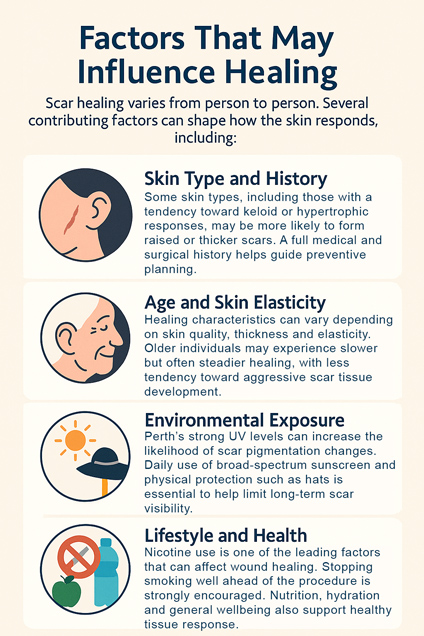
✓ Skin Type and History
Some skin types, including those with a tendency toward keloid or hypertrophic responses, may be more likely to form raised or thicker scars. A full medical and surgical history helps guide preventive planning.
✓ Age and Skin Elasticity
Healing characteristics can vary depending on skin quality, thickness and elasticity. Older individuals may experience slower but often steadier healing, with less tendency toward aggressive scar tissue development.
✓ Environmental Exposure
Perth’s strong UV levels can increase the likelihood of scar pigmentation changes. Daily use of broad-spectrum sunscreen and physical protection such as hats is essential to help limit long-term scar visibility.
✓ Lifestyle and Health
Nicotine use is one of the leading factors that can affect wound healing. Stopping smoking well ahead of the procedure is strongly encouraged. Nutrition, hydration and general wellbeing also support healthy tissue response.
Supporting Scar Recovery At Home
Healing does not end once sutures are removed. Patients can actively support scar health in a number of ways during the weeks and months after surgery. Many of these principles apply across facial procedures and are discussed in more detail in our guide on how to manage face lift scars for optimal results. Dr Watts provides a personalised recovery guide for every patient, which may include:
✓ Silicone Application
Silicone-based products, such as gels or sheets, are well-regarded for their ability to create a protective barrier over healing skin. This may assist in maintaining balanced hydration and limiting overproduction of collagen in raised scars.
✓ Massage (When Advised)
Once healing is stable and your care team has confirmed it is appropriate, light massage may be introduced. Gentle pressure applied over the scar tissue helps encourage alignment of collagen fibres. This technique should only be performed under direction, as early pressure may be harmful.
✓ Avoiding Tension or Pressure
Wearing sunglasses, glasses or accessories that apply pressure to incision areas near the ears or hairline may interfere with healing. Likewise, stretching the skin or engaging in vigorous activity too early may disrupt tissue repair.
✓ Skin Protection
SPF 50+ sunscreen should be worn every day, even in overcast conditions. Scar tissue is more sensitive to UV, and protecting healing skin can help support long-term tone and texture blending.
DOWNLOAD DR WATTS’ GUIDE TO FACE AND NECK LIFT SURGERY
A Patient-Specific Approach
Every face is different, and so is every healing journey. Dr Watts considers a wide range of factors in planning your surgical approach, including:
- Hairline position
- Skin thickness and elasticity
- Medical and healing history
- Personal lifestyle, work and sun exposure
By adjusting surgical planning to suit these individual characteristics, patients are supported with a plan that is both practical and medically appropriate for their needs.
Patients attending Dr Watts’ West Perth clinic also benefit from convenient access to post-operative appointments, allowing progress to be monitored, concerns addressed and guidance tailored to how each patient is progressing.
How Expectations Shape The Recovery Journey
A key part of recovery is understanding what scars represent. They are not a sign of failure or fault, but a natural outcome of surgical access. While every effort is made to support favourable healing, the appearance of scars changes over time and often settles in gradually.
Some individuals may initially be more aware of the incisions, especially as redness or swelling settles. Over time, many find that the focus shifts to the overall effect of the procedure, and that the scar becomes part of the overall picture rather than a focal point.
Scars are not something to be eliminated, but managed and supported. Dr Watts encourages patients to stay engaged throughout the healing period and to return for follow-up so progress can be reviewed and additional treatments discussed if required.
Deep Plane Face Lift Surgery Before and After Photos
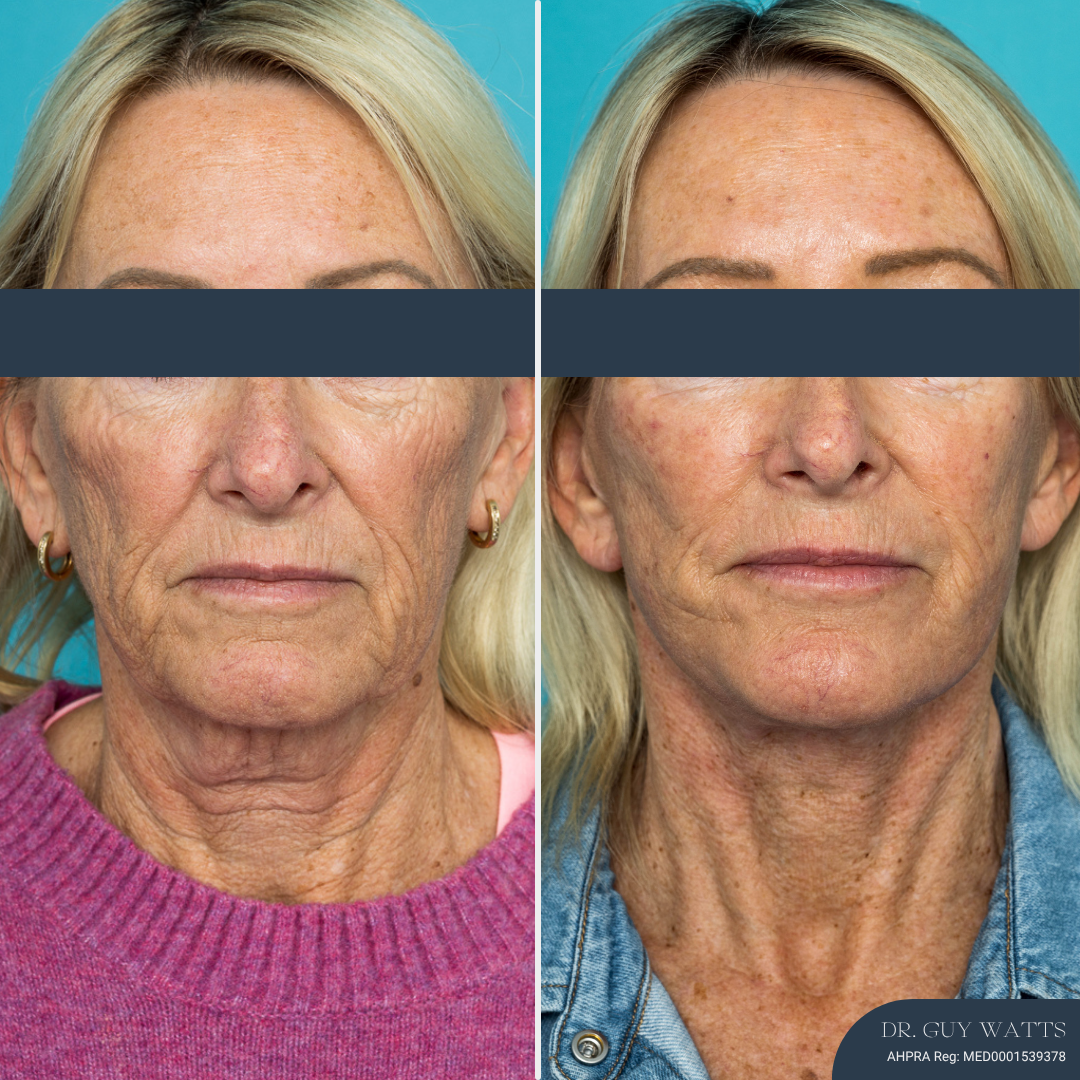
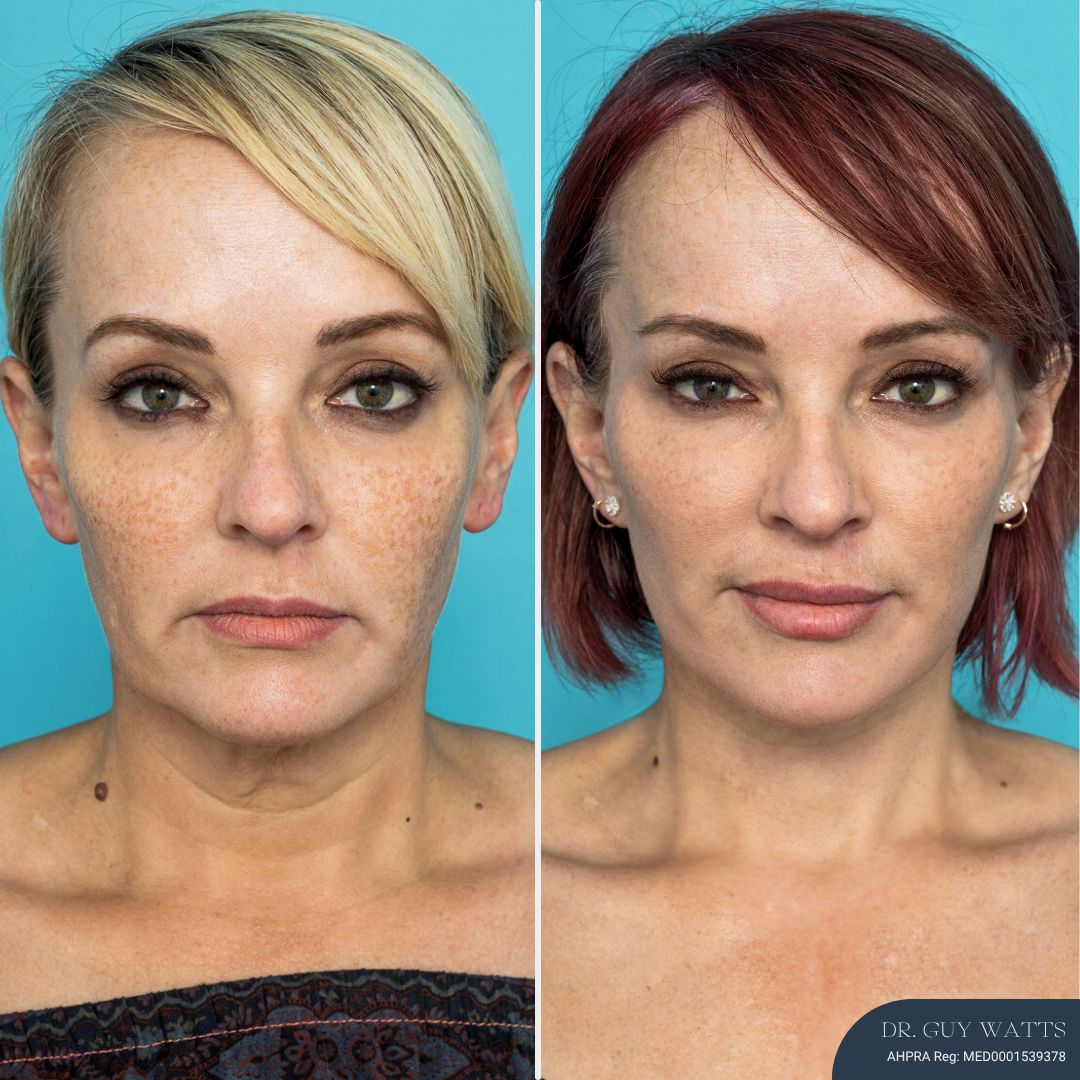
Photo disclaimer:
Each surgical procedure produces unique outcomes influenced by factors such as body composition, skin tone, laxity, age, and genetics. The before-and-after photographs displayed are of actual patients and are provided for informational purposes only.
Do’s And Don’ts For Post-Operative Scar Care
Do:
- Follow all instructions provided by your surgical team
- Keep the area clean, moisturised and protected from sun
- Use silicone products if advised
- Apply SPF every morning
- Attend all follow-up appointments for review
Don’t:
- Expose the healing area to sun without protection
- Use unapproved skincare or cosmetic products near the incisions
- Pick, scratch or peel skin over the incision site
- Wear tight accessories or glasses that press on the healing area
- Return to high-impact activities too soon
Scar Care In The Context Of Perth’s Lifestyle
Living in Perth brings unique considerations when planning and recovering from surgery. The climate offers a great deal of sunshine, but this also means that patients must take extra steps to protect healing skin from UV-related pigmentation or sensitivity.
Many Perth patients lead active lives and may return to work or community activities within weeks of surgery. This makes the planning of incisions and recovery time even more important. Dr Watts works with patients to create recovery plans that align with their lifestyle, while also supporting optimal healing.
With the clinic based in West Perth, patients can access their follow-up appointments easily and remain connected with care throughout the post-operative period.
A Surgical Approach Grounded In Clinical Experience
Dr Guy Watts is a Specialist Plastic & Reconstructive Surgeon with a focused practice in facial surgery. His approach combines clinical experience with patient-specific planning, providing care that extends beyond the operating theatre.
Scar healing is not simply left to chance – it is something that can be supported, monitored and guided. From initial consultation to long-term recovery, patients receive detailed information about what to expect, how to manage changes and when to seek support.
If you are exploring your options for a face lift in Perth and would like to learn more about scar care, healing timelines, or whether this approach may be appropriate for you, Dr Watts welcomes you to arrange a consultation. Every face is unique – and so is every healing process.
FAQs About Deep Plane Face Lift Scar Management
Further Reading about Face Surgery with Perth Plastic Surgeon Dr. Guy Watts
- Read more on the Dr Guy Watts Blog: Recovery after Facelift Surgery
- Read more on the Dr Guy Watts Blog: When to Resume Exercising after Facelift Surgery
- Read more on the Dr Guy Watts Blog: 7 Tips to Reduce Bruising after Facelift Surgery
- Read more on the Dr Guy Watts Blog: What is a Haemostatic Net?
About Dr. Guy Watts – MED0001539378
FRACS (Plas) – Specialist Plastic Surgeon In Perth WA

Dr. Guy Watts is a Specialist Plastic Surgeon (AHPRA MED0001539378) with an extensive career that spans across renowned plastic surgery clinics worldwide. His experience has been honed through invaluable experiences at esteemed establishments such as the New York Eye and Ear Infirmary and the renowned Pitanguy Clinic in Brazil.
Having collaborated with the foremost cosmetic plastic surgeons on a global scale, Dr. Watts has chosen to return to Perth after a 17-year journey of intensive training and invaluable professional experience to bring the latest practices and technology in cosmetic plastic surgery to his patients.
Dr. Watts is a Fellow of the Royal Australasian College of Surgeons (FRACS) and a Member of the Australian Society of Plastic Surgeons (ASPS), Australasian Society of Aesthetic Plastic Surgeons (ASAPS) and the International Society of Aesthetic Plastic Surgeons (ISAPS).
Read about the potential Risks and Complications of Surgery
Read the Patient Information and Resources
About CLINISPA
Clinispa is Dr Watts’ bespoke medical clinic performing Cosmetic Aesthetic treatments. At Clinispa, we offer advanced clinical treatments in a luxurious and calming environment, tailored to support your skin’s health and appearance.
Clinispa aesthetic services are performed by Dr Guy Watts’ nursing professionals, who have a passion for and solid understanding of facial aesthetics.
All Clinispa clients are considered individually, with a personalised treatment plan consisting of advanced scientific approaches to cosmetic aesthetics. We incorporate innovative technologies in conjunction with superiorly formulated skin care.
For more information about the full range of Clinispa Aesthetic of Cosmetic Treatments visit the Clinispa website
Sorry, the comment form is closed at this time.