

03 Feb How To Manage Blepharoplasty Scars For Optimal Results
Blepharoplasty, commonly referred to as eyelid surgery, is a frequently performed facial procedure for women and men across Perth. While the motivations for seeking this surgery may vary – ranging from reducing upper eyelid heaviness that interferes with vision, to addressing changes around the eyes associated with ageing – patients often share a common concern: how to manage blepharoplasty scars for optimal results.
Blepharoplasty typically involves discreet incisions placed within natural folds of the eyelids, but even in this delicate area, some degree of scarring is inevitable. The quality and visibility of a scar, however, depend on more than just where the incision is made. It involves the precision of the surgical technique, how the body heals, and how the healing process is managed afterwards.
In this article, Dr Guy Watts – Specialist Plastic & Reconstructive Surgeon based in Perth, Western Australia – explores the many factors that influence scar formation and long-term scar appearance after blepharoplasty. With a focus on patient education, this guide outlines what you can expect, what you can influence, and what care strategies can help support a more refined and less noticeable scar.
What Is Blepharoplasty And Where Are The Scars Located?
Blepharoplasty is designed to address excess skin, muscle, and fat in the upper or lower eyelids. It may involve:
- Upper eyelid blepharoplasty, which typically addresses excess skin or drooping that may obstruct the upper field of vision or create a hooded look.
- Lower eyelid blepharoplasty, which may be performed to reduce puffiness, smooth out under-eye bags, or address fine wrinkling.
Incisions are deliberately placed in areas where they are least likely to be visible. In upper eyelid surgery, the incision is typically hidden within the natural upper eyelid crease. In lower eyelid surgery, it may be placed just below the lash line (a subciliary incision), or internally (a transconjunctival approach), depending on the technique and goals.
Because the eyelid skin is among the thinnest on the body, it tends to heal with minimal scarring when managed properly. However, how that healing unfolds – and how the scar eventually looks – is not identical for everyone. Patient-specific factors, the surgical approach, and adherence to post-operative instructions all influence the final appearance.
Take our quiz, and find out if you are ready for surgery
Why Some Scars Become More Noticeable Than Others
Scarring is a natural and necessary part of the healing process. After any incision, the body undergoes a series of complex biological responses designed to close the wound and repair the skin. This typically involves three key stages:
- Inflammation: White blood cells arrive at the site to prevent infection and begin cleaning the area.
- Proliferation: New skin cells, collagen, and tiny blood vessels are generated.
- Maturation: Collagen fibres are reorganised, and the scar becomes flatter, lighter, and softer over time.
However, the appearance of a scar can vary widely depending on several factors:
- Biology and skin type: Those with darker skin or a personal or family history of keloids or hypertrophic scars may experience more prominent scarring.
- Age: Younger skin tends to produce more collagen, which can sometimes result in firmer scars; older skin, on the other hand, may heal more slowly but often with less pronounced scarring.
- Sun exposure: Exposure to UV light during the healing phase can darken scars, making them more noticeable.
- Smoking: Tobacco use significantly impairs wound healing by reducing blood flow and oxygen to the tissues.
- Medical conditions: Certain health issues such as diabetes or autoimmune diseases can affect how well wounds heal.
Even the location of the incision plays a role. Because the eyelids are in constant motion and the skin is so delicate, even minor swelling or tension on the wound can affect how a scar matures. While scarring cannot be eliminated entirely, the goal is to manage all these variables to help it heal as inconspicuously as possible.
The Role Of Surgical Technique In Scar Optimisation
A precise, careful approach during surgery can significantly influence the quality of scar healing. Dr Guy Watts uses surgical methods that prioritise accuracy, tissue preservation, and tension-free closure – all of which are important in promoting fine, flat scars.
Key surgical considerations include:
- Incision placement: Positioning the incision within the eyelid’s natural crease or inner lid ensures that scars are less likely to be seen when the eyes are open.
- Minimal trauma: Gentle handling of the eyelid skin during surgery helps prevent unnecessary inflammation and supports better wound healing.
- Fine suture technique: Using small, well-placed sutures that align the skin edges precisely helps the incision to close cleanly, reducing the risk of thick or uneven scars.
- Avoiding overcorrection: Removing too much skin can increase tension on the wound, leading to wider or more noticeable scars.
In his Perth practice, Dr Watts brings years of training in Specialist Plastic & Reconstructive Surgery to each procedure, ensuring that every step is taken to support both the function and appearance of the eyelid. While surgical technique sets the stage, what happens after the procedure is equally important.
DOWNLOAD DR WATTS’ GUIDE TO COST OF SURGERY
Your Role In Recovery: Patient Factors That Affect Scarring
Each patient brings their own unique biology and health history to surgery, and these factors inevitably affect how well an incision heals. Understanding the role you play in the outcome helps shift the focus from a passive to an active recovery process.
Some of the most influential patient-related factors include:
- Skin quality: Thinner or more elastic skin may show scars less readily. Conversely, thicker or oilier skin types may retain swelling longer and delay scar maturation.
- Genetics: Some people simply form more prominent scars due to inherited healing tendencies.
- Lifestyle choices: Smoking, alcohol consumption, and poor nutrition can compromise wound healing.
- Sun protection: UV exposure is one of the most preventable contributors to poor scar outcomes. Wearing sunglasses and applying high-SPF sunscreen once healing permits is essential.
- Medication adherence: Taking prescribed medications, avoiding unapproved topical agents, and attending follow-up visits all play a role in ensuring healing is monitored and supported.
Dr Watts discusses these variables in detail during consultations, helping patients in Perth plan for an appropriate recovery period and tailor their expectations based on their health background.
The Healing Journey: What To Expect From Week One To Twelve Months
Scar healing is not a straight line. It unfolds over time, often in ways that may be unfamiliar to patients undergoing eyelid surgery for the first time. While initial recovery from blepharoplasty may seem rapid, the underlying tissue changes take much longer to settle.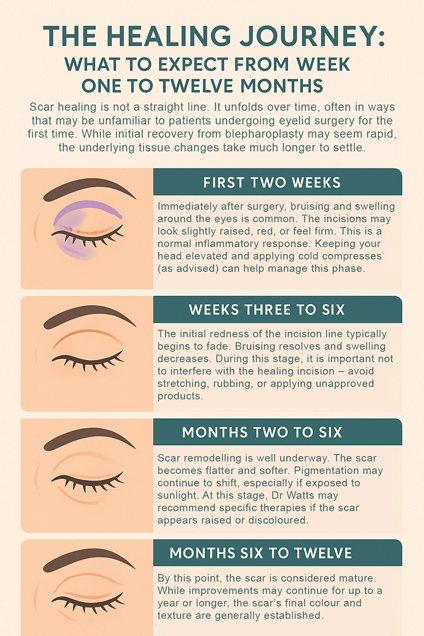
✓ First two weeks:
Immediately after surgery, bruising and swelling around the eyes is common. The incisions may look slightly raised, red, or feel firm. This is a normal inflammatory response. Keeping your head elevated and applying cold compresses (as advised) can help manage this phase.
✓ Weeks three to six:
The initial redness of the incision line typically begins to fade. Bruising resolves and swelling decreases. During this stage, it is important not to interfere with the healing incision – avoid stretching, rubbing, or applying unapproved products.
✓ Months two to six:
Scar remodelling is well underway. The scar becomes flatter and softer. Pigmentation may continue to shift, especially if exposed to sunlight. At this stage, Dr Watts may recommend specific therapies if the scar appears raised or discoloured.
✓ Months six to twelve:
By this point, the scar is considered mature. While improvements may continue for up to a year or longer, the scar’s final colour and texture are generally established. If any further refinement is needed, it can be discussed during follow-up.
Throughout this process, Dr Watts and his team monitor healing closely, guiding patients through the stages with practical advice and evidence-based care.
Effective Scar Management: Supporting Your Recovery At Home
Once the surgery is complete, your attention shifts to recovery. There are several ways you can actively support scar healing at home, and these are often simple, practical steps that make a significant difference.
- Follow wound care instructions: After surgery, you will be given detailed information on how to clean and protect the incision sites. Following this precisely is one of the most important ways to reduce complications.
- Avoid unnecessary strain: In the early days, avoid lifting, bending, or activities that increase blood pressure to the head, as this can worsen swelling or disrupt early healing.
- Use approved skincare products only: Do not apply ointments, serums, or moisturisers that have not been approved by your surgeon. Some ingredients may irritate the delicate eyelid area or interfere with healing.
- Protect the area from sunlight: UV radiation can darken healing scars. Wear sunglasses outdoors, and once permitted, apply SPF 50+ sunscreen daily to the upper face.
- Avoid makeup over healing scars: Resist the urge to conceal scars with makeup in the early weeks. Only resume when advised by Dr Watts, usually after the skin barrier has fully closed.
- Monitor changes: Keep an eye on your scar’s development. If the scar becomes increasingly raised, itchy, or pigmented, alert the clinic. Early treatment of abnormal scarring can improve outcomes significantly.
Treatment Options If Scars Become Prominent
While most blepharoplasty scars settle well over time, a small percentage may benefit from additional treatment. At Dr Watts’ Perth clinic, options are assessed carefully and tailored to the individual’s presentation. Common interventions include:
- Topical silicone gel or sheets: These are often used to flatten raised scars and soften their texture. They are considered first-line management for mild hypertrophic changes.
- Low-dose corticosteroids: In some cases, creams or very small injections may be used to address redness or firmness. These are applied cautiously due to the thinness of eyelid skin.
- Laser treatments: Fractional laser or pulsed dye lasers may be considered to reduce discolouration or refine texture. These are generally performed only after several months have passed.
- Microneedling: A non-invasive technique to stimulate collagen remodelling. This is only used when the scar is stable and has matured sufficiently.
- Scar revision surgery: In rare situations where a scar remains thick or wide despite conservative care, revision under local anaesthetic may be discussed.
It is important to note that not all visible scars are abnormal. Dr Watts will assess your healing against expected timelines and advise only when treatment is medically appropriate.
Practical Do’s And Don’ts For Scar Healing
Do:
- Use cold compresses in the first 48 hours to reduce swelling.
- Attend all scheduled follow-up visits to allow monitoring.
- Wear sunglasses and wide-brimmed hats when outside.
- Follow your prescribed skincare and recovery regimen closely.
Don’t:
- Pick at any scabs or dry skin.
- Use over-the-counter scar creams without discussing with your surgeon.
- Resume strenuous activity too soon.
- Smoke or expose yourself to second-hand smoke during healing.
A Local Perspective: Scar Management In Perth’s Climate
Patients in Perth face unique environmental considerations that can influence scar healing. High levels of UV radiation throughout the year mean that protecting surgical scars from sunlight is critical. Even incidental exposure while driving or walking outside can affect pigment formation.
Additionally, Perth’s dry summer climate can contribute to skin dehydration, which may make healing skin feel tight or irritated. Staying well-hydrated, using gentle moisturisers as advised, and avoiding excessive air conditioning can help keep healing tissue comfortable.
Dr Watts encourages his Perth patients to be proactive in understanding how local environmental factors influence their recovery. Sun protection, in particular, is a key part of long-term scar management.
What Dr Guy Watts Emphasises To Every Patient
“Blepharoplasty offers a meaningful benefit to many patients, whether for functional or aesthetic reasons. But the journey doesn’t end when you leave the operating theatre. Healing is dynamic, and each person brings their own biology, lifestyle, and environment to that process. By working together – surgeon and patient – we can manage that journey in a way that supports the most refined and natural result.“
Dr Watts reminds every patient that visible scarring after eyelid surgery is not unusual in the early weeks, but with care and time, the outcome can evolve considerably. The key lies in thoughtful preparation, precise technique, and engaged recovery.
Lower Blepharoplasty Surgery Before and After Photos
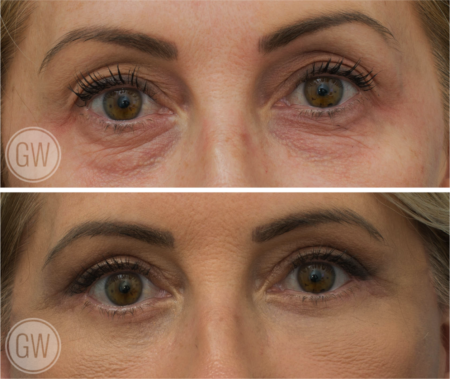
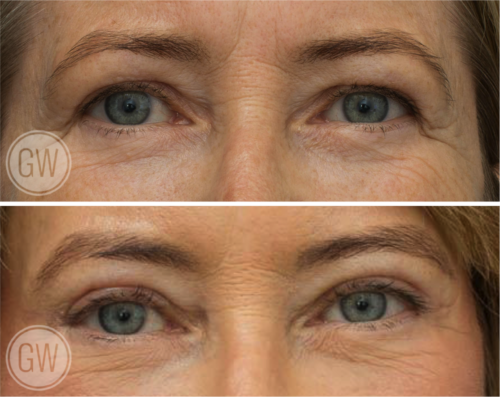
Photo disclaimer:
Each surgical procedure produces unique outcomes influenced by factors such as body composition, skin tone, laxity, age, and genetics. The before-and-after photographs displayed are of actual patients and are provided for informational purposes only.
Considering Blepharoplasty In Perth? Know What To Expect
If you are thinking about eyelid surgery and are concerned about scarring, you are not alone. It’s one of the most frequently discussed topics during consultation at Dr Watts‘ clinic in West Perth.
During your consultation, Dr Watts will take time to understand your goals, assess your facial anatomy, and discuss how blepharoplasty can be tailored to your needs. He will also provide realistic information about scar location, expected healing timelines, and strategies to support your recovery.
By understanding what to expect and what you can do to support your healing, you can feel more confident in your decision and more prepared for the road ahead.
To learn more about eyelid surgery or to arrange a consultation, contact Dr Guy Watts’ clinic in Perth. His team is here to guide you with care, clarity, and respect for your individual journey.
FAQs About Blepharoplasty Scar Management
Further Reading
- Read more about Dr Guy Watts Blog on Does It Hurt to Get the Blepharoplasty Stitches Removed?
- Read more about Dr Guy Watts Blog on Can Blepharoplasty Affect Your Vision?
- Read more about Dr Guy Watts Blog on Sunken Eyes – Causes and Options
- Read more about Dr Guy Watts Blog on Recovery After Lower Blepharoplasty
- Read more about Dr Guy Watts Blog on How To Manage Deep Plane Face Lift Scars For Optimal Results
- Read more about Dr Guy Watts Blog on Recovery After Upper Blepharoplasty Surgery
- Read more about Dr Guy Watts Blog on Recovery After Eyelid Surgery: Postoperative Tips and Timeline for Blepharoplasty
About Dr. Guy Watts – MED0001539378
FRACS (Plas) – Specialist Plastic Surgeon In Perth WA

Dr. Guy Watts is a Specialist Plastic Surgeon (AHPRA MED0001539378) with an extensive career that spans across renowned plastic surgery clinics worldwide. His experience has been honed through invaluable experiences at esteemed establishments such as the New York Eye and Ear Infirmary and the renowned Pitanguy Clinic in Brazil.
Having collaborated with the foremost cosmetic plastic surgeons on a global scale, Dr. Watts has chosen to return to Perth after a 17-year journey of intensive training and invaluable professional experience to bring the latest practices and technology in cosmetic plastic surgery to his patients.
Dr. Watts is a Fellow of the Royal Australasian College of Surgeons (FRACS) and a Member of the Australian Society of Plastic Surgeons (ASPS), Australasian Society of Aesthetic Plastic Surgeons (ASAPS) and the International Society of Aesthetic Plastic Surgeons (ISAPS).
Read about the potential Risks and Complications of Surgery
Read the Patient Information and Resources
About CLINISPA
Clinispa is Dr Watts’ bespoke medical clinic performing Cosmetic Aesthetic treatments. At Clinispa, we offer advanced clinical treatments in a luxurious and calming environment, tailored to support your skin’s health and appearance.
Clinispa aesthetic services are performed by Dr Guy Watts’ nursing professionals, who have a passion for and solid understanding of facial aesthetics.
All Clinispa clients are considered individually, with a personalised treatment plan consisting of advanced scientific approaches to cosmetic aesthetics. We incorporate innovative technologies in conjunction with superiorly formulated skin care.
For more information about the full range of Clinispa Aesthetic of Cosmetic Treatments visit the Clinispa website
Sorry, the comment form is closed at this time.