As time passes, many individuals notice changes in the shape or appearance of their lower face. This may include a softening jawline, deepening skin folds or shifting facial volume. These changes are often the result of natural ageing processes involving the skin, muscle and soft tissue layers.
Some people in Perth and surrounding areas explore face lift surgery as one way of addressing these changes. Among the most frequent questions Dr Guy Watts receives in his practice is whether a face lift procedure can be performed in a way that looks consistent with a person’s features and identity.
Dr Watts is a Specialist Plastic & Reconstructive Surgeon based in Perth, Western Australia, with a practice that focuses on evidence-informed approaches to facial surgery. This article explores the principles behind modern face lift techniques and how surgical planning can support an appearance that aligns with a person’s anatomy and personal preferences.
Take our quiz, and find out if you are ready for surgery
What Is a Face Lift?
A facelift, medically referred to as rhytidectomy, is a surgical procedure that involves the adjustment of facial soft tissues in the mid and lower face. The goal of the procedure is to reposition underlying support structures that may have shifted over time, contributing to visible changes.
Contemporary face lift techniques involve much more than surface-level skin tightening. Instead, they address deeper tissues such as the SMAS (superficial musculoaponeurotic system). This layer plays a significant role in facial support and shape.
During the procedure, the SMAS layer may be adjusted, repositioned or secured, depending on the individual’s anatomy. Skin is then gently repositioned over the modified tissue, taking care to avoid excessive tension. This multi-layered approach is aimed at creating results that align with the natural structure of the face.
Dr Watts performs face lift surgery at accredited hospitals in Perth, using techniques informed by his specialist surgical training and clinical experience.
What Does a ‘Natural‘ Result Mean in Face Lift Surgery?
The word “natural” can mean different things to different people. For some, it may refer to maintaining facial movement and expression. For others, it may mean that any changes following surgery do not appear readily noticeable to others.
In clinical terms, a natural-looking result is one that reflects the individual’s existing anatomy, bone structure and personal characteristics. Rather than creating a new appearance, the surgical approach aims to support tissue positioning in a way that aligns with the person’s overall facial features.
Examples of this approach include retaining normal facial expressions, supporting tissue balance rather than excessive skin removal, avoiding surgical signs such as visible tension or skin irregularities, and planning incision placement along natural folds or within the hairline. Dr Watts works closely with patients during consultation to understand how they view their appearance and to explore whether surgical adjustment may align with their personal aims.
DOWNLOAD DR GUY WATTS’ FACE AND NECK LIFT SURGERY GUIDE
Ultimate Guide To Face and Neck Lift
How Have Face Lift Techniques Changed Over Time?
Older face lift methods often involved tightening the skin without modifying deeper tissues. This could result in temporary changes but sometimes produced outcomes that lacked long-term structural support.
Modern surgical practice has shifted toward deeper layer modification, with specific focus on the SMAS. This fibromuscular layer, located beneath the skin and fat, contributes to facial support and plays a central role in age-related changes.
Dr Watts may use a combination of the following approaches, depending on individual assessment: SMAS plication – folding or suturing the layer to reinforce support; SMAS elevation or repositioning – adjusting tissue placement; neck support – addressing deeper tissues when changes are also present in the neck.
These techniques are selected based on anatomical factors and patient suitability. They do not follow a single template but are adapted to suit the needs of each case.
Who May Consider a Face Lift?
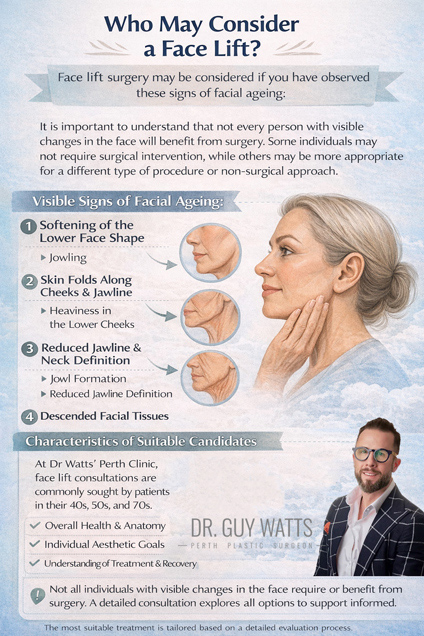
Face lift surgery may be considered by individuals who have observed changes such as softening of the lower face shape, development of skin folds along the cheeks or jawline, reduced definition between the face and neck, or shifting of facial soft tissues over time.
There is no defined age range for surgery. At Dr Watts’ Perth clinic, patients who seek face lift consultation are typically between their 40s and 70s, though suitability is based on individual health, anatomy and preferences.
It is important to understand that not every person with visible changes in the face will benefit from surgery. Some individuals may not require surgical intervention, while others may be more appropriate for a different type of procedure or non-surgical approach. All options are discussed in detail during the consultation process to support informed decision-making.
The Role of Personalised Planning
Individual variation in facial structure is significant. Factors such as bone shape, soft tissue volume, skin elasticity and overall health all influence how the face changes over time.
Dr Watts places strong emphasis on detailed planning for every patient.During a consultation, he will assess facial features from multiple angles, examine skin condition, soft tissue mobility and facial symmetry, discuss personal goals and concerns, outline appropriate surgical options, limitations and risks, and provide information about expected recovery and variation in outcomes. This approach is designed to support individuals in understanding what surgical techniques are available and whether they are likely to be suitable.
Are Other Procedures Sometimes Combined With a Face Lift?
In some individuals, changes related to ageing affect not only the lower face, but also the eyes, brow or neck. Where appropriate, it may be possible to discuss combined procedures, but only if clinically suitable.
Procedures that are occasionally performed alongside a face lift may include neck surgery to adjust tissue changes beneath the jawline or in the neck, blepharoplasty (eyelid surgery) to address excess skin or volume changes around the eyes, or fat transfer or removal where volume loss or redistribution has occurred.
Any decision to perform additional procedures is made only after a full assessment. Dr Watts considers patient preferences, surgical indications and potential recovery implications before making any recommendations. In many cases, patients may choose to stage procedures or focus only on specific areas based on their goals and circumstances.
Understanding Recovery: What Can Patients Expect?
Recovery following face lift surgery involves a period of progressive healing. Each person’s recovery will differ depending on the surgical technique, their general health, and individual healing characteristics.
Common aspects of recovery may include swelling and bruising during the first one to two weeks, gradual return to normal activities over a period of weeks, regular follow-up visits to monitor progress, and a personalised aftercare plan provided by the surgical team.
Dr Watts and his team provide comprehensive guidance following surgery. Patients receive detailed instructions on wound care, activity modification and signs to monitor during recovery. Healing timelines vary. The full result of face lift surgery may not be visible for several weeks or months. Patience during recovery and regular check-ins form part of the ongoing care process.
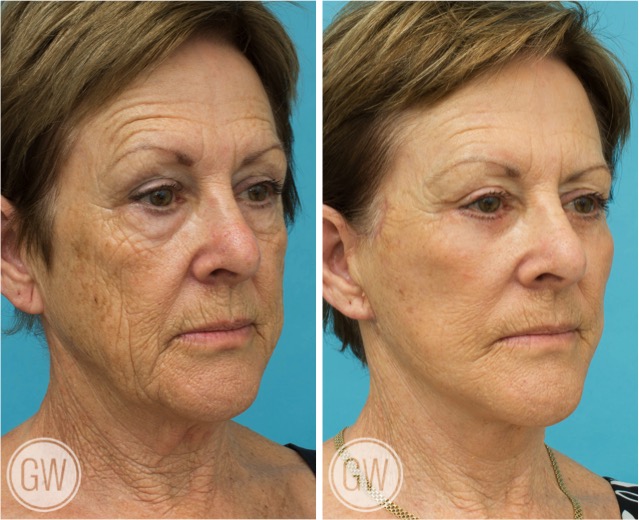
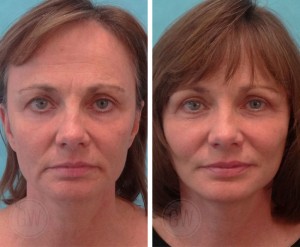
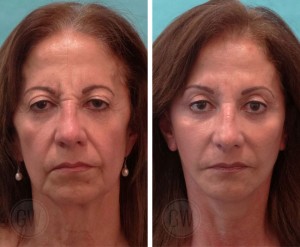
Face Lift Surgery Before and After Photos
Photo disclaimer: Each surgical procedure produces unique outcomes influenced by factors such as body composition, skin tone, laxity, age, and genetics. The before-and-after photographs displayed are of actual patients and are provided for informational purposes only.
What Role Does Skin Quality Play in Surgical Outcomes
Skin quality plays an important role in the planning and outcomes of face lift surgery. While the procedure focuses on adjusting deeper tissues of the face, the overlying skin contributes to how these changes are expressed after surgery. The elasticity, thickness, and general condition of the skin can influence how the face responds during the healing process. For example, reduced elasticity or long-term sun exposure may affect how the skin accommodates adjustments made to the underlying structures. These factors are carefully considered during the pre-operative assessment.
Dr Guy Watts includes a detailed evaluation of skin condition as part of every face lift consultation at his Perth practice. This involves assessing factors such as previous sun exposure, hydration, pigmentation, and overall texture. Where appropriate, additional strategies may be discussed to support ongoing skin health. These might include consistent sun protection measures, the use of medical-grade topical treatments, or other non-surgical options aimed at maintaining skin structure. It is important to understand that surgery does not change the biological quality of the skin itself. While repositioning deeper tissue layers may address visible signs of ageing, the outcome is also influenced by the skin’s natural ability to adapt. Supporting skin health both before and after surgery is often part of a broader care approach, particularly in long-term planning.
Understanding Risks and Recovery Variability
All surgical procedures carry potential risks, and face lift surgery is no exception. Complications can include bleeding, infection, temporary or prolonged changes in sensation, fluid accumulation, visible scarring, delayed healing, asymmetry, or changes in nerve function. Although many of these risks are uncommon, they must be considered carefully as part of any decision to proceed. Dr Watts provides every patient with clear, individualised information about the possible risks associated with surgery, along with the factors that may influence their personal risk profile. This is part of a transparent consultation process that aims to support informed, well-considered decisions.
Recovery following face lift surgery also varies from person to person. While some individuals may progress through the early phases of healing without concern, others may experience fluctuations in swelling, sensitivity or the way the face changes over time. Factors such as age, overall health, skin condition, and adherence to post-operative care guidelines can influence the rate and nature of recovery. Dr Watts offers structured follow-up and personalised care to monitor healing, provide reassurance, and make adjustments where required. It is important to recognise that a face lift does not stop the ageing process. Changes in the skin and soft tissues will continue over time, and every individual will experience a different rate of progression. While face lift surgery can address specific age-related changes, it is not designed to permanently prevent future changes to facial structure or skin behaviour.
Face Lift FAQs
Is it obvious when someone has had a face lift?
Not necessarily. When techniques are tailored to the individual and focus on tissue balance, the outcome may align closely with a person’s existing features. However, healing and anatomical differences influence how noticeable changes may be.
Can a face lift change the way I express emotion?
Modern techniques aim to preserve natural movement by focusing on deeper tissues rather than skin tension. Some temporary tightness may occur during recovery, but expressions are generally maintained.
Do men and women have different surgical needs for face lifting?
Yes, facial structure, hairline position, skin thickness, and facial hair patterns can influence the approach taken. Planning is adjusted to reflect these differences.
Will people know I've had surgery without me telling them?
That depends on the nature of the changes and your individual healing. Some people find the outcome is subtle enough that others don’t notice unless told.
Can skin type or ethnicity affect my surgical options?
Yes, factors such as skin thickness, pigment characteristics, and structural features may influence technique selection. These are considered during consultation and surgical planning.
Is it possible to have a face lift more than once?
It can be discussed if anatomical changes develop years after the initial procedure. Any secondary surgery is approached cautiously and based on individual factors.
Can a face lift be performed without general anaesthesia?
In some cases, sedation and local anaesthesia may be suitable, depending on the extent of the procedure. Most comprehensive face lifts are performed under general anaesthesia to allow for accuracy and comfort.
How long does it typically take to feel 'normal' again after surgery?
Daily activities often resume within a few weeks, but healing varies. It can take several months for swelling to resolve and for the tissues to settle.
Does having a face lift stop the need for other facial procedures?
Not necessarily. Some individuals may still consider procedures related to skin tone, eyelids, or volume changes as part of their ongoing facial care.
Are there non-surgical alternatives that can create a natural look like a face lift?
Non-surgical options may offer temporary improvements, but they do not adjust underlying facial structures. For some individuals, surgery may be the more appropriate approach depending on goals and anatomy.
Medical References
Park JH, Choi JH, Lee JH, et al. Evolution of superficial muscular aponeurotic system facelift techniques and complication rates: a systematic review. Archives of Plastic Surgery. 2023;50(4):389‑397. https://pmc.ncbi.nlm.nih.gov/articles/PMC10819192/
Face lift surgery is a personal decision. It involves not only consideration of physical appearance but also reflection on goals, recovery commitment and expectations.
Dr Watts supports patients by providing detailed, unbiased information during consultation. There is no pressure to proceed with surgery. The focus is on discussion, education and appropriate planning.
At his clinic in Perth, Dr Watts aims to provide an environment where individuals feel supported in learning about available options and determining whether surgery is right for them.
Learning More About Face Lift Options
If you are considering face lift surgery and would like to learn more about current techniques and individual suitability, Dr Guy Watts welcomes consultations at his Perth practice.
Dr Watts is a Specialist Plastic & Reconstructive Surgeon with a focused clinical interest in facial surgery. Consultations involve a full assessment, medical history review, and discussion of relevant surgical considerations, without assumptions or expectations.
Visit the Contact Page to book a consultation or request further information.
About Dr. Guy Watts – MED0001539378
FRACS (Plas) – Specialist Plastic Surgeon In Perth WA
Dr. Guy Watts is a Specialist Plastic Surgeon (AHPRA MED0001539378) with an extensive career that spans across renowned plastic surgery clinics worldwide. His experience has been honed through invaluable experiences at esteemed establishments such as the New York Eye and Ear Infirmary and the renowned Pitanguy Clinic in Brazil.
Having collaborated with the foremost cosmetic plastic surgeons on a global scale, Dr. Watts has chosen to return to Perth after a 17-year journey of intensive training and invaluable professional experience to bring the latest practices and technology in cosmetic plastic surgery to his patients.
Clinispa is Dr Watts’ bespoke medical clinic performing Cosmetic Aesthetic treatments. At Clinispa, we offer advanced clinical treatments in a luxurious and calming environment, tailored to support your skin’s health and appearance.
Clinispa aesthetic services are performed by Dr Guy Watts’ nursing professionals, who have a passion for and solid understanding of facial aesthetics.
All Clinispa clients are considered individually, with a personalised treatment plan consisting of advanced scientific approaches to cosmetic aesthetics. We incorporate innovative technologies in conjunction with superiorly formulated skin care.
For more information about the full range of Clinispa Aesthetic of Cosmetic Treatments visit the Clinispa website




Sorry, the comment form is closed at this time.